
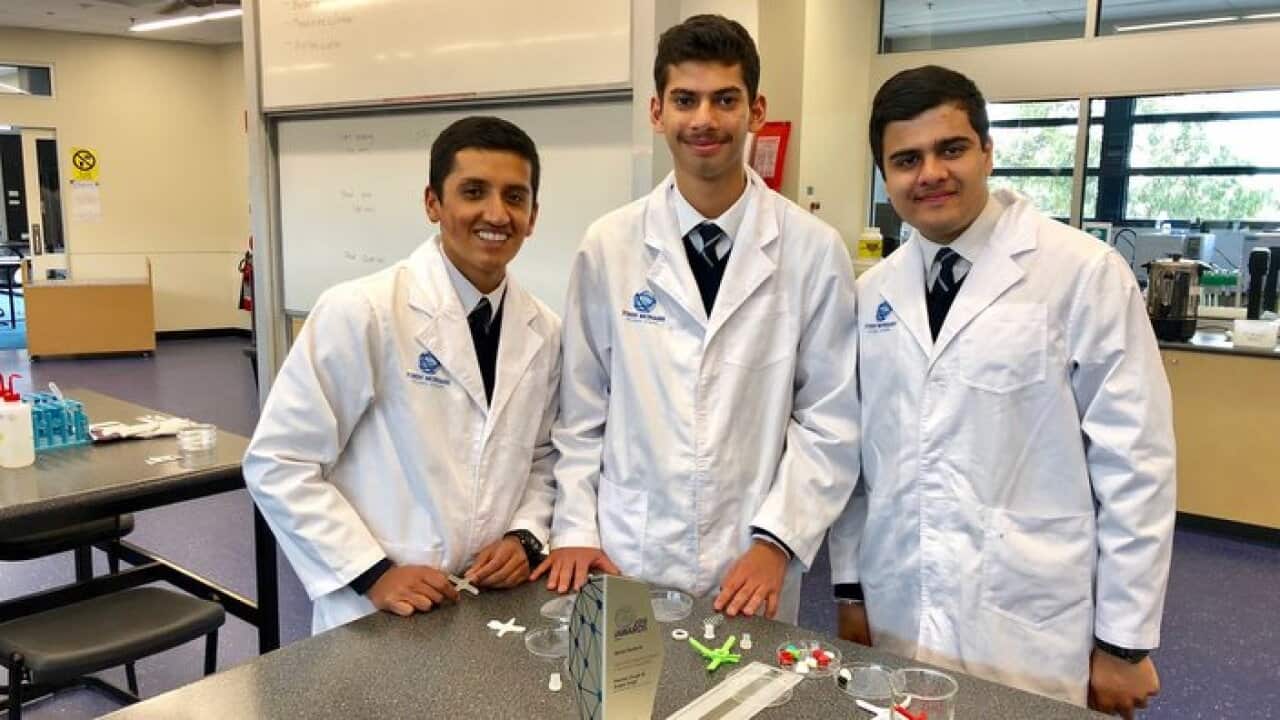

The boys’ innovation was so impressive they were announced as Victorian winners of the Australian Information Industry award.
Three year-eleven students have been awarded for creating a device which could help scientists unlock the regenerative powers of human tissues and organs. Juggling regular homework and exams, they’re now looking to export their device so researchers the world over can take advantage of it.
It’s not every day you create a device that could help advance genetic research. But that’s exactly what three year-11 students at Melbourne’s John Monash Science School have done. They’ve created a ‘Movement Impeding Device’ and student Aashutosh Sapkota says it helps researchers better analyse zebrafish embryos – animals we share almost 80 per cent of our genome with.
The sixteen-year-olds came up with the novel idea after working with researchers at Monash University’s FishCore lab. They learned there wasn’t a standard procedure to immobilise the zebrafish embryos. Student Angad Singh says using a 3D printer, they engineered one.
Professor Peter Currie worked closely with the students as they developed their idea.
The boys’ innovation was so impressive they were announced as Victorian winners of the Australian Information Industry award. Student Praneel Chugh says it was all about teamwork, and perseverance.
Knowing the students were on to something, teachers at John Monash Science School gave them the time they needed to fine-tune their device. Principal Peter Corkill says the trio was inquisitive and determined.
The next step for the students is winning a national award, then adapting their device for other experiments.