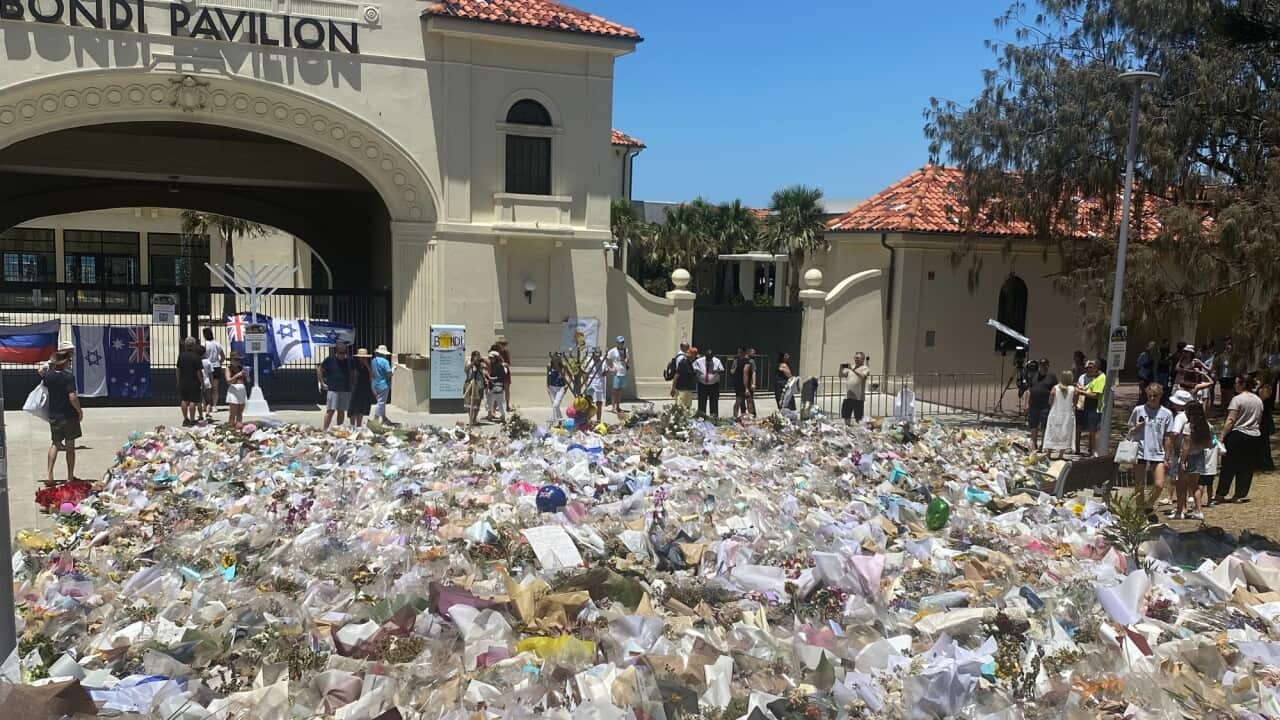
Na molimauina le tele o teu fugala’au ma le loimata maligi i le faitau afe o tagata na auai atu iai:
CARA: "For Jewish people, every single person who has been murdered here is like our brother, like our sister, like our mother, like our father."
RABBI YOSSI: "And it's been uplifting seeing so many people come down here, different faiths, backgrounds, and that's the message: that we're one united humanity. It's not about our faith, it's not about the colour of our skin or our backgrounds."
MEG: "We just wanted to come down to pay our respects. It's a place where we always really felt like we were safe. And there's a real sense of community down here, and we just wanted to be with everyone to do that."
O le fa’anoanoa ma le loto nutimomoia i le motusia o mafutaga ma e pele ona o le maliu ma le oti, o se mea e masani ai tagata uma.
Ae a mafua ona o se fa’alavelave e pei o se osofa’iga terorisi ma le auala na maliliu ai ni tagata, e le na o se tagata poo se ‘aiga e lagonaina le loto nutimomoia, ae o le to’atele o tagata i se atunu’u.
E fa’aigoaina o le collective grief ma na fa’amatalaina e le fa’atonu o le Grief Australia, Christopher Hall:
"Collective grief is that experience which is shared where people join with others to both have their own experience of grief recognised and I guess validated, as well as a desire to come together. And sometimes it is a desire to restore a sense of safety, of connection. Sometimes that coming together can also be an act of defiance, particularly in the context of an event such as terrorism."
O le osofa’iga terorisi i Bondi Beach na fa’asagatonu i tagata Iutaia.
Na saunoa se tasi o ositaulaga i le tapua’iga Iutaia, Rabbi George Mordecai, o le sunako, le Emanuel Synagogue i Woollahra, o le itu e sili ona fa’afetaia, o le lagonaina o le lagolago atu a isi tagatanu’u o Ausetalia:
"Of course, there's a lot of anger, there's a lot of sadness, fear. But also, I will say this, and I've experienced it myself, there's been such an outpouring of warmth and support from the greater Australian community. And it's really warmed my heart. I'd be walking on the street and people see my kippah on my head and they'd come up to me and say, 'We're with you'. And a lot of my congregants have also had similar experiences as well with my colleagues. So it's a mixture, it's a plethora of different sorts of emotions in our community right now."
Na saunoa Christopher Hall o le Grief Australia, e taua tele sauniga ma tu ma aga fa’atino poo rituals i taimi o le fa’anoanoa ma le loto nutimomoia:
"I often describe grief as love with nowhere to go. It's this energy that seeks expression. And we might do that in conversations with others. We might do that through activism. We may do that through charitable work. We saw people lining up to donate blood. So this kind of legacy making is really important. It's a way of keeping also the deceased present in the world."
Na saunoa Rabbi Mordecai o le sunako i Sini, o le itu e ao ina manatua, o le loto nuti momoia, o se lagona fa’aletagata, ae matua sese ma le talafeagai ona afua mai ai ni manatu ma finauga fa’apolitiki:
"And I think that we are very much in the middle of it right now. And I do want to say that it's really troubling for me when I see our grief being politicised right now in the general community for us right now. The seven days following a funeral of a loved one in Jewish tradition is a very holy time. We call it shiva where we just tend to the mourners and really the whole community is in that shiva in that mourning space right now. And we need to be present to the community in all of its grief without politicising anything right now. I think it's really important. It's important message. Let us be in our grief."
Mo nisi talafou ma ripoti, fa'afofoga i le SBS Samoan i le 'upega tafa'ilagi poo le SBS Radio app, pe asiasi i le Facebook SBS Samoan.