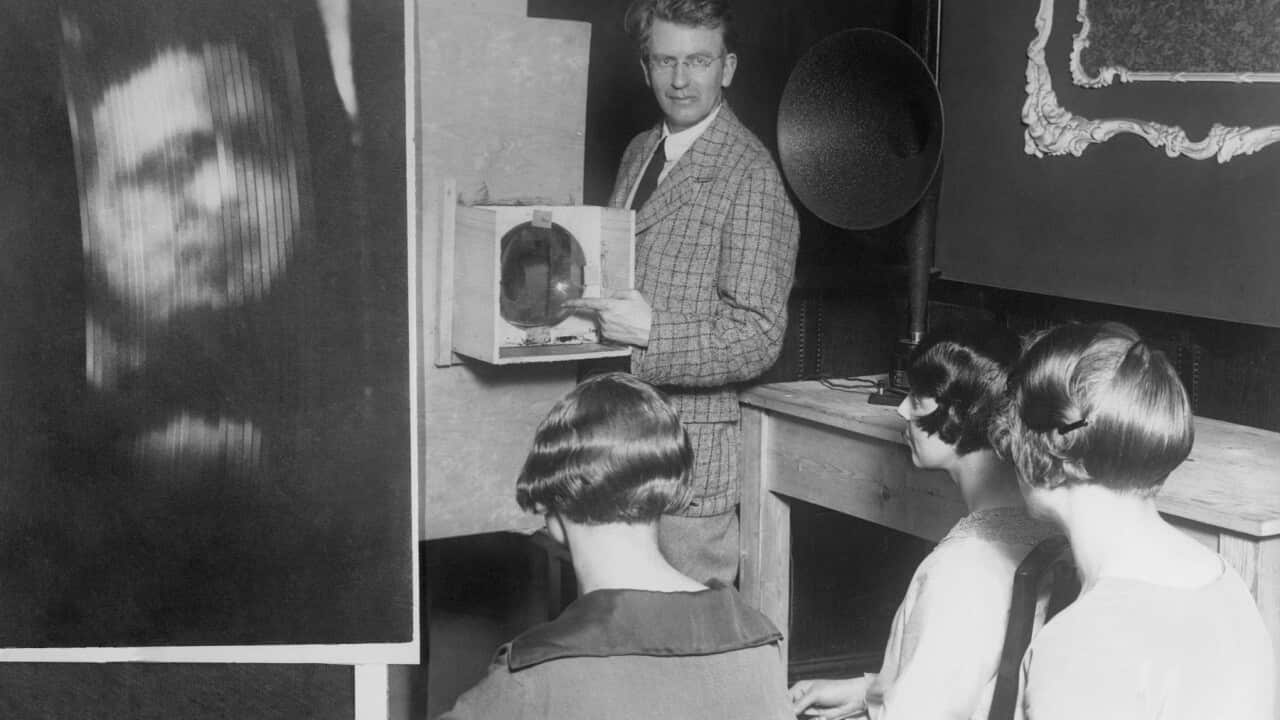

O le TV, le Televise na muamua gaosia e se tagata Sikotilani e igoa ia John Logie Baird i le 100 tausaga ua mavae.
O le tami muamua na mafai ai ona pu'e se ata minoi i se pusa lea ua tatou matamata ai i alā-ata (Television) na muamua fa’aigoaina o le Televisor.
O John Logie Baird o se ali’i faipisinisi, ae o sana hobby e fiafia iai o le gaosia lea o mea poo se inventor.
O le fa’ata’ita’iga muamua o lana Televisor, lea ua igoa nei o le Television, na faia i lona fale i Soho i Lonetona ia Ianuari o le 1926.
Ae o le Televisor a Baird e le'i alu i le eletise; o se masini na fa’ataavili e se uili pe mechanical.
Na saunoa Lewis Pollard le Curator of Television and Broadcast, Science and Media Museum i Peretania, o se masini na fau i soo se fasi u'amea ma uaea na maua e Baird:
"It was very technical, very complicated and because Baird was such a pioneer in what he was doing, he had to be essentially making a lot of his equipment from scratch or using whatever you might have had around the lab. So, the apparatus we have on site in the museum has parts of an old hatbox, a bicycle lamp, and it was very DIY because you couldn't just go to a shop and buy the pieces you needed because television didn't exist."
O fa’asalalauga ae maise o talafou, na mafuli i nusipepa ma le leitiō.
O le leitiō na sili ona alumia ona e lē tau nofo i lalo se tagata ma faitau, ma e lagonaina ai leo o tagata e faatalanoaina.
O le tulaga lea na iai le fa’asalalauga muamua a le BBC i le TV i le 1936; e pei sa lē ano tele iai nisi ona o le fa’alagolago malosi i le leitiō i aso na:
"The BBC's first regular television broadcasts began on the 2nd November 1936, introduced by Leslie Mitchell. There was no colour of course, pictures were strictly black and white or, as some cynics suggested, black and dark grey. But definition improved with usage. Transmission was limited to two hours a day."
O le TV e pei ona t’aatele ma tatou matamata ai i aso nei, na faato'a taunu’u mai i Ausetalia ma Niu Sila i le 1956.
I le 1953, na molimauina ai le alualu i luma o le lelei ma le fa’atuatuaina o fa’asalalauga i ata i le TV, ma o le tausaga lea na pu'eina ma fa’asalalauina ai e le BBC le fa’au'uga o le tupu tamaitai o Peretania Elisapeta II i le TV:
E pei ona saunoa Lewis Pollard:
"Any TV camera in the UK that could be mobilised was mobilised for use during the coronation. It was such a large media event that's why so many people remember it. We talk, here the museum about, the millions of people who watched, but one thing that people might not be so familiar with is the televisions in the 1950s were larger than Baird's Televisor, but still very small and the records say something like 17 people watched each television set, which would be half the size of a contemporary TV, maybe even smaller than that. So, for people watching at home, you know, it was such a big moment that it really helped, I'd say it really helped cement television as part of people's everyday lives. It went from this novelty that some people might have to, oh, I should have this in my home as well. And that's what really made television go as big as it did in the UK."
Mo nisi talafou ma ripoti, fa'afofoga i le SBS Samoan i le 'upega tafa'ilagi poo le SBS Radio app, pe asiasi i le Facebook SBS Samoan.