
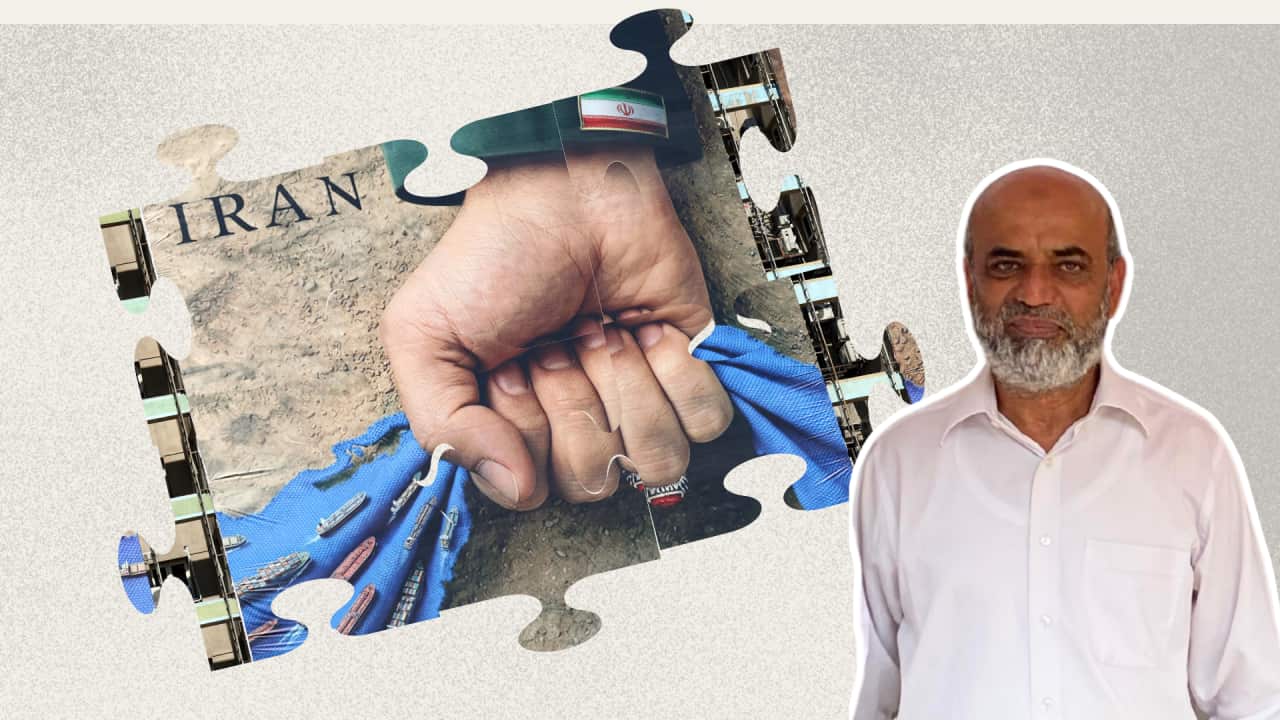

The US–Iran war, which began in February 2026, has continued and intensified through September, bringing tensions in the Strait of Hormuz to a critical level. Around 25 per cent of the world’s oil and trade passes through the strait. To understand the crisis and its potential impact on the global economy, oil prices and possibly food supplies, listen to our in-depth conversation with master mariner Shahid Bhatti, who served in the merchant navy for 19 years, in this podcast.
Shahid Bhatti, who first travelled through the Strait of Hormuz and the Persian Gulf in 1981, says the current crisis cannot be viewed simply as an oil-related issue. A large share of the food and everyday essentials needed by countries bordering the Persian Gulf also arrives by sea, as it would not be possible to transport such large quantities by air cargo. He said an alternative land route through Jordan and Saudi Arabia could be used, but it would be extremely expensive and time-consuming.
Shahid Bhatti warned that if the Red Sea and the Suez Canal were also closed, forcing ships travelling to Europe and the US to take the longer route around southern Africa, voyages could take an additional two to three weeks. He said this would have an impact on economies around the world. He added that hopes of reopening the routes had emerged after the signing of a Memorandum of Understanding between the US and Iran in Islamabad, but by September, tensions were still continuing to escalate.