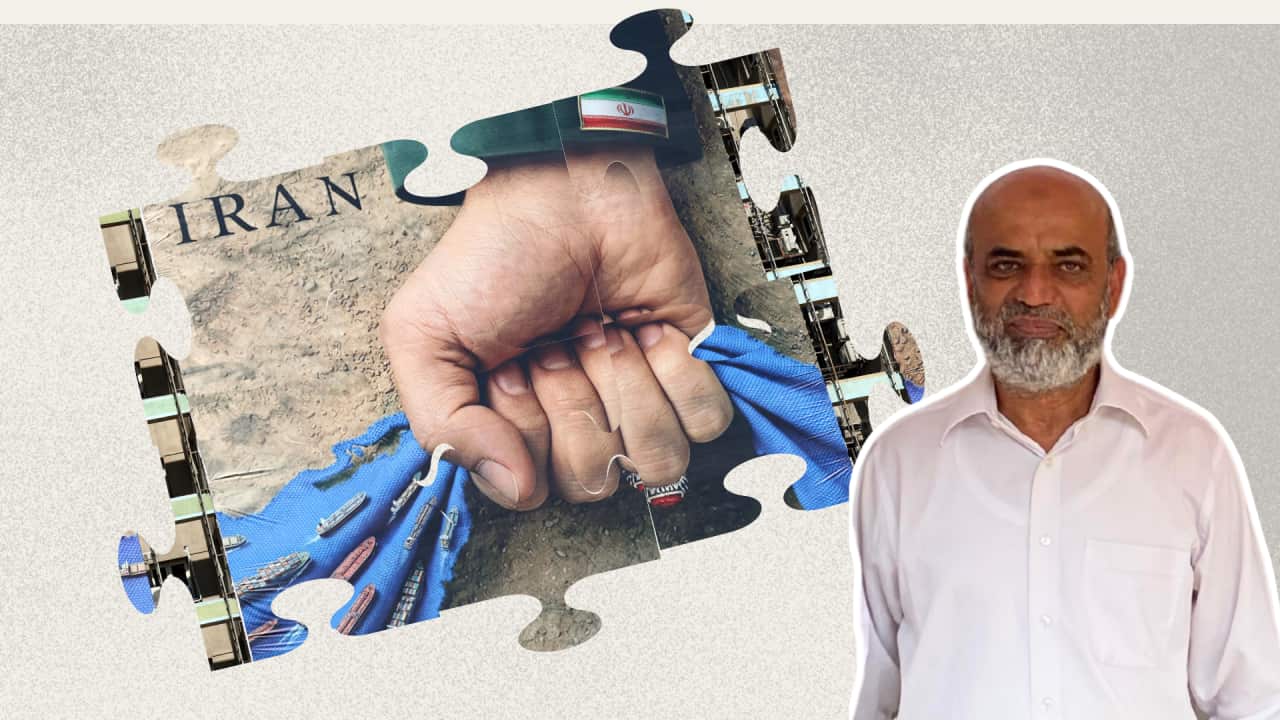


We spoke to Master Mariner Shahid Bhatti, who has spent 19 years at sea, on this topic. He says that the Strait of Hormuz is not just a sea route but the artery of global trade, and any disruption in it could put fuel prices, shipping costs and supply chains under severe pressure.
As tensions rise in the Middle East, the Strait of Hormuz has once again become the center of global attention. It is the narrow but crucial sea route through which oil and gas from the Gulf countries reach the rest of the world. According to experts, if there is an obstacle in this route, the first impact will be on global oil prices, which can then be followed by an increase in inflation, transport costs and prices of essential goods.
In this context, we spoke to Master Mariner Shahid Bhatti, who has served at sea for 19 years. According to him, the closure of any important passage in the sea is not just a line on a map, but it means that the routes of ships will change, the journey will be longer, insurance will be expensive and there will be delays in the delivery of goods. He said that the importance of the Strait of Hormuz is also very high because a large part of the world's energy supply passes through this route.
Master Shahid Bhatti says that if the situation worsens further, the shipping industry will come under immediate pressure. Shipping will be forced to take alternative routes, which will increase both time and cost. This will have a direct impact not only on oil-producing countries but also on countries that rely on imports for their energy needs.
He added that for those working at sea, such tensions are not just an economic issue but also a matter of human security. When a critical waterway is threatened, the crews working there, the ships and global trade all face uncertainty.