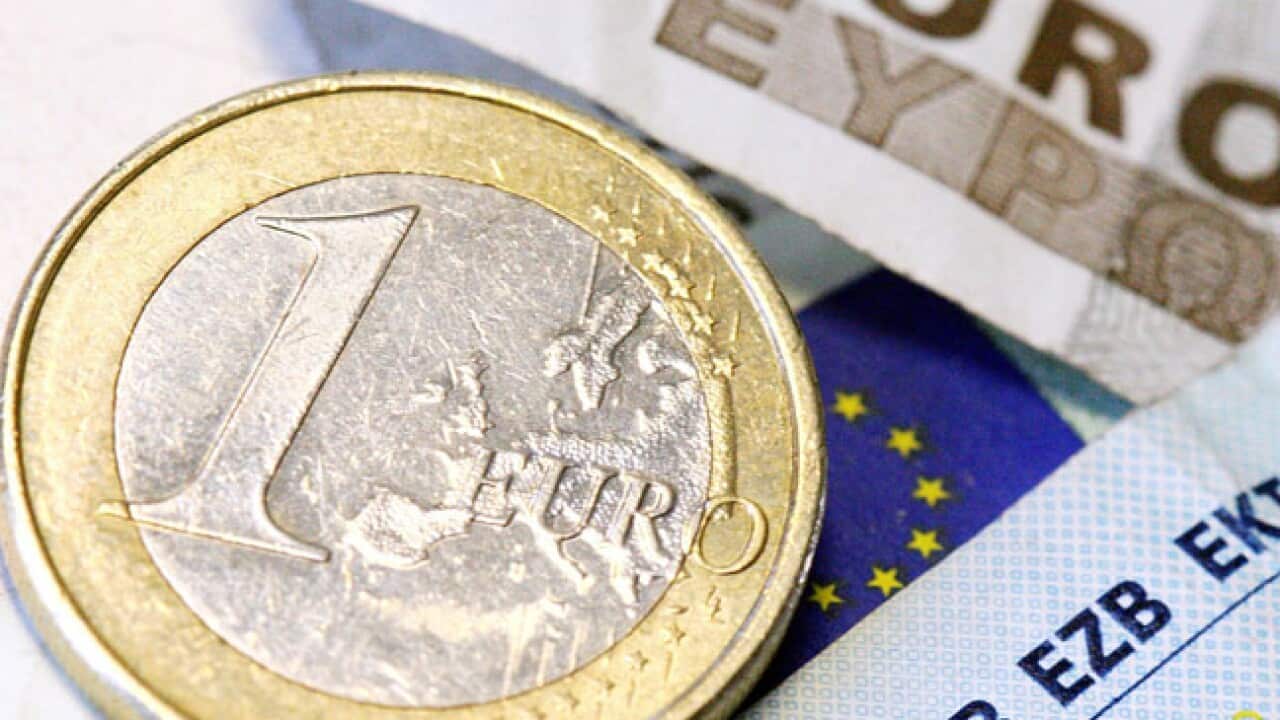
If 2011 went down as the "annus horribilis" for the European Union's flagship icon of integration, leaders of Germany, France and debt-laden monetary partners are now staring into a precipice after months spent burying their heads in the sand.
The euro debt crisis could bring all of Europe to its knees, said French President Nicolas Sarkozy recently in a key speech reflecting on contagion that spread from Greece through also bailed-out Ireland and Portugal before hitting Spain and finally Italy.
News that makes sense
Your trusted source for staying up-to-date with the world around you. Get free daily news updates and analysis, straight to your inbox.
"What kind of Europe will we have left if the euro disappears, if Europe's economic heart collapses?" he asked.
Athens, Dublin, Lisbon -- at the start of the year, all of these were considered "peripheral" problems for the 17-nation eurozone as a whole.
But 2011 saw infections at the edge of the currency area eat their way into its economic heart -- all the way into France and even paymaster Germany, where the threat of a credit rating downgrade or poor take-up on the sale of government bonds served as a major wake-up call.
The crisis has taken many forms since a huge problem first emerged in the United States late in 2007.
It affected mortgage markets, consumer spending and the real economy for householders and businesses with recession, before finally triggering panic over government debt in a Europe whose banks had become overstretched.
LEADERS FELL, TECHNOCRATS ROSE
Where the crisis was initially economic, it soon became political -- heads tumbling as in the spectacular case of Italy's Silvio Berlusconi, and social ties unravelling, as seen in the Occupy Wall Street or Indignados protest movements.
Berlusconi was only the highest-profile in a long line of leaders who fell to the crisis from Greece to Slovakia.
It was the time of the "technocrats," the unelected European Union experts given a mandate from Brussels to take over the running of territories the EU could only have dreamt of influencing in the decades of 'ever closer union' since World War II.
"There is a risk that public opinion will eventually backfire," said a senior EU diplomat in Brussels.
TOUGH YEAR AHEAD
The coming 12 months will establish whether the eurozone has the wherewithal to prevent problems in Italy or Spain from becoming gangrenous.
In Rome, some 400 billion euros must be found in 2012 -- 150 billion just in the opening three months -- just to keep Mario Monti's makeshift government afloat awaiting elections.
By mid-year, a new permanent European Stability Mechanism (ESM) is meant to be up-and-running.
This emergency fund -- the successor to a troubled pot of money neither big enough to fill public finance holes in Madrid or Milan, nor attract sufficient investment interest from China or other emerging giants -- will replace the 440-billion-euro European Financial Stability Facility (EFSF).
Between its eventual depth, and the implicit promise of near-unlimited backing from the European Central Bank (ECB) in Frankfurt plus enforceable tax-and-spending checks across the continent, Europe hopes to have in place a firefighting kit to cover all eventualities.
Yet north and south do not see eye to eye. For former Dutch EU commissioner Frits Bolkestein, the break-up of the eurozone is "inevitable," given almost religious differences in the culture of a German-led bloc for whom budgetary discipline is everything and a "Mediterranean" south seeking "political" solutions to economic problems.
BRITAIN WORKING ON PLAN B
Across the English Channel, banks in London -- home to 80 percent of the EU's financial services industry -- are already engaged in contingency planning should the euro become an over-priced currrency used on the streets of Kosovo, or a relic of better times in Athens back lanes.
American and Asian multinational companies are also doing financial modelling for a future without the euro.
For the former head of the European Commission at the time of the euro's launch, Jacques Delors, it has been a case of too little, too late by successive EU leaders who should have acted to ensure design flaws were never allowed to bring down global markets.
Whether German Chancellor Angela Merkel and French President Nicolas Sarkozy are able to hold the line thanks to stricter cross-border control of eurozone public finances and looser ECB pursestrings remains to be seen.
As Poland's Foreign Minister Radek Sikorski said recently: "I will probably be the first Polish foreign minister in history to say so, but here it is: I fear German power less than I am beginning to fear German inactivity."
Yes, Europe is promising a great leap forward with policies that correct at last the flaws in the design of monetary, without fiscal, economic and ultimately political union.
But all depends on how far the ECB is prepared to go along with solutions dependent on changes to the EU treaty likely to take up most of the year.
"It's still a gamble," admitted another key EU diplomat.







