
A magnitude-9 earthquake in Japan, a momentous climate change summit, reports on future global "hyperwarming", and rumblings about some of the first geoengineering field trials all made 2011 a remarkable year for the environmental sciences. Here is our pick of the year.
The megaquake connection: Are huge earthquakes linked?
The recent cluster of huge quakes around the Pacific Ocean – the December 2004 Sumatra quake, the February 2010 Chile quake, and now Sendai – fuelled speculation that they are seismically linked.
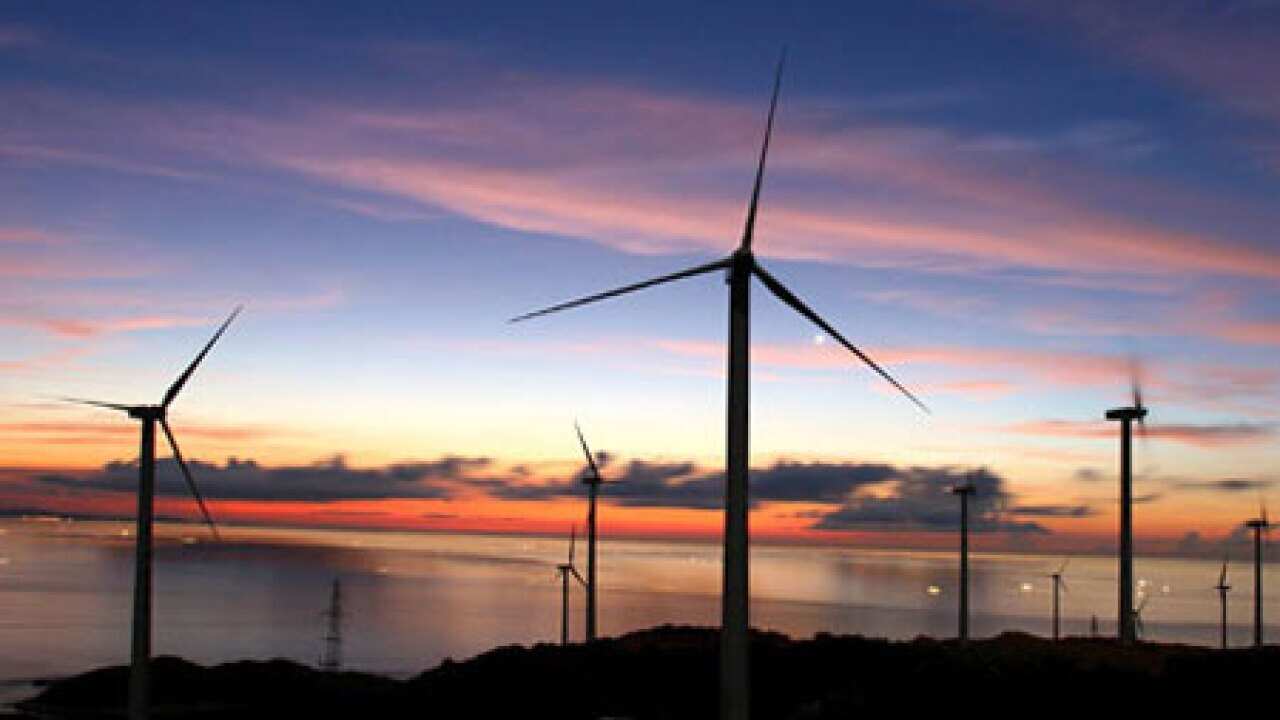
Wind and wave farms could affect Earth's energy balance
Witness a howling gale or an ocean storm, and it's hard to believe that humans could make a dent in the awesome natural forces that created them. Yet one physicist says it is a mistake to assume that energy sources like wind and waves are truly renewable.
Last chance to hold Greenland back from tipping point
The planet is on course for over 3 °C of global warming. That leaves Greenland – the world's second-largest ice cap – heading for a point of no return. The suggestion is that Greenland will reach a tipping point in the early 2040s. After that no amount of action on our part can save the ice sheet.
Playing the climate blame game
The question of whether climate change is responsible for extreme weather events like the heatwave that set Russia alight in 2010 is one of the hottest topics in climate science. Next year, UK and US climate scientists plan to launch an annual global assessment of whether humans are to blame for the previous year's extreme weather events. Solving the issue could bring closer the day when disaster victims can successfully sue oil and coal companies.
Geoengineering trials get under way
Field trials for experiments to engineer the climate have begun. Next year, if they get approval, a team of UK researchers will hoist one end of a 1-kilometre-long hose aloft using a balloon, then attempt to pump water up it and spray it into the atmosphere. If the test succeeds, a larger-scale version could one day pump sulphate aerosols into the stratosphere, creating a sunshade to offset the greenhouse effect.
Dangerous decade: What follows the Durban climate deal?
Not a single tonne of carbon was saved. In the short term, the planet will benefit not one jot. Some are calling it a betrayal of both science and the world's poor. Yet the climate conference in Durban, South Africa, did force major developing nations like China, Brazil and South Africa to accept the principle of future binding targets on their greenhouse gas emissions for the first time.
Gas drilling contaminates drinking water
Drilling for shale gas may pose a safety hazard if there are water wells nearby. But the controversial use of "fracking" does not seem to be a safety risk as regards water contamination.
La Niña behind worst African drought in 60 years
Almost 10 million people in the Horn of Africa faced a humanitarian emergency as the region grappled with its worst drought for 60 years. The main climatic trigger for the droughts was La Niña, a cyclical meteorological phenomenon affecting how much rain falls in Africa and elsewhere.
When will the 7 billionth human be born?
On 31 October, a newborn baby somewhere in the world became the 7 billionth member of the human race. Or so said the UN – but behind the UN's patina of certainty may lie outdated and unreliable census data. These inaccuracies make it harder to answer a more important question: is human population set to peak within the next few decades or will it carry on growing beyond that?
Earth's time bombs may have killed the dinosaurs
The fate of the dinosaurs may have been sealed half a billion years before life even appeared, by two geological time bombs that still lurk near our planet's core.





