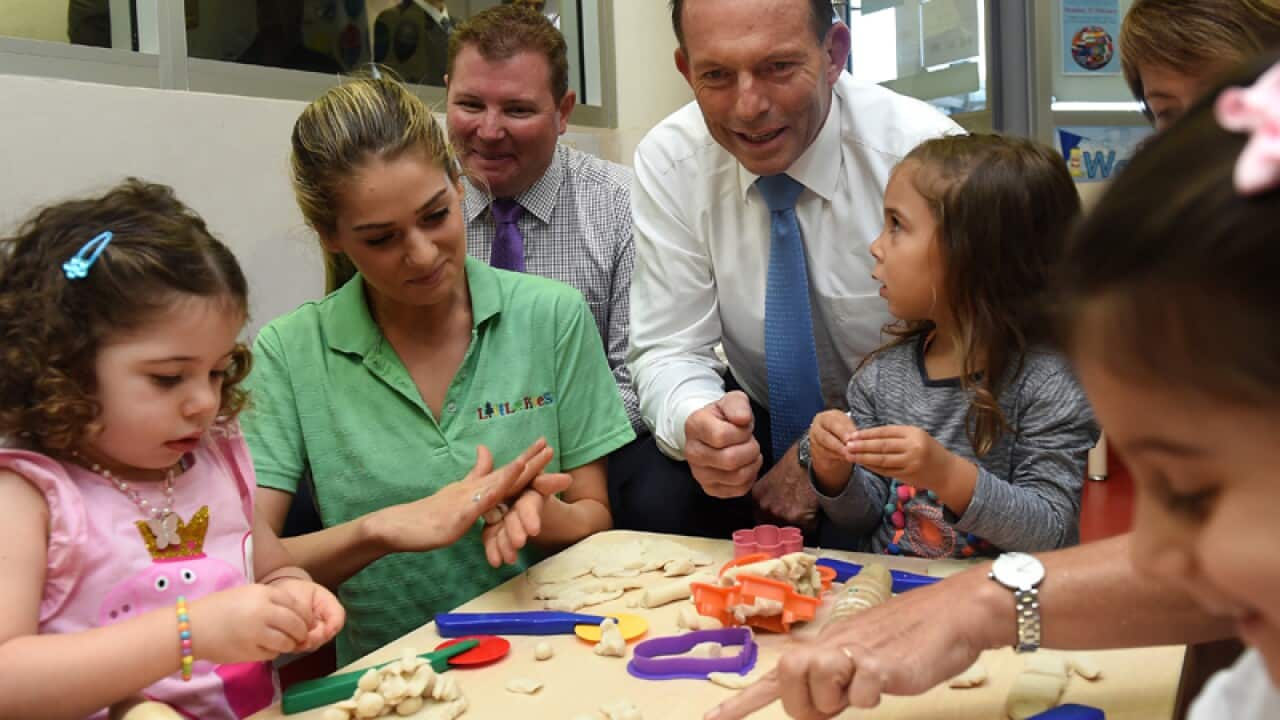
Parents working for emergency services or living in regional areas will get taxpayer support to employ nannies if they can't get their kids into regular childcare services.
A two-year trial of the program, announced on Tuesday, is expected to help pay for 4000 nannies to look after 10,000 children from January 2016.
The $246 million program will be judged a success if it helps more parents get work and stay in work, Social Services Minister Scott Morrison says.
But there has been criticism the program amounts to taxpayers covering the cost of babysitters, because nannies won't need education qualifications.
While full details of who will get assistance are yet to be released, families who can't find places in mainstream care because of their location or the hours they work are the main target.
"Police, firies and ambulance officers and Customs officers and nurses ... will be at the front of the queue for this," Mr Morrison told reporters in Sydney on Tuesday.
That's because these professions were having the most difficulty in accessing childcare services.
"This isn't a replacement for mainstream services, this is a supplement."
Nannies are over the moon about the trial.
"For the child that's got a shift-working night-time parent going off to work, we really want to help those families and make sure the child is able to stay in their own home, their own bed," Australian Nanny Association vice-president Annemarie Sansom told AAP.
The subsidy will be paid to services, not families, so to qualify nannies must be employed through a government-approved provider.
They have to be aged over 18 and hold working-with-children checks and first aid qualifications.
But unlike workers in childcare centres, they won't be required to have minimum early childhood education qualifications.
The Productivity Commission recommended the same national quality framework covering childcare centres be used for in-home care, like nannies, if it was to attract subsidies.
Mr Morrison said the measure is not necessary because nannies will be providing a different type of service.
The Australian Childcare Alliance, which represents long-daycare centres, is concerned by the lack of detail about what regulations will be in place.
"We don't need to have it becoming an absolutely informal sector where anybody can just mind children overnight and in those hours when they can't attend formal care," president Gwynn Bridge told AAP.
Some parents worry that paying for unqualified nannies might come at the cost of making high-quality care affordable to more families.
"Let's be frank, this is government subsidies extended to pay for babysitters," The Parenthood lobby group spokeswoman Jo Briskey told ABC TV.
Mr Morrison rejected that characterisation.
Share


