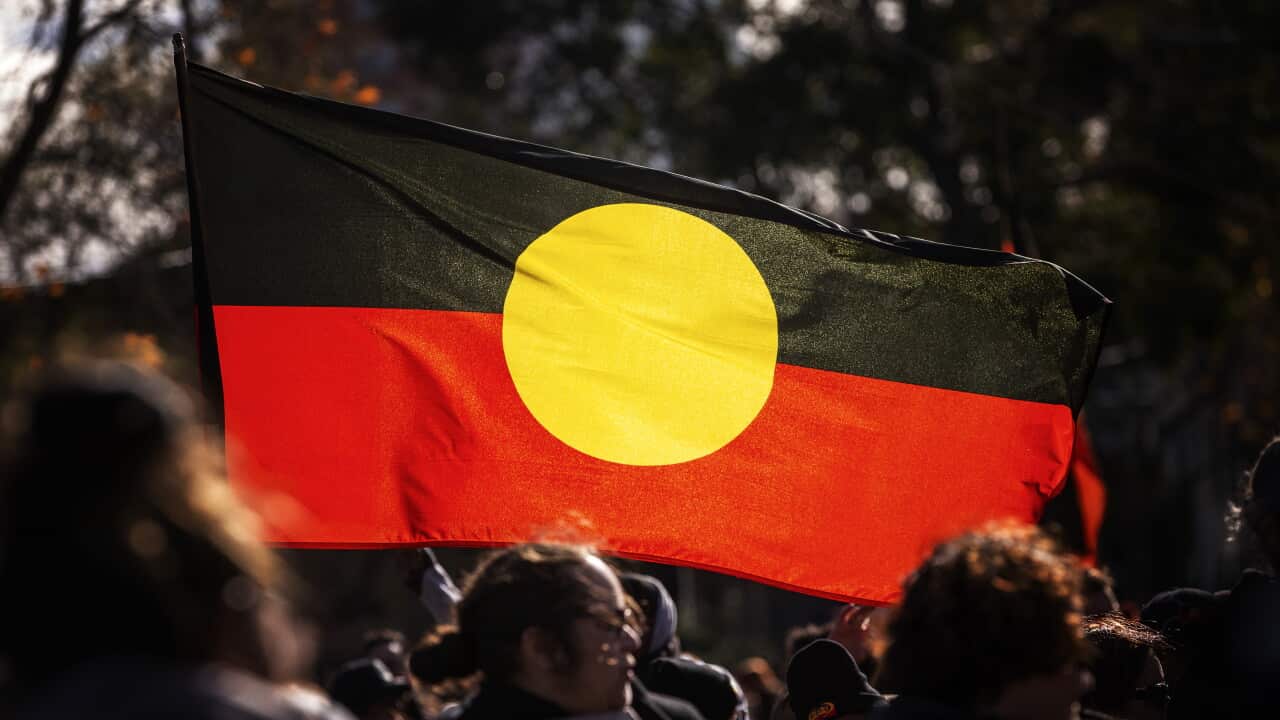
IN BRIEF
- NAIDOC Week will run from 5-12 July, with the awards ceremony taking place on 15 August.
- This year's theme is 50 Years of Deadly, marking NAIDOC's history spanning more than five decades.
WARNING: Aboriginal and Torres Strait Islander readers are advised that this story includes the names and images of Indigenous persons who have passed away.
For more than 50 years, NAIDOC Week has provided a platform for Aboriginal and Torres Strait Islander peoples to engage in truth-telling, celebration and protest.
This year, NAIDOC Week will begin on 5 July and continue until 12 July, with community events, cultural exhibitions and workshops being staged across the country.
Unlike previous editions, the National NAIDOC Awards will not take place during the first week of July. Instead, the ceremony — which recognises the achievements, resilience and cultural contributions of First Nations people — will be held on 15 August in Mparntwe, Alice Springs.
Lynette Riley, a Wiradjuri and Gamilaroi woman and co-chair of the National NAIDOC Committee, said the change reflects "an important milestone".
News that makes sense
Your trusted source for staying up-to-date with the world around you. Get free daily news updates and analysis, straight to your inbox.
The 2026 NAIDOC theme is "50 Years of Deadly", marking more than five decades since an entirely Indigenous-led NAIDOC committee was formed.
"The Committee is committed to ensuring this anniversary is celebrated in a way that reflects its significance and honours the generations of people who have contributed to the NAIDOC journey," Riley said.
Steven Satour, a Pitjantjatjara, Yankunytjatjara and Pertame man and fellow co-chair of the National NADIOC Committee, described the milestone as remarkable.
"We really wanted to take a moment to reflect on how far NAIDOC has come, beginning as a day of observance and growing into a national movement is really incredible," Satour told SBS News.
History of NAIDOC Week
NAIDOC stands for the National Aborigines and Islanders Day Observance Committee.
Its origins can be traced back to the 1920s, when Aboriginal rights groups protested against the status and treatment of First Nations peoples, including boycotts against Australia Day.
January 26 commemorates the establishment of the first British colony in Australia in 1788. For some Aboriginal and Torres Strait Islander peoples, it's called Invasion Day or Survival Day. Following protests in Sydney in 1938, it also became known as a Day of Mourning.
From 1940, the Day of Mourning was held annually on the Sunday before January 26. Over the years, the event evolved to also become a celebration of First Nations people, culture and history — spanning over an entire week.
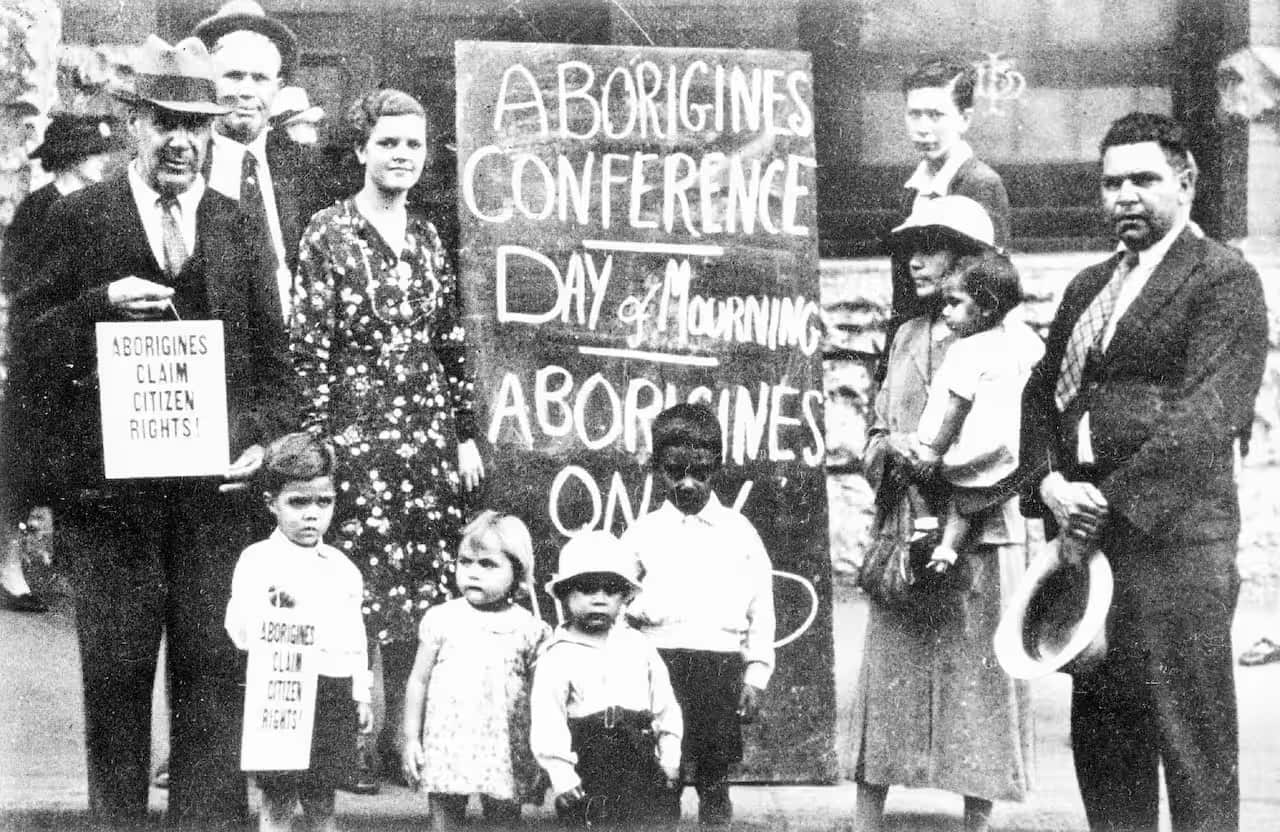
In 1956, the federal government, working with Aboriginal and non-Aboriginal groups, established the National Aborigines Day Observance Committee. In the early 1990s, the committee's name was changed to include Torres Strait Islanders.
The Committee has retained what it describes as "the now defunct and inaccurate term 'Aborigines'" in its title, "due to historic use by our Elders in establishing this week of commemoration".
NAIDOC Week celebrations
Today, Satour believes NAIDOC Week represents the "opportunity to engage with mob, learn from mob [and] hear from mob".
NAIDOC Week is observed in many schools and workplaces across the country, engaging both Indigenous and non-Indigenous Australians.
It has grown to feature an array of cultural education, sporting and arts events. This year, a special NAIDOC touch football tournament will take place in Adelaide, while beaded jewellery and weaving workshops will be hosted in local communities.
There are art exhibitions, music and dance performances also on show in parts of regional Australia and major cities.
"I think my favourite thing is that so many communities have such different ways of celebrating and bringing people together," said Satour.
"We've got some commonalities; flag raising and marches and local NAIDOC Awards all across the country, but we see people getting really creative with their ideas on [NAIDOC] events."
Each year, a different theme is selected by the NAIDOC Committee, often focusing on political, social or cultural issues.
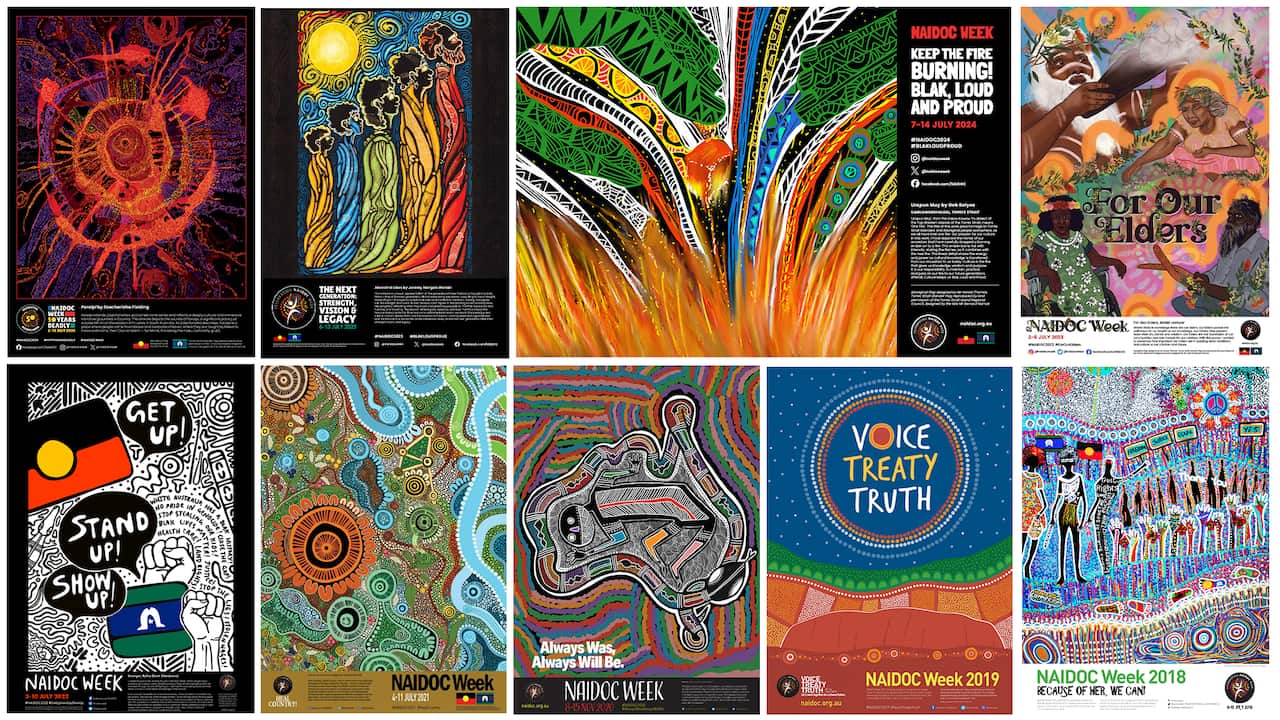
In 2025, the focus was on The Next Generation: Strength, Vision & Legacy, while in 2023, NAIDOC's For Our Elders theme celebrated Indigenous leaders, past and present.
NAIDOC Week Awards
The NAIDOC Committee also hosts an illustrious poster competition, attracting new and seasoned First Nations artists alike. The tradition dates back to 1967, when the first NAIDOC poster was produced, according to the Committee.
The winner of this year's competition is Zaachariaha Fielding, a Yankunytjatjara artist and musician from the APY lands in South Australia. Fielding said his poster, Paraulpi, reflects both the stories and sounds of his ancestors, as well as movement through generations:
"The painting is sound ... it is the melodies the Elders would sing for the dancers to come forward to them," Fielding told NITV Radio.
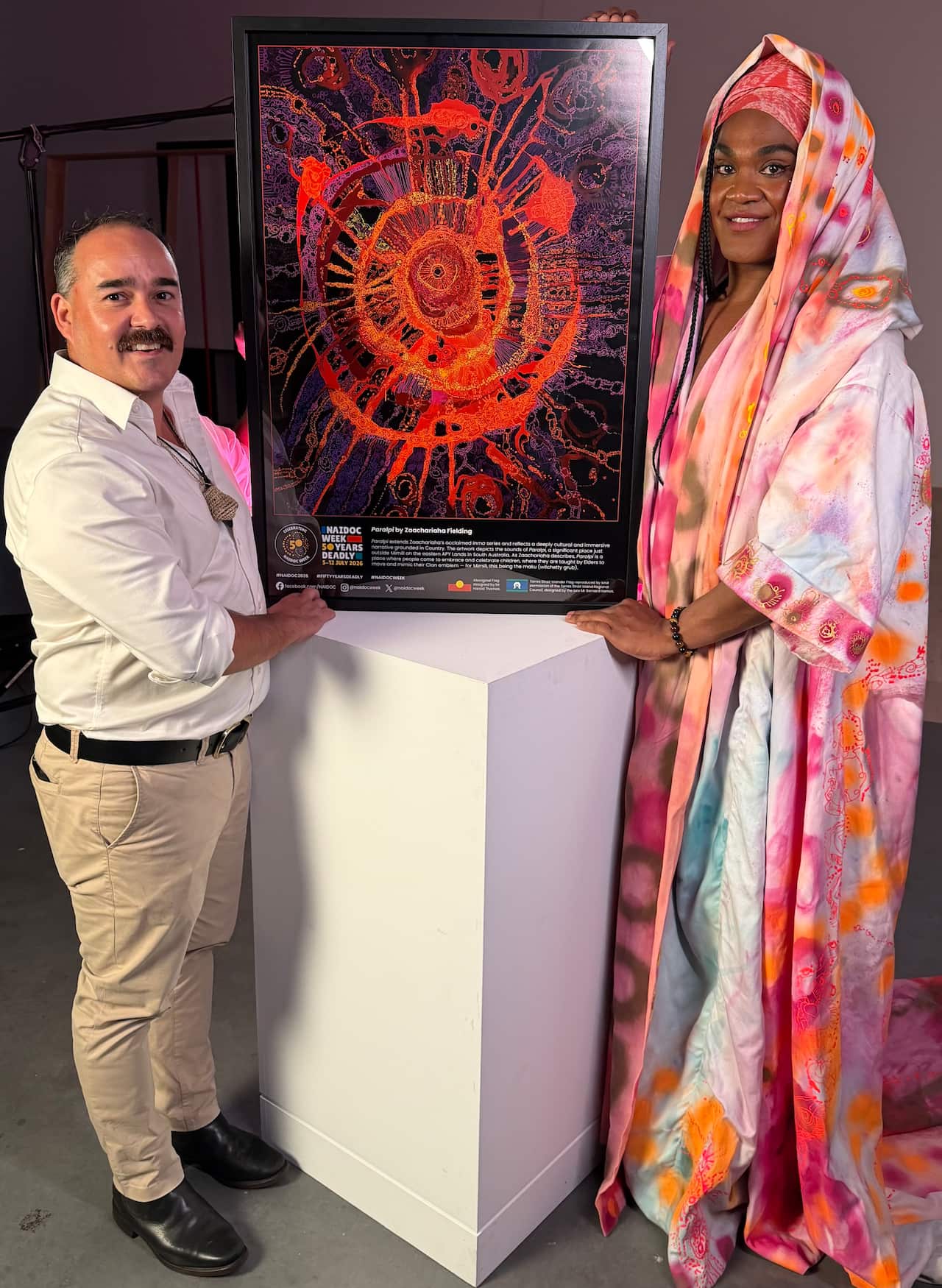
He hopes when Australians see this year's NAIDOC poster, they will be "grateful for your lineage ... grateful for where you come from".
That history is "power", "worth" and "strength", Fielding said. The musician represented Australia at the Eurovision Song contest in 2024, as part of the duo Electric Fields.
The National NAIDOC Committee also recognised Rhoda Roberts AO's dedication to First Nations storytelling with the 2026 Lifetime Achievement Award.
The Widjabul Wieybal woman from the Bundjalung nation in northern NSW was
the inaugural Elder in Residence for SBS. She died at the age of 66, earlier this year.
The Committee made the rare decision to honour Roberts posthumously, but said she had been selected for the award before her death.
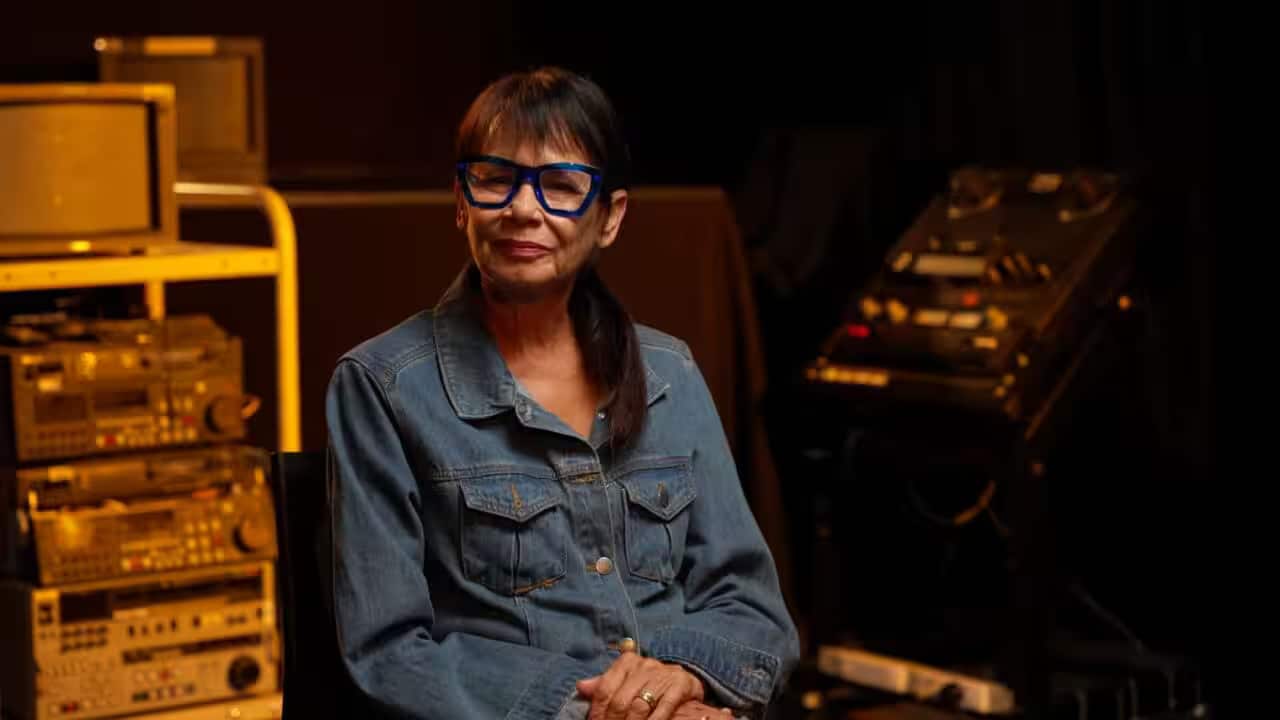
In a prior statement, Riley — a National NAIDOC Committee co-chair — described Roberts as "a force" who was "fearless, brilliant and deeply committed to community and culture".
"Rhoda had been selected for this honour, and we felt strongly that it was important to continue recognising her extraordinary contribution. Her legacy will continue to inspire generations to come."
The Lifetime Achievement Award is given to people who have made profound and lasting impacts on Indigenous peoples through their work, advocacy, and leadership.
For the latest from SBS News, download our app and subscribe to our newsletter.







