
13 min read
Obituary
Rhoda Roberts AO: The cultural warrior who changed the nation
In consideration of Indigenous cultural protocols, SBS/NITV has gained permission to use and reproduce Rhoda's name, voice and image. We are doing so in line with her wishes. We also continue to consult with her family and community.
Rhoda Roberts AO, a First Nations trailblazer and icon across the media, performing and the creative arts sectors, has died at the age of 66.
Her short battle with a very rare form of ovarian cancer ended on Saturday afternoon on her country surrounded by family.
A Widjabul Wieybal woman from the Bundjalung nation in northern NSW, she made an enormous contribution in championing and showcasing Indigenous culture, music, art, stories, history and language across the nation and the world.
In the performing arts, she helped redefine the landscape, creating and performing in milestone productions like Radiance (1993) — a benchmark for contemporary Black theatre.
A defining voice of her generation, her creative brilliance also shone at some of the world's biggest stages, shaping how Indigenous culture was shared with national and international audiences.
From her leadership as Creative Director of Awakening - the Indigenous segment of the Sydney 2000 Olympics Opening Ceremony — to her work on the 2003 Rugby World Cup, Vivid Sydney, the Garma Festival, the FIFA Women’s World Cup 2023 Opening Ceremony, the Parrtjima Festival in Alice Springs — her vision transformed major cultural moments.
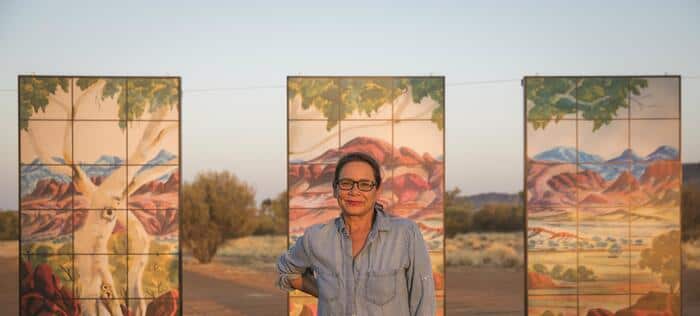
She received an Order of Australia honour in 2016 for distinguished service to the performing arts, leadership, advocacy and promoting contemporary Indigenous culture.
Roberts also served as the inaugural Elder in Residence with SBS and NITV since 2021, the same year she was appointed as the First Nations Consultant at the National Institute of Dramatic Art (NIDA).
She had also served as a board member for Indigenous Tourism Australia, Playwriting Australia, the Australian International Cultural Council (AICC), NSW Anti-Discrimination Board, Actors Equity, National Aboriginal and Islander Skills Development Association (NAISDA), the NSW Australia Day council, Wantok Music, Darling Harbour Authority, the Yothu Yindi Foundation Garma Festival Board and Indigenous Tourism Australia.
In 2020, she was appointed to the Board of Screenworks — a non-profit committed to supporting and empowering screen creatives and crew across regional Australia.
In 2022, she was engaged by Voyages Indigenous Tourism as a consultant to the new Gallery of Central Australia (GOCA) at Ayers Rock Resort and the Gallery at the Mossman Gorge Cultural Centre in North Queensland.
This role saw her help navigate the consultation between the Anangu and Voyages for Wintjiri Wiru, a spectacular world first drone, sound and light show at Uluru.
In June 2024, she was the artistic director of the Australian delegation for the Festival of Pacific Arts and Culture in Hawaii leading 70 First Nations artists, performers, and practitioners.
SBS chair, Dr Nicholas Pappas AM paid tribute to Roberts' lifelong contribution.
"Rhoda Roberts led with bold, visionary leadership, conviction and a deep sense of cultural stewardship that has left an enduring mark on Australia’s creative and cultural life. Her contribution set a benchmark grounded in culture, integrity and purpose," he said
"She strengthened the connection between First Nations cultures and contemporary multicultural Australia and will always hold a special place within SBS."
"She expanded what is possible in Australian media, and her influence will continue to guide the SBS network, and the broader arts and media sector, for years to come."
SBS acting managing director Jane Palfreyman noted Roberts' generosity in sharing First Nations' stories and creating pathways for future generations.
"Rhoda was a true trailblazer and a leader of so many firsts in our industry, playing a transformative role in Aboriginal and Torres Strait Islander representation across Australia’s cultural landscape."
"At SBS, her impact is deeply felt, most recently as our inaugural Elder in Residence, where she embedded culture into the fabric of our organisation. Immeasurably generous in sharing her knowledge, wisdom, and spirit, she will continue to guide how we work, lead and tell stories," Palfreyman added.
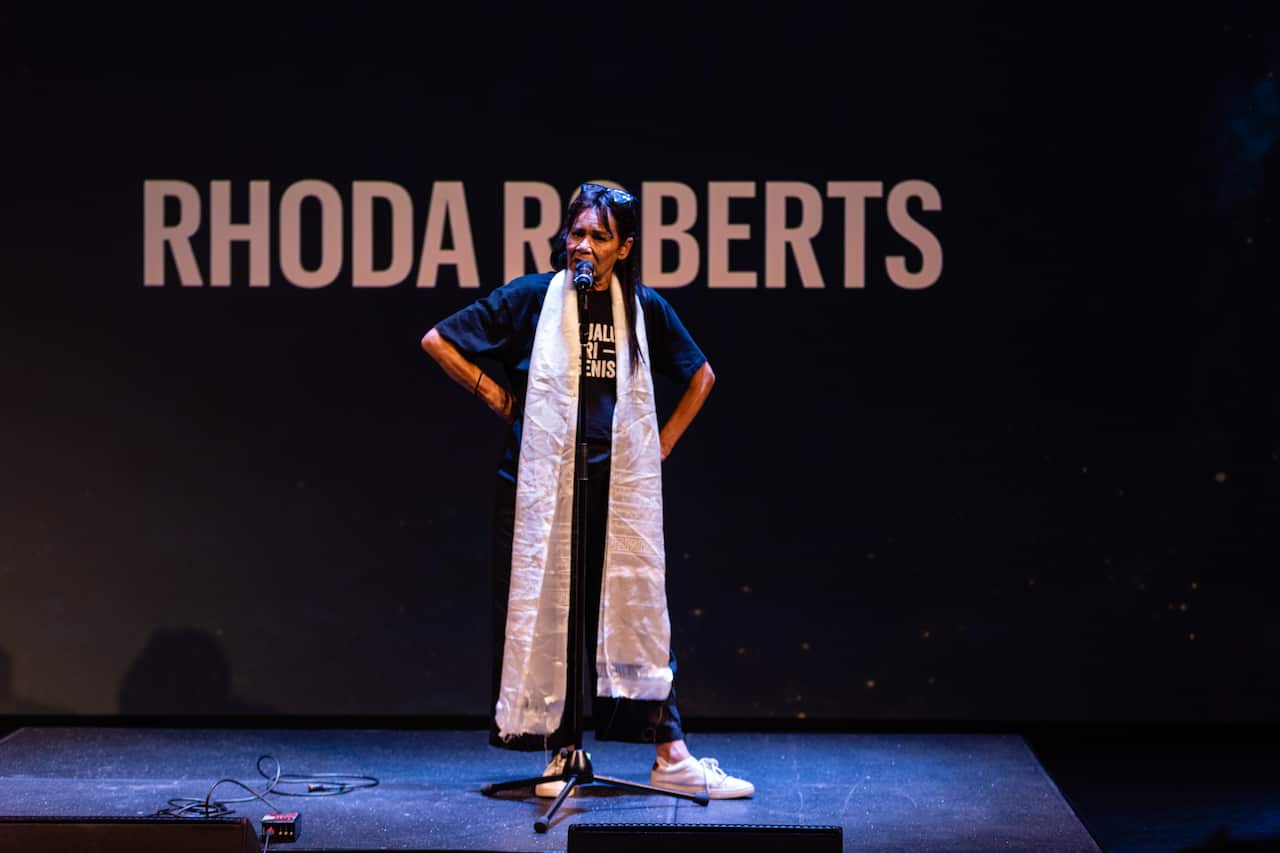
Before her passing, Roberts also received praise for her career and contributions from Prime Minister Anthony Albanese.
"Rhoda, thank you so much. For everything you have created, inspired and shared," Albanese said in December.
"We honour your extraordinary career and the pathway you've carved for all who follow you."
Rhoda is survived by her partner Stephen, her children, Jack, Sarah, and Emily — the biological child of her twin sister who she raised from a baby.
Among her many accolades she had been recognised with a Ros Bower Award from the Australia Council in 2019; received the Helpmann Awards' Sue Nattrass Award in 2018 as well as a Deadly Award for Broadcasting in 1998 and had also been recognised with a Sidney Myer Facilitators award in 1997.
In July last year, she was presented with a Lifetime Achievement Award at the First Nations Media Awards.
Roberts was a mentor and friend to countless artists, actors, musicians, producers, journalists and cultural workers.
A lifetime of firsts
Born in 1959 in NSW, Roberts attended the first black national playwrights' conference in 1987 and would go on to co-found the Aboriginal National Theatre Trust in 1988. She would star in the acclaimed Louis Nowra's production Radiance at Belvoir St Theatre in 1993 — an acclaimed play that open the floodgates for black theatre in the mid-90s.
In 1994, at the height of her career, she married actor Bill Hunter — later separating in 1998 just three years before his passing.
In the late 1990s, she was engaged by the Sydney Olympics Games Organising Committee (SOCOG) in a variety of artistic advisor roles on the Cultural Olympiad, Festival of the Dreaming (1997-2000), Sydney Dreaming events, the Torch Relay and as Creative Director on the Indigenous segment of the Sydney Olympics Opening Ceremony – an 8-minute section called Awakening.
As the head of Indigenous programming at the Sydney Opera House from 2012 to 2021, Roberts established an annual free outdoor festival celebrating First Nations music, dance and culture called Homeground (2014) adding Dance Rites to the festival in 2015. She produced a weekly national program Deadly Voices from the House (2016), oversaw Songlines — the lighting of its sails with Indigenous artwork in 2016, and the Badu Gili projections - a daily lighting of the Opera House’s eastern Bennelong sail with First Nations art launched on the eve of NAIDOC Week in 2018.
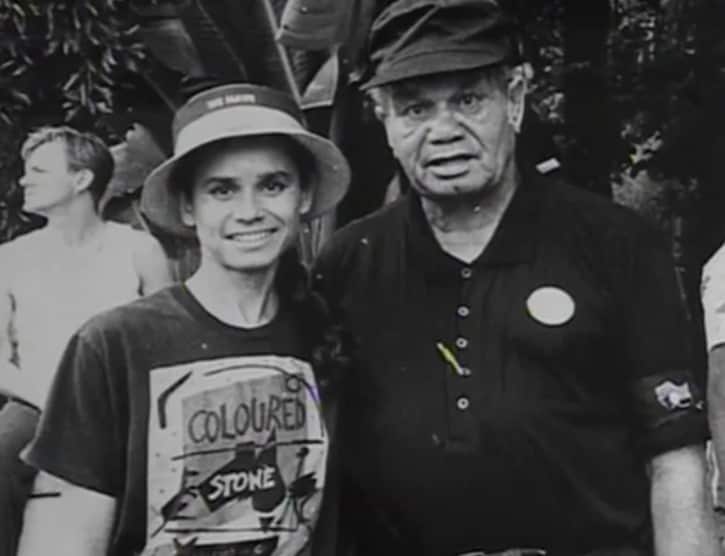
Her path to the arts was not a direct one.
She graduated as a registered nurse in 1979, moving to London in 1981 to work at the Westminster Hospital as well as in hospitals in Italy, Greece and India.
Roberts returned to Sydney in the mid-1980s to study performing arts.
Acting roles in television and theatre soon followed.
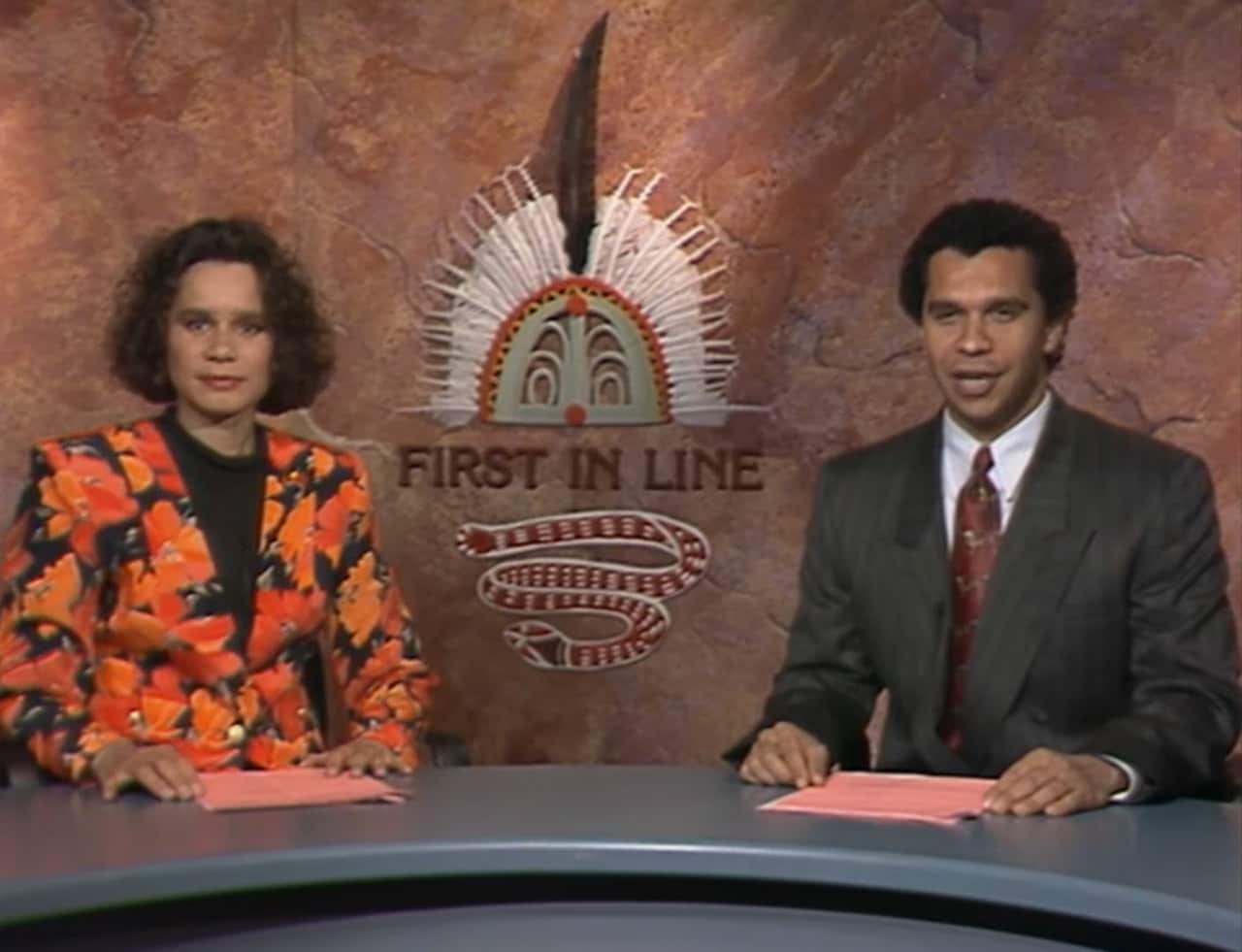
She emerged as a trailblazer in media and broadcasting. In 1989, she co-presented First In Line with Michael Johnson — the first Aboriginal current affairs program in Australia.
She later presented and produced documentaries and several programs for SBS, including Vox Populi and Hotline, hosted by SBS icon Silvio Rivier and Stephen Cook.
In 1993, she worked as a producer and broadcaster for the national radio program Deadly Sounds; a show which ran for 21 years giving the Indigenous community a positive voice in Australian media.
Other than with SBS, her television credits include guest appearances on Home and Away, A Country Practice and Blue Heelers. Film credits include Wim Wenders' Until the End of the World and a number of short films.
In a 2018 interview, Roberts reflected on the impact of First Nations storytelling during the 1980s.
"Not only with First In Line, but Vox Populi was a great opportunity to showcase stories that were literally good news stories, but also gave another perception, a different lens if you would like," she told Satellite Dreaming.
"We went from the soft stories to also ensuring that there were political stories and very much information-based stories that showed a different viewpoint."
By the turn of the millennium, her reputation, influence and brilliance continued to grow being engaged for many large-scale events including the Athens Olympic Games handover ceremony, the opening ceremony of the Musee Du Quay Branley, Paris (2006), the Japan Expo (2006), and Sydney New Year's Eve celebrations (2008 – 2011).
Always championing Indigenous artists, performers and music, she was the founder and Artistic Director of the Festival of the Dreaming, Sydney Dreaming Festival and the Dreaming Festival near Woodford, Queensland.
From 2003 to 2013, she developed and directed the Woggan-ma-gule annual ceremony at Barangaroo in Sydney. Held on the morning of 26 January it acknowledged and celebrated First Nations' culture through music, dance, language and storytelling.
From 2005-2007, Rhoda was a reporter and host for the ABC Radio National Program Awaye and from 2008 until 2011 she was the creative director for the Sydney New Year's Eve celebrations.
She was commissioned by Opera Australia in 2012 to direct and write Yarrabah the Musical, following the success of her direction of the international Opera Miricoloa a Milanao by Italy’s Giorgio Battistelli for the Brisbane Festival 2009.
In December 2012, Rhoda was front and centre anchoring the historical national broadcast with Stan Grant from Uluru as she helped launch NITV free to air.
Always the storyteller, she recently worked as a consulting development Director on the NITV commissioned documentary The Colleano Heart.
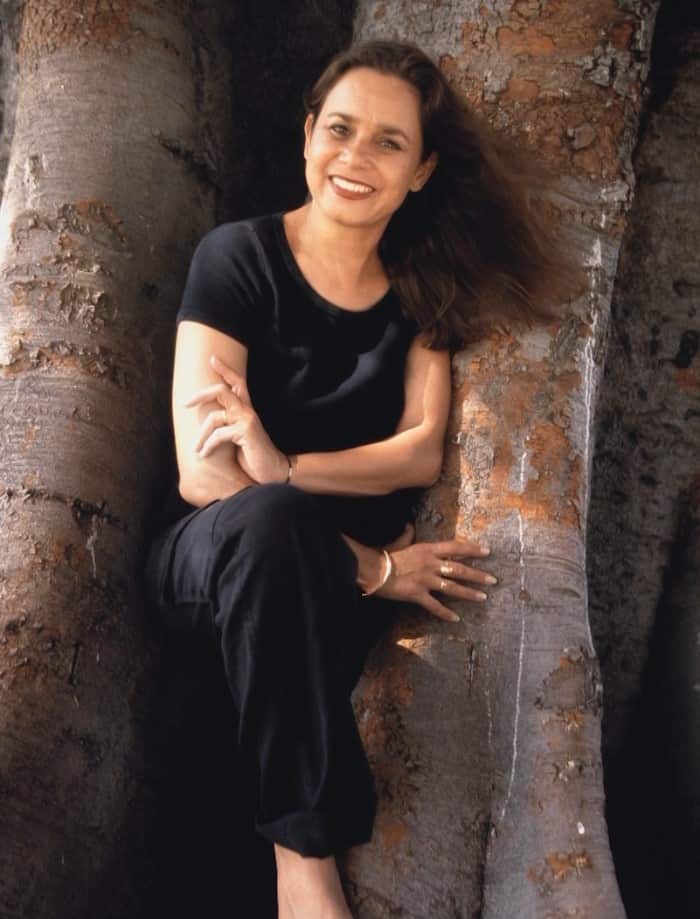
In order to undergo treatment for her cancer, she stepped down from several roles including being the cultural lead at The Koori Mail newspaper — the Aboriginal-owned national newspaper established by Owen Carriage and Rhoda’s father Pastor Frank Roberts in May 1991.
Despite being ill, Roberts wrote and performed My Cousin Frank at the Sydney Opera House in December 2025 telling the story of her cousin Frank Roberts, who became Australia's first Aboriginal Olympian in 1964.
It would be her last public performance.
She was also writing a new production The Indigenous World Art Orchestra and was directing the feature documentary — Balang (the story of Tom E Lewis) and was in development for a film, Bukal (the story of Henrietta Maree).
Tanya Denning-Orman, a Guugu Yimithirr and Birri Gubba woman and SBS' director of First Nations, acknowledged the enormous role Roberts played in inspiring a new generation of Indigenous media professionals.
"Seeing her on prime-time TV inspired me, and many others — she did not just lead change, she galvanised a sector, nurturing and guiding the leaders who are carrying the flame of change forward, one lit in her by her family, her story, her ancestors," Denning-Orman said.
"Her craft extended beyond screen and stage, through her advocacy for First Nations leadership, and her commitment to the next generation."
"Rhoda, we miss you, we thank you, and we will carry you with us in all that we do."
Enduring pain and loss
In July 1998, Roberts' twin sister Lois went missing while hitch-hiking between Nimbin and Lismore
The family were told that the 38-year-old had simply "gone walkabout" and "you're overreacting".
Six months later, her remains were found in the nearby Whian Whian State Forest. She had been bound, tortured, abused and murdered.
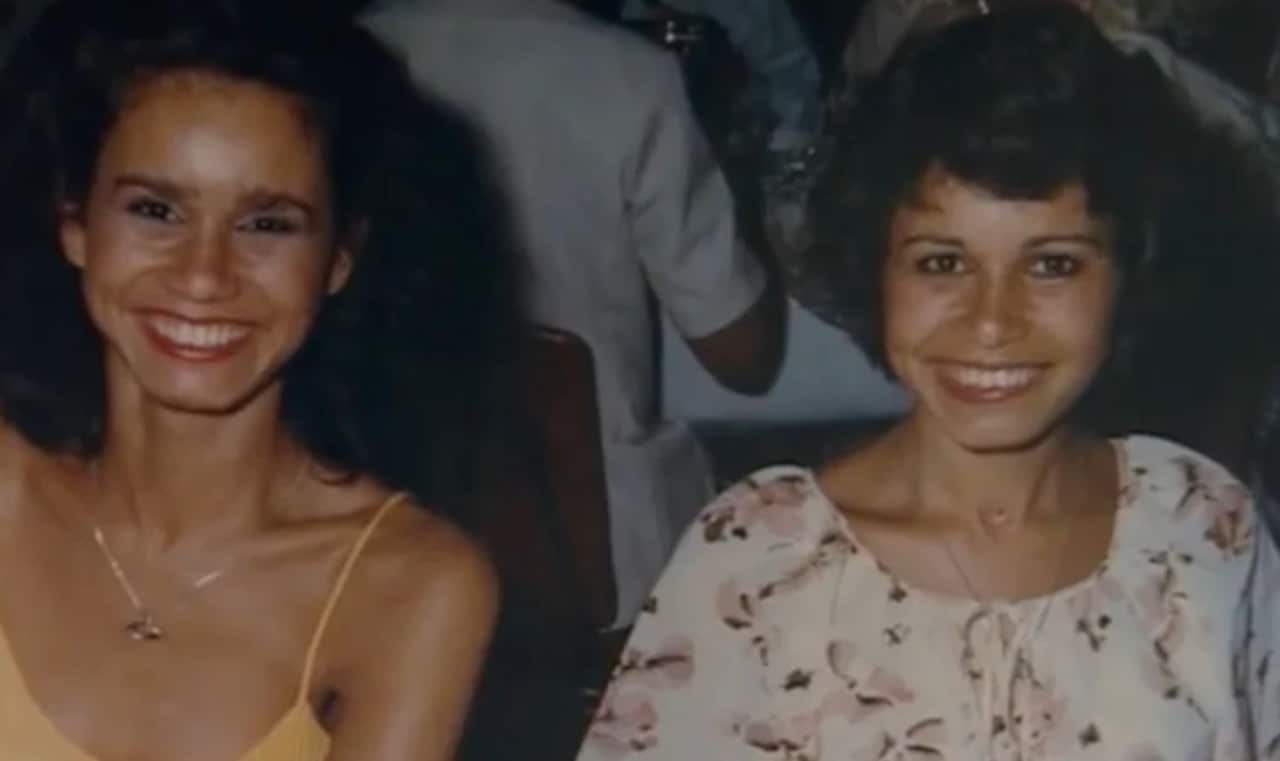
No one has ever been charged over her death, and the case has never been reinvestigated.
Roberts spoke often of Lois — recalling both the deep bond they shared and the enduring pain of her loss.
"Since the day she went, before I go to sleep at night, I think of her. First thing when I wake up, I see her. So, she will always remain young," she said during a recent interview.
Welcome to Country
Roberts is also credited with coining the term Welcome to Country in the 1980s.
"It [a Welcome to Country] was a moment for us to reflect on our religious beliefs, our rituals that we had always attended to," she told SBS Examines last year.
"However, with occupation and the assimilation process, those practices were soon outlawed."
In an interview with the ABC in July, Roberts spoke about being credited with coining the term in the 1980s when she was running the Aboriginal National Theatre Trust.
"We thought, 'Well, why don't we start reintroducing that protocol that we do in our communities, but for the arts sector' because they are very open and flexible and great critical thinkers," she said.
"And so we were thinking, 'What would we call it?' And so, Welcome to Country I coined."
'Always be generous and kind’
Looking ahead, Roberts said: "The next generation looks brilliant."
"There are people who are incredibly educated, but also there are some extraordinary critical thinkers," she told the ABC in July.
"They're looking at the horizons and seeing that there are opportunities. And if we were to look at every industry sector in this country, there are Aboriginal people working in those sectors."
Roberts said extraordinary First Nations people are working across a wide range of specialist professions and are "giving back" to Australia and its economy.
"But we don't often focus on that. We focus on the terrible things that many communities also have issues with, whether it's in incarceration, domestic violence," she said.
At the end of the interview, she shared a mantra passed down from her father Pastor Frank Roberts.
"You know who you are. We've been here for thousands of years. How extraordinary that is. So always be generous and kind."
For the latest from SBS News, download our app and subscribe to our newsletter.







