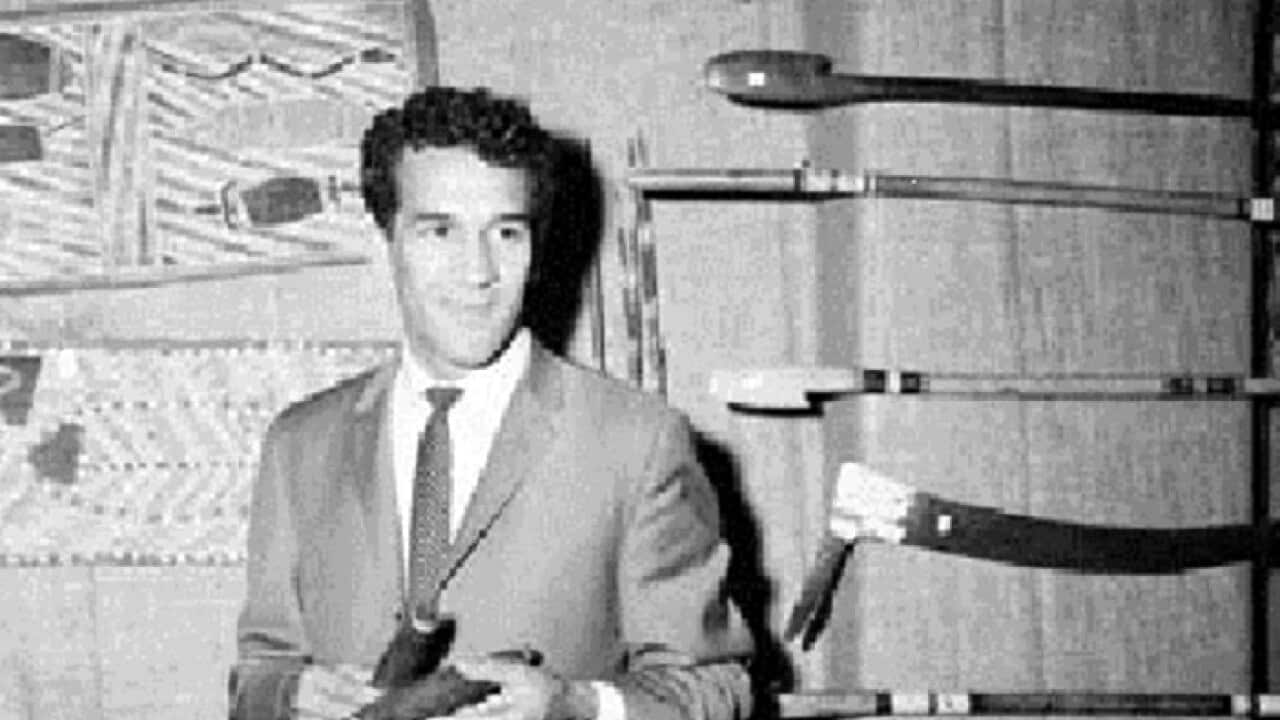
(Transcript from SBS World News Radio)
Fifty years ago this month, a young Indigenous activist set out from Sydney with about 30 others on a two week tour to expose endemic racism, segregation and the appalling living conditions for Aboriginal people in rural New South Wales.
The Freedom Ride of 1965 took its inspiration from what had occured a few years earlier in North America's deep south when civil rights activists boarded buses to expose how segregation on public buses was unconstitutional.
And our Indigenous listeners are warned that this story contains audio from an Indigenous person who is now deceased.
Greg Dyett reports.
News that makes sense
Your trusted source for staying up-to-date with the world around you. Get free daily news updates and analysis, straight to your inbox.
(Click on the audio tab above to hear the full report)
"The whole Freedom Ride is not so much for the white people, on my mind. My deeper objective I suppose was for Aboriginal people to realize hey listen, second class is not good enough, you know, you don't always have to be first class but don't always be second class and don't cop shit, you know, when you don't have to.
The late Indigenous activist Charles Perkins.
On February 12, 1965 the then 29 year old student from Sydney University set out with 30 others on a two week trip through rural New South Wales towns.
"And you don't have to live on river banks in shanty hunts and at the end of a road where there's rubbish tip, live in town. Now you don't have to cop these white men sneaking around, pinching Aboriginal women at night, you know, sitting down the front of picture theatres, not being able to sit in a restaurant, where nobody would allow you as an Aborigine to sit in a restaurant, that's not on."
On board the bus was a journalist, Darce Cassidy who'd recently started work at the ABC.
His audio recordings from the two week trip eventually got broadcast several years after the Freedom Ride.
Darce Cassidy says in setting out to highlight what was taking place, the freedom riders endured verbal and sometimes physical abuse.
"Our bus was run off the road and no one unfortunately hurt but there certainly were attacks on us both verbal and physical and, of course, that only made people all the more concerned to continue."
Darce Cassidy says a confrontation at the Moree pool exposed endemic racism and segregation.
For several hours there was a stand off at the pool as Perkins and the freedom riders tried to convince the pool manager to admit the Aboriginal children.
"I think that the Aborigines will probably be assimilated in time but at the moment the standards of hygiene and so on are just not good enough to mix with the other people in the town but eventually I feel sure that they will probably move it towards that direction. After more than an hour's argument and a conference between the mayor and the pool manager, Mr Ford the Aborigines were admitted. That's a manager's perogative, he claims that you've intimidated him."
Just as the Walgett RSL Club had refused to admit Aboriginal people, the Moree pool also elected to discriminate against Indigenous people.
"For the Aborigines, this was the first time they'd swum in the white pool and as the bus drove on the bumpy rode back to their reserve you could tell by their voices what it had meant to them."
Darce Cassidy says Charles Perkins was the key to the Freedom Ride's success.
"He played an absolutely critical role because he gave the activities some legitimacy as an Aboriginal person. He was also very cautious, he also was very careful that we did not break any laws.
Indigenous activist Michael Anderson says the Freedom Ride really made Australians take note of what was taking place.
"It woke people up, it woke people up out of their complacency and made them take notice there were issues that had to be dealt with here. That's there greatest thing that I'm reminded of and the fact that non Aboriginal Australia in those racist rural communities began to realize hang on a minute, the Aborigines are not so alone afterall."
Fifty years on, Darce Cassidy says what was exposed then is in some ways still a major problem.
"It's fair to say that the Freedom March was more than a nine day wonder but it's also true to say that in a large proportion of Australia Aboriginal people still suffer neglect and at times outright hostility. It takes more than a few bus rides by students to change this and it's still an ongoing issue."
Indigenous activist Michael Anderson agrees.
"You sort of raise your eyebrows and you say well hang on a minute, we may have achieved some benefits in terms of bricks and mortar but other than that mate we've gone backwards."







