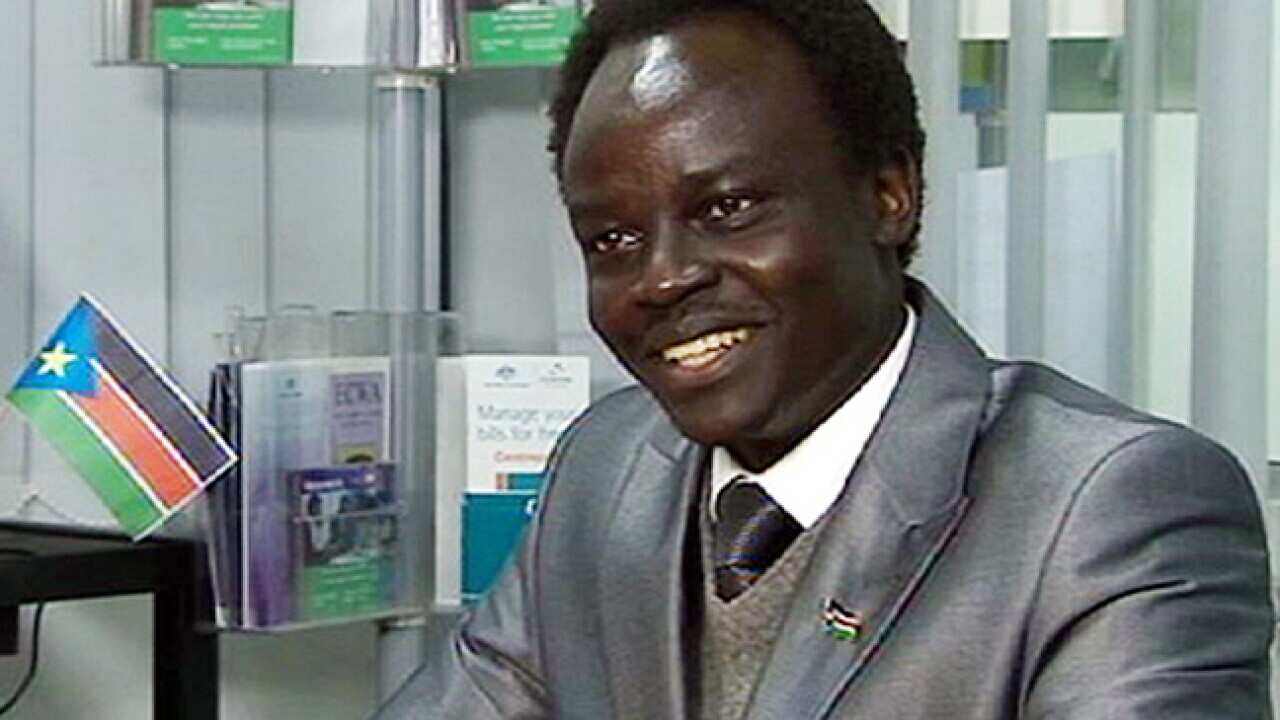
In a small office block in the western suburbs of Sydney, Arou Job Adier is busy planning the festivities that will mark the fist anniversary of South Sudan's independence.
It's a jubilant atmosphere as he and other members of his community group rehearse their speeches.
Adier - known to his friends as Emmanuel – migrated to Australia from Sudan in 2006, where Juba was nothing more than a city in the South. Now it's the capital of the world's newest nation and a city, he says, blossoming.
“They are physical achievements that we can see. The buildings are erected. The farmers have gone back to farm, the school children have been out back in school. All the civil societies are doing what they [can].”
Emmanuel and many other members of the South Sudanese community in New South Wales are eager to mark the anniversary, which they believe is another key step towards forging an identity as South Sudanese.
News that makes sense
Your trusted source for staying up-to-date with the world around you. Get free daily news updates and analysis, straight to your inbox.
“I'm very optimistic, things are running on well. Independence to us means a lot and if a reflection to the people of South Sudan that now they have gained their identity, having identified with a country that they call their own.”
GUARDED OPTIMISM
But not everyone shares his optimism. In a small Anglican church in Adelaide, Bishop David Kuol is getting ready to lead a memorial service for those still suffering in South Sudan.
It's been a long year for the spiritual leader, who divides his time between what he calls his two homes: South Sudan and South Australia. He says the initial joy and excitement of gaining freedom has been replaced with the knowledge that there is still much work to be done.
This time last year the streets of Juba were lined with elated men, women and children, proclaiming their new homeland.
It was a moment that unfolded before the eyes of the world one that brought so much promise to a country that had been wracked by decades of civil war and tribal conflict.
That promise however soon gave way to a harsh reality.
Over the last year, South Sudan has been plagued by border disputes, corruption and a worsening political stand-off over the rich oil fields South Sudan took with it when it seceded from the North.
“Last year the people were very happy that they got their independence but now things have changed because of some problems happening among the people, especially insecurity and corruption scandals. Those things have changed the mind of the people,” says Bishop Kuol.
'A VERY DIRE SITUATION'
Both Sudan and South Sudan rely heavily on oil revenues, but the two countries have failed to come to an agreement over the resource, 75 percent of which lies in the South. Almost all of South Sudan's economy relies on oil exports.
Its decision to halt oil production amid ongoing disputes with Sudan has not only meant it has virtually no revenue for infrastructure but has heightened fears of an all out war between the two neighbours.
To make matters worse, the aid organisation, Oxfam, says the country is currently experiencing its worst humanitarian crisis since the end of the Sudanese civil war in 2005 as tens of thousands flee the North with nowhere to go.
Worst hit are the Blue and Upper Nile areas where the rain has turned already crowded refugee camps into festering swamps.
“We have the perfect storm of a humanitarian disaster. We have conflict between Sudan and South Sudan, which is feeding an economic crisis and combine that with political instability and a raining season we're finding that more and more people are struggling to survive in South Sudan,” Oxfam CEO Andrew Hewett told SBS.
Mr Hewett says the key to improving things in South Sudan is ending the conflict and improving the relationship between Sudan and South Sudan.
He says until that happens, things can't – and won't -- improve. “We've got a very dire situation. The people, particularly the most vulnerable and we're talking here particularly children are at most of risk at dying. It means that they're not accessing clean water; it means that they're susceptible to disease that can often be rampant in poor quality accommodation,” Mr Hewett said.
ACTION NOW
Other aid organisations, including Medicins Sans Frontieres, have joined the call for the international community to do more.
Recent talks between the two countries, led by the African Union, are a positive step in the right direction, according to Mr Hewett, but their outcomes remain to be seen.
The United Nations says it's doing its best to move people to suitable locations but a lack of funding means it simply cannot keep up with the numbers of people crossing a border that came into existence only one year ago.







