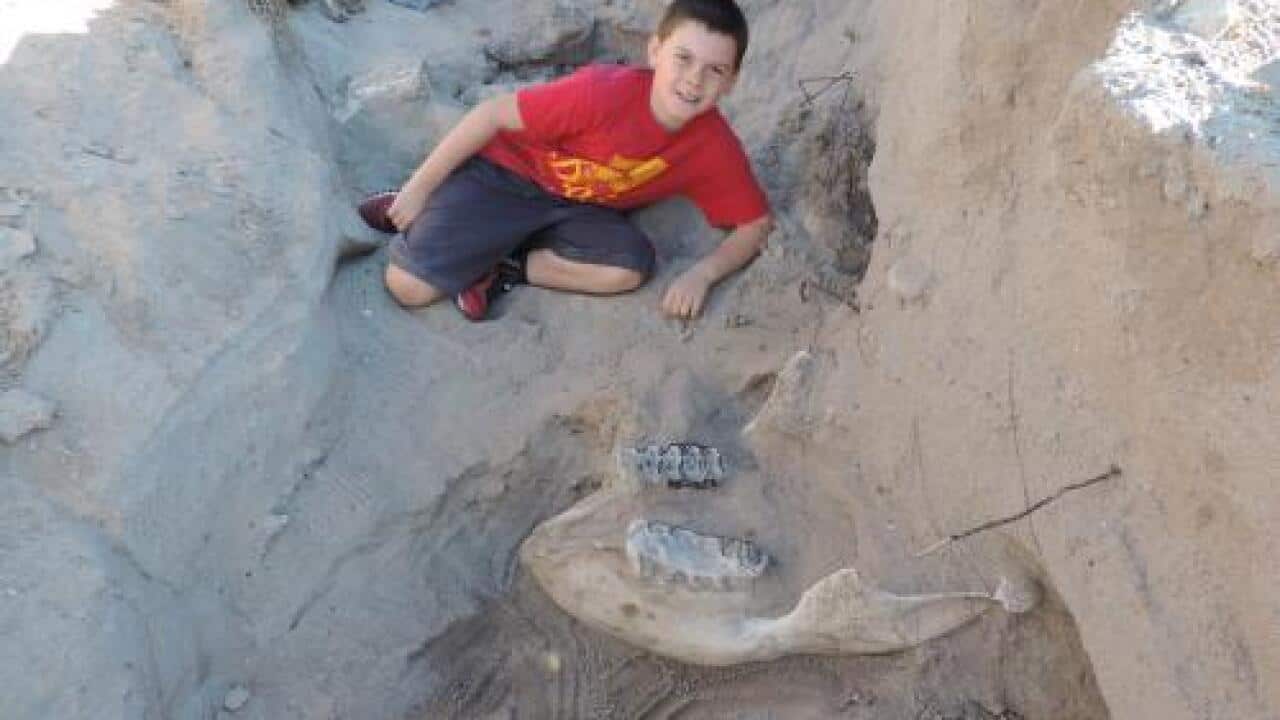
In doing so, Sparks accidentally made a significant paleontology discovery.
“I was running farther up and I tripped on part of the tusk,” Jude told the New Mexican State News Center.
“My face landed next to the bottom jaw. I looked up farther and there was another tusk”.
Jude’s parents, Michelle and Kyle Sparks, who were hiking with their sons at the time, thought Jude had discovered the remains of an elephant but, after taking a photo and conducting some research of their own, realised it was something else.
“It was just an odd shape,” Jude, now 10, told the New York Times.
News that makes sense
Your trusted source for staying up-to-date with the world around you. Get free daily news updates and analysis, straight to your inbox.
The family decided to email Peter Houde, a biology professor at the nearby New Mexico State University.
The professor went with the family to revisit the find the day after their hike. He identified the fossil as the remains of a Stegomastodon skull, a creature that existed in the last few million years.
However the elephantine-like creature is not a dinosaur, rather a primitive mammal.
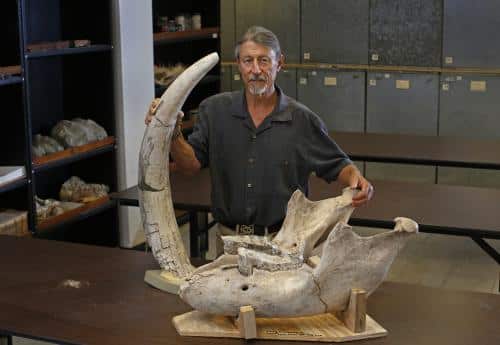
“This may only be the second complete skull found in New Mexico," Houde said.
The area’s dry and rocky environment provides the perfect conditions to preserve bones for millions of years, however prehistoric remains are typically very fragile and tend to disintegrate when exposed to the surface due to erosion, making the find particularly "unusual", the professor said.
Last November, when the group revisited the site they reburied the fossil. It took months to plan, organise funding and to obtain the correct permit before the skull could be excavated in May earlier this year.
After its unearthing, the New Mexico State University team of 10-12 people coated the fossil in plaster and put the skull in wood brackets to help support the prehistoric structure.
Houde has said that he estimates the discovery to be 1.2 million years old, with the jaw weighing around 54 kilograms and the entire skull weighing about 900 kilograms.
Though it will take years to conduct a complete study of Jude’s discovery, Houde has said that it will eventually be displayed.
“This little boy will be able to show his friends and even his own children, look what I found right here in Las Cruces.”







