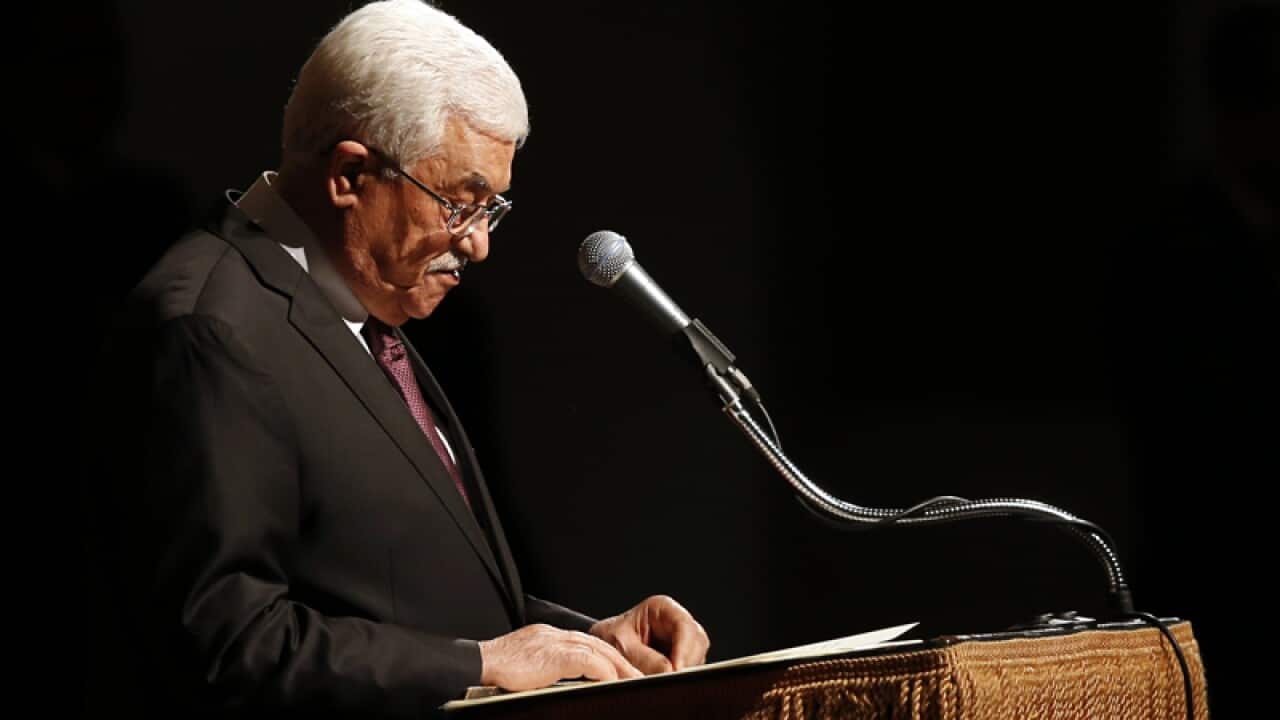
Palestinian leader Mahmud Abbas has accused Israel of a "genocidal crime" in Gaza, telling the United Nations that negotiations have failed and the time for Palestinian independence has come.
Abbas, speaking at the UN General Assembly in New York, vowed to seek war crimes prosecutions against Israel over the 50-day "war of genocide" that killed 2140 Palestinians and left Gaza in ruins.
"There is an occupation that must end now," Abbas said. "There is a people that must be freed immediately.
"The hour of independence of the state of Palestine has arrived."
The address angered the United States, which slammed it as "offensive," while Israeli Foreign Minister Avigdor Lieberman accused Abbas of waging "diplomatic terrorism" and making "false accusations".
News that makes sense
Your trusted source for staying up-to-date with the world around you. Get free daily news updates and analysis, straight to your inbox.
Abbas did not set a deadline for Palestinian statehood, after aides suggested 2017 as a possible date.
Describing Israeli attacks on Gaza as a "genocidal crime," Abbas said, "we will not forget and we will not forgive, and we will not allow war criminals to escape punishment".
The war in Gaza was "a series of absolute war crimes carried out before the eyes and ears of the entire world," he said.
The Palestinians have threatened to join the International Criminal Court (ICC) to allow legal action to be taken against Israel.
In 2012, the Palestinians won UN observer status, delivering the ability to become a party to the ICC, where they could sue Israeli officials over alleged war crimes.
Speaking to the 193-nation Assembly, Abbas asserted it would be "impossible to return to the cycle of negotiations that failed to deal with the substance of the matter and the fundamental question" of statehood.
The US State Department called the speech provocative, saying it would undermine peace efforts.
"President Abbas' speech today included offensive characterisations that were deeply disappointing and which we reject," said spokeswoman Jen Psaki.
Abbas said a resolution backed by Arab countries would be presented to the UN Security Council to relaunch talks with a view to reaching a final settlement with Israel on the two-state solution.
It is unlikely this will garner support, notably from the United States, which has repeatedly vetoed resolutions seen as undermining Israel.
The Security Council has been trying for weeks to unite behind a draft resolution seeking to shore up a ceasefire accord.
Abbas spoke after rival Palestinian factions reached a unity deal to pave the way for the return of the Palestinian Authority to Gaza and for an internationally funded reconstruction effort.







