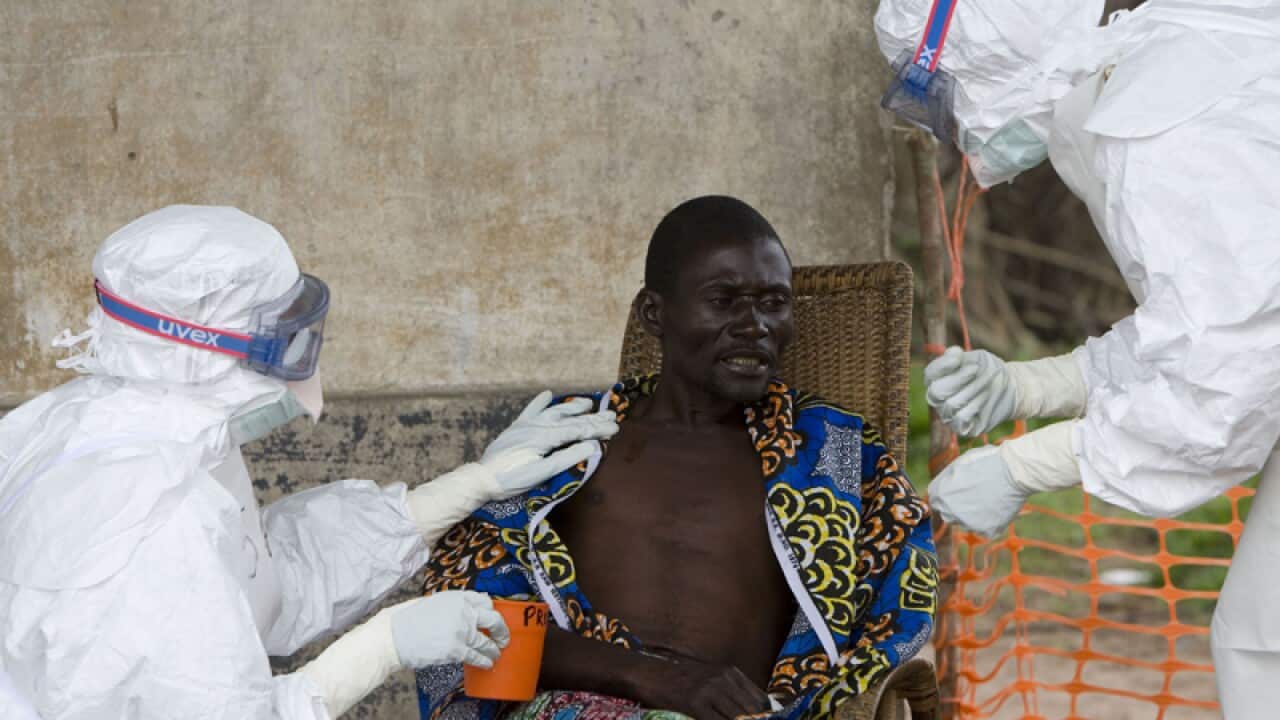
Australia won't send an official team of health workers to fight Ebola in west Africa, and will instead contract a company to run a British-built hospital.
Prime Minister Tony Abbott announced on Wednesday the government would hire Aspen Medical at a cost of $20 million to run a 100-bed centre in Sierra Leone until mid-2015.
Most of the estimated 240 staff will be African, but Mr Abbott said some would be international "and it's quite possibly even likely that some will be Australian".
Opposition foreign affairs spokeswoman Tanya Plibersek said it was possible no Australians would be involved in providing vital care.
"It is a little difficult to understand exactly where these locally engaged staff will be coming from," she said, pointing out there were just 100 doctors serving the six million people of Sierra Leone before the Ebola crisis struck.
News that makes sense
Your trusted source for staying up-to-date with the world around you. Get free daily news updates and analysis, straight to your inbox.
Mr Abbott said contracting out the health service was in line with other Australian aid efforts such as the fight against cholera.
He said British authorities had agreed to treat any Australians working in Ebola-affected parts of west Africa as though they were UK citizens.
Aspen will pull out workers who contract the virus and a mandatory quarantine will apply to any Australians before they return home.
Opposition Leader Bill Shorten said the plan was welcome but overdue, and the government had not gone far enough to use Australian skills to defeat the disease at its source.
"There are many Australians who wish to volunteer to use their skills - committed and capable doctors and nurses who wish to help in the fight against Ebola," he told reporters.
A further $4 million will be spent on logistical support for Ebola teams and training for health staff in countries such East Timor and Papua New Guinea to deal with potential outbreaks.
Mr Abbott said he expected Aspen would have staff in Sierra Leone within days, and the treatment centre would operate by the end of November.
"I think the Australian people expect our priorities to be prevention at home, preparedness in the region, and work in the wider world and that's what we are doing," he said.
The overall fatality rate for Ebola, which has claimed the lives of about 5000 people, has dropped from 49 per cent to 36 per cent.
However, more than half of the 523 healthcare workers who have contracted the virus have died.
Airports are stepping up checks of passengers coming in from West Africa and other affected regions.
Health Minister Peter Dutton said the risk to Australia remained very low.
Australian Medical Association president Brian Owler said the government announcement was welcome, but more details were needed on training, safety and resources, and how many Australians would be involved.







