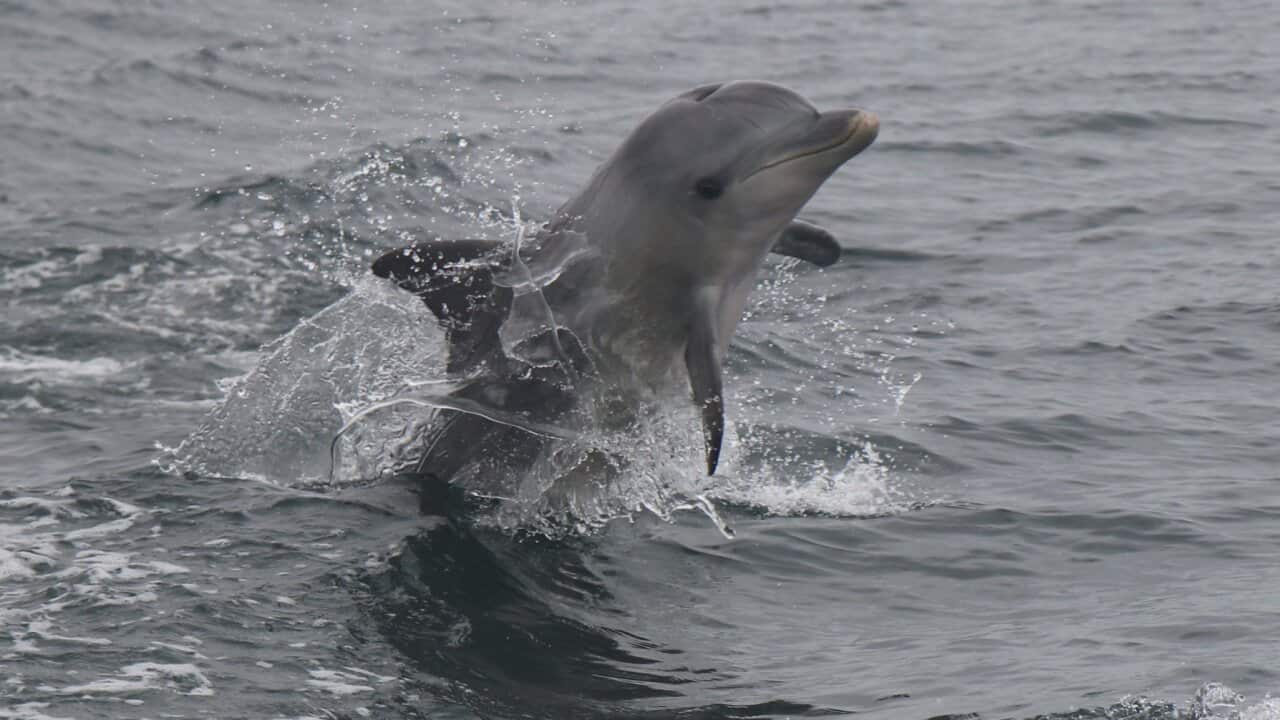
In Adelaide's busy Port River, among the cargo ships, live about 30 bottlenose dolphins.
The pod is a tourist must-see, but it is increasingly under threat.
Mike Bossley from Whale and Dolphin Conservation, says lately volunteers who patrol the river have noticed a disturbing trend.
"We’ve had a lot of problems lately with dolphins dying. And many of them, we suspect, have been killed by being hit by boats," he told SBS News.
A two-week-old calf, Holly, was found dead in January after a blunt force injury.
News that makes sense
Your trusted source for staying up-to-date with the world around you. Get free daily news updates and analysis, straight to your inbox.
'Quite a bunch'
Mr Bossley the pod is unique, because they live permanently within the city limits, and because they have picked up an unusual habit of “tail walking”.
"They’re probably the most urbanised dolphins in the world, in that there are quite a bunch, 30 odd, that live in here pretty much permanently, all year round,” he said.
“And this means that they’re very important for tourism but they’re also a kind of canary in the mine for the local environment."
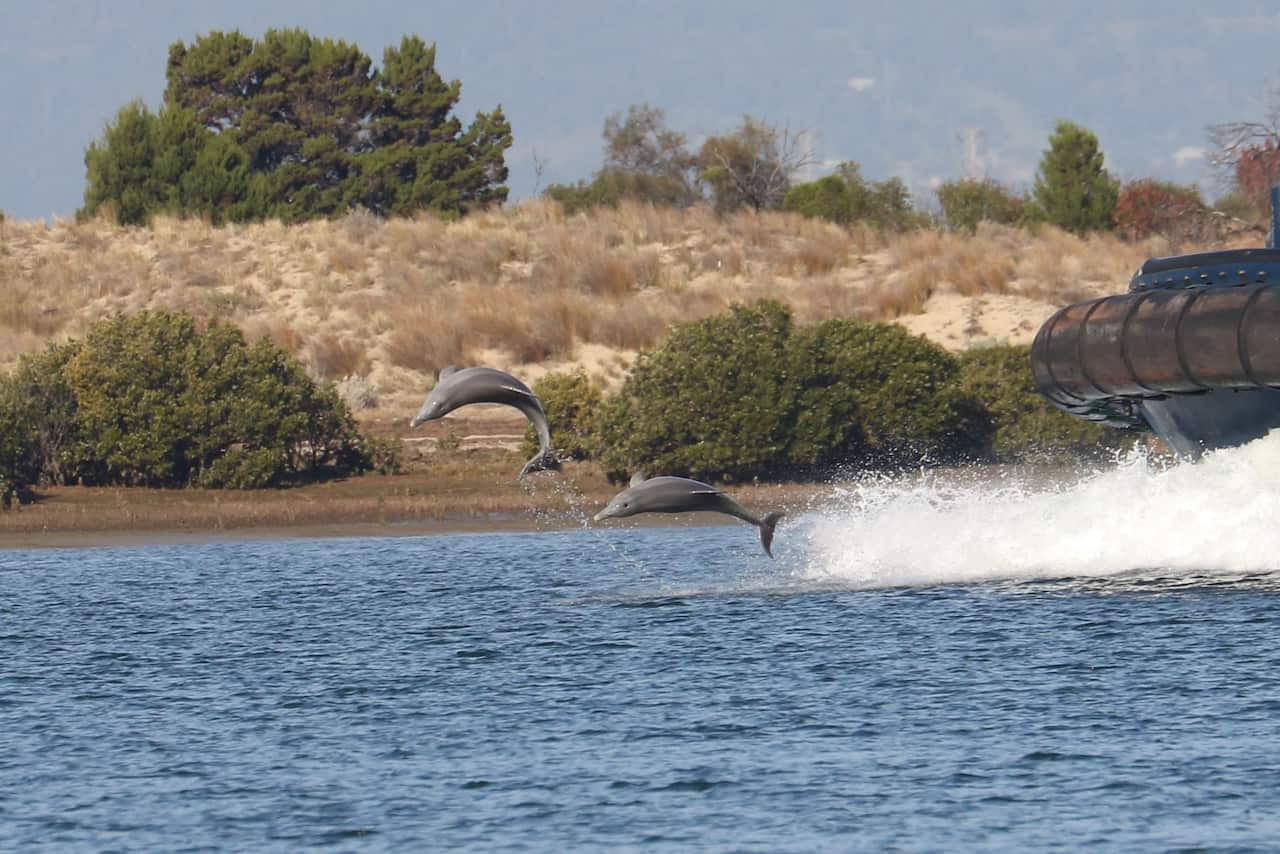
Dr Catherine Kemper, a senior research scientist at the South Australian Museum, says the pod is a rich source of information to researchers, being so close to an urban centre.
She examines the dead river dolphins and says while it’s often difficult to make absolute determinations about how they died, boat strikes are a real possibility.
"Some of the data points to a few of the animals having been hit by boats … but unless we are very confident by looking at the injuries or the physiology of the animal inside, then we tend to say that it’s not a boat strike until we can really be sure."
She says the coast-dwelling nature of the pod means they can come into conflict with humans in many ways.
"Boats are a problem, but there’s all these things, we build our marinas on the coast because we love being by the sea, we change the amount of seagrass and of course seagrass is important for the fish that the dolphins might eat."
But in the past, she said she even found bullets in dead dolphins.
"There was a time in 1998 that four dolphins in the area were shot. And that kind of sparked us to get together as a group, called the Dolphin Trauma Group,” she said.
Safety measures
In 2005, part of the Port River was declared a dolphin sanctuary, but some feel there’s now cause to take protections further.
Marianna Boorman is one of a group of volunteers who regularly monitors the dolphins.
“We look to make sure they’re behaving normally. So if we see a dolphin tail-slapping an excessive amount, we always try to get a good view or a photo of their tail to make sure there’s no entanglement,” she says.
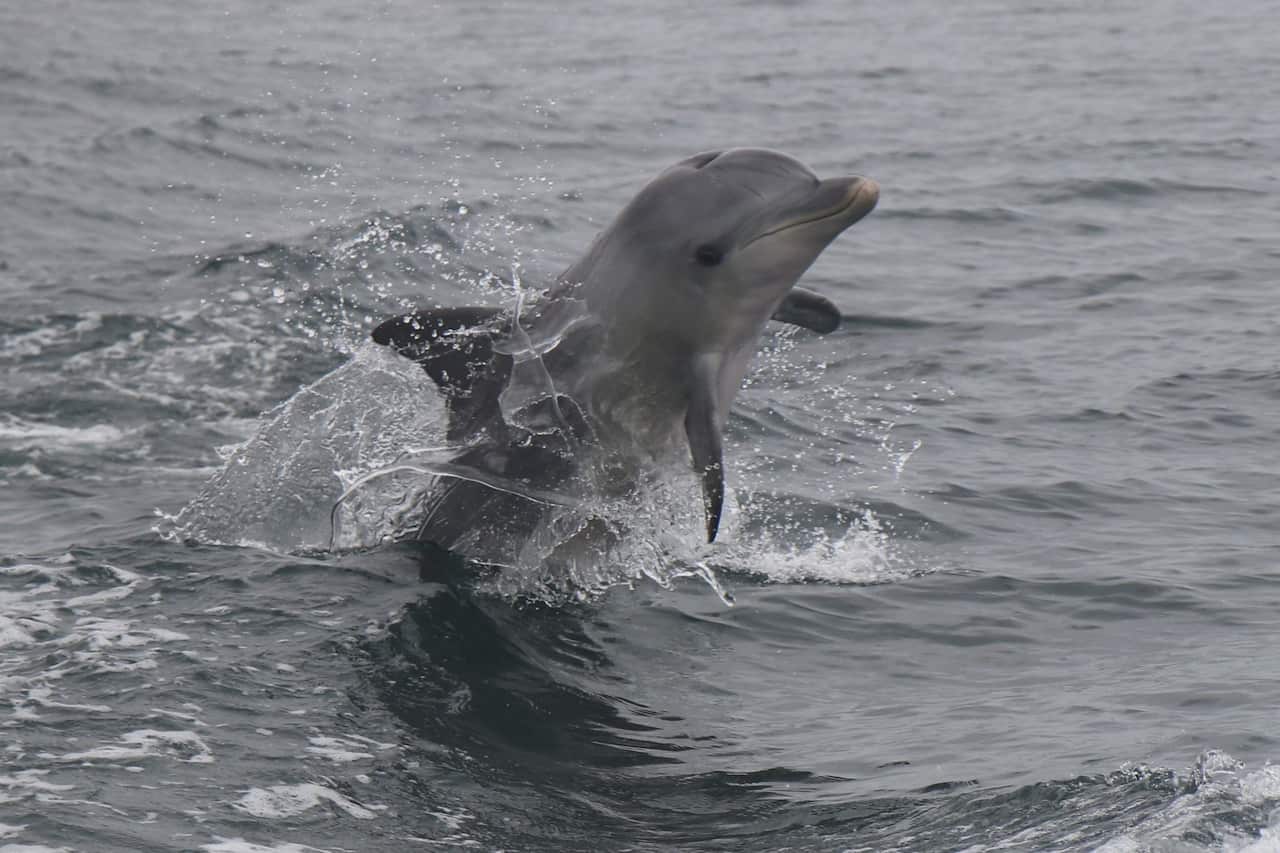
She says dolphins can be very playful with boats, often swimming alongside them, but believes younger dolphins are more prone to boat strikes because they haven’t yet learned when to get out of the way.
She said there is a simple solution that would help protect them: imposing a speed limit in parts of the Adelaide River.
"There really needs to be a change. There’s a lot more people using the area and therefore there’s a lot more chance that the dolphins, but even people, could get injured.
Currently, speed limits across the river vary from 4 knots to unlimited.
"Having the open speed limits does attract the people who want to go at excessive speeds, do 'doughnuts' and change direction erratically, and that’s really what puts the dolphins at risk.”
Local action
More than 11,000 people have signed a petition calling on the state government to impose a speed limit of 10 knots.
State transport minister Stephen Knoll has rejected the idea of a single speed limit, saying that could put boats, and those on them, at risk.
“If vessel operators follow all the relevant legislation and do the right thing, a blanket speed limit shouldn’t be necessary,” he said in a statement provided to SBS News.
“10 knots wouldn’t provide sufficient safety of operation for shipping or recreational boating operations," he said, and could increase “the risk of collision and would impact upon the ability of small boat operators to seek immediate shelter during adverse weather events”.
Mike Bossley fears more dolphins may die if no action is taken.
“The status quo is clearly not working. If Minister Knoll is opposed to the blanket 10 knot speed limit, then we need to come up with another option.”
For now, Mr Bossley and his volunteers will continue to patrol the river and look out for its special inhabitants.







