
This audio is voiced by AI and may occasionally mispronounce words.
Share your feedback and help us improve this feature. Read more about how we use AI at SBS here.
Lina Amani's fate is caught between the political realities of two countries.
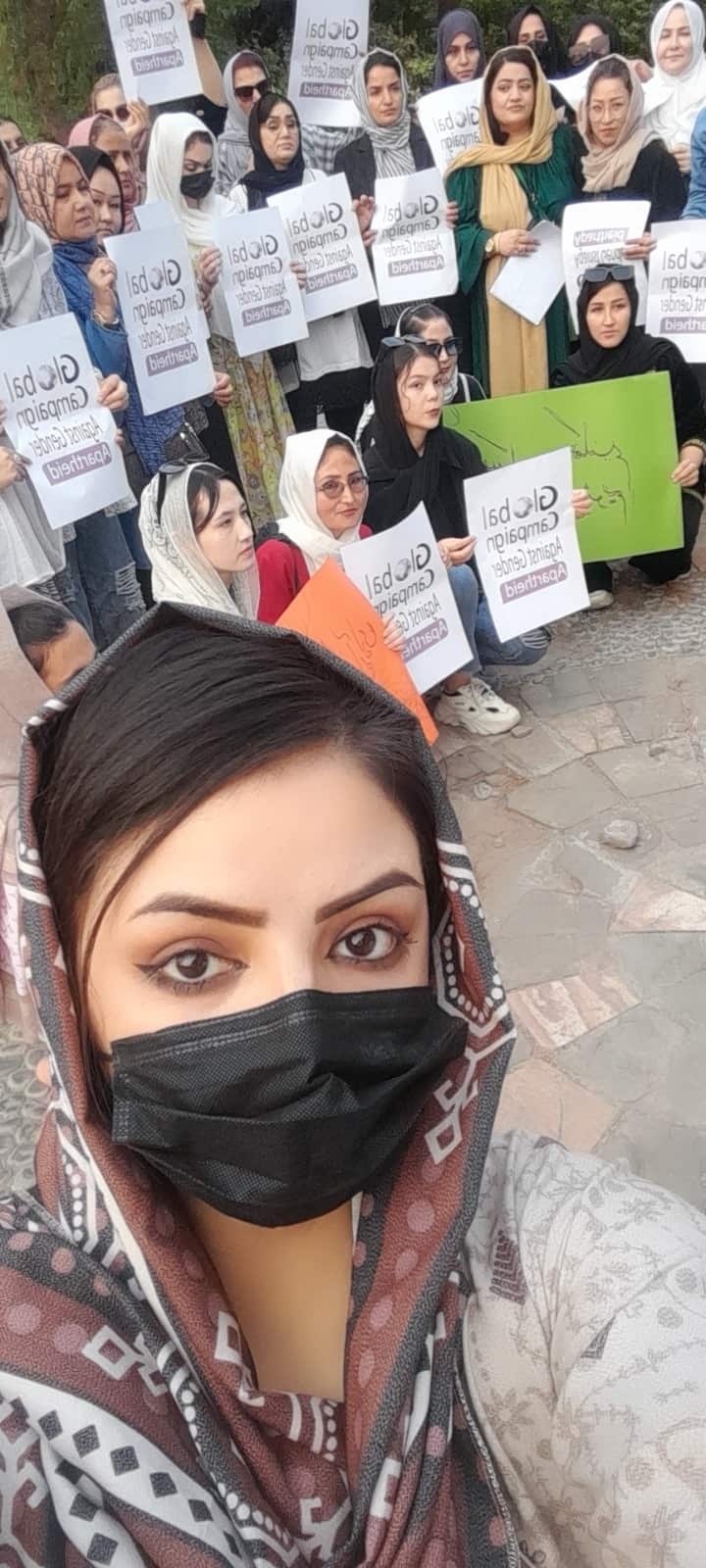
The 25-year-old has been living a life in exile in Pakistan for the past five years, unable to return to her home in Afghanistan over fears she will be targeted for her work as a women's rights activist.
When the Taliban took power in 2021, enforcing draconian restrictions on women's rights and basic freedoms, Amani fled across the border to continue her campaigning.
"When the Taliban took away women's rights to education and work, I could not remain silent," Amani tells SBS News.
"I joined peaceful protests to defend women's rights and the right to education. That decision changed my life forever.
News that makes sense
Your trusted source for staying up-to-date with the world around you. Get free daily news updates and analysis, straight to your inbox.
"Because of my activities, I became a target of the Taliban.
"Staying meant losing my freedom, my future, and most likely my life."
But now she's facing a new threat: deportation.
'Worried for our lives'
Over the past few years, Pakistan has beefed up deportation laws, citing national security concerns. As a result, more than two million Afghans without a valid passport or visa have been forcibly returned. Iran has similarly implemented a large-scale campaign targeting undocumented migrants, expelling more than one million Afghans.
In Pakistan, Amani says local police search for Afghans in residential areas and markets.
The crackdown has left her fearful she could be put back into the hands of her oppressor.
"We are not only worried about losing the place where we are staying," she says.
We are worried about losing our safety, our future and even our lives.
Rights groups say deported Afghans are being returned to a country with a worsening humanitarian crisis, where almost half the population is in dire need of aid. Nearly one in 10 children under five are now suffering from wasting, with acute malnutrition worsening in two-thirds of provinces, according to Save the Children.
UN officials have described Afghanistan as "a graveyard for human rights", citing the Taliban's severe human rights restrictions against women, activists, minorities, journalists and people associated with former international forces.
Amnesty Australia campaigner Zaki Haidari tells SBS News: "We have cases of people that have been deported to Afghanistan and been killed by Taliban."
"We have cases of individuals who were deported to Afghanistan and been detained and disappeared."
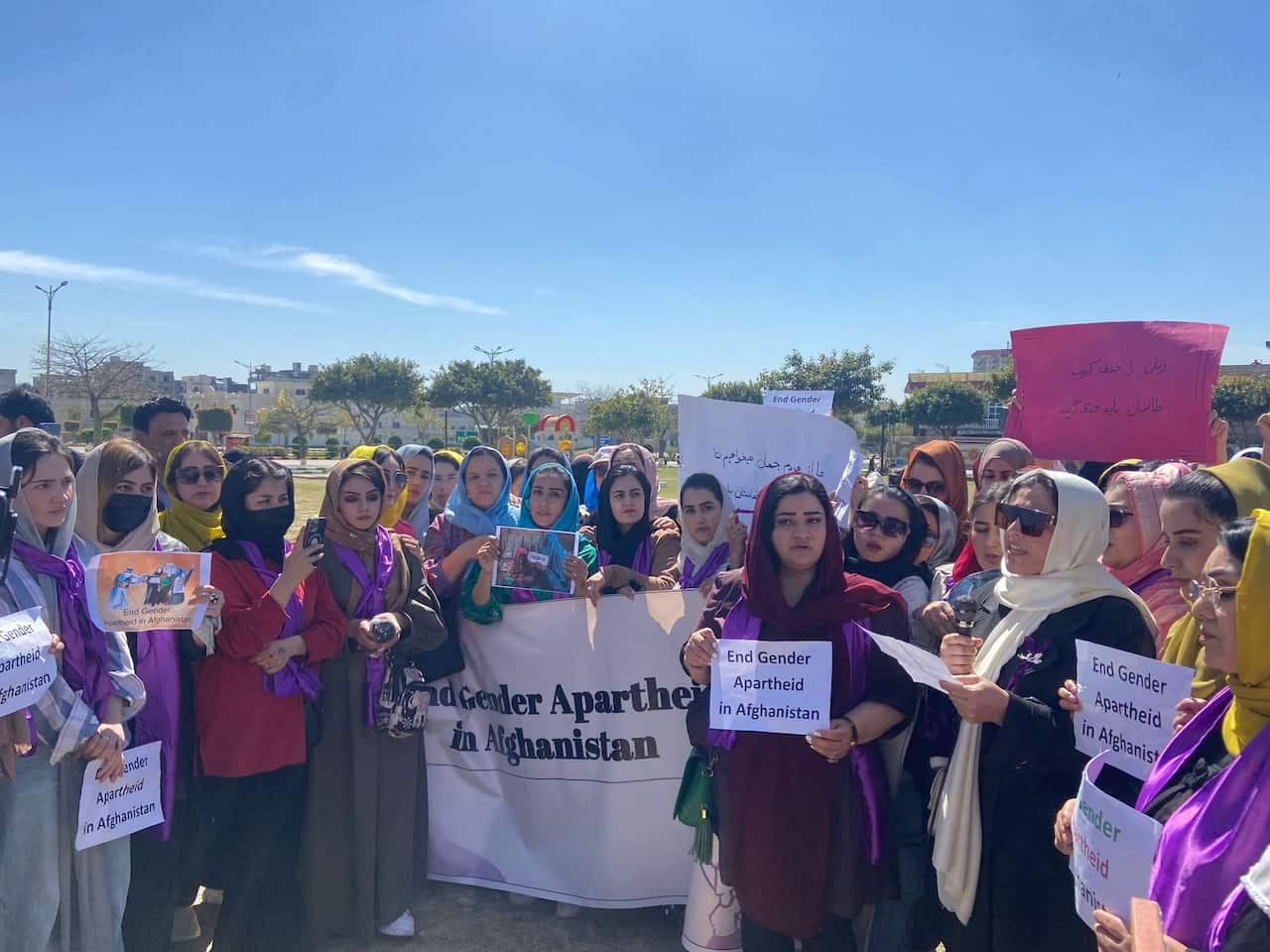
It remains the only country in the world in which girls over 12 and women are prohibited from secondary and higher education. The Taliban has banned beauty salons, enforced strict dress codes, removed books by women from bookshelves, banned women from parks and their voices from public spaces.
Amnesty is calling for the restrictions on women to be classified as gender apartheid and a crime against humanity.
"The Taliban has managed to introduce different laws just to completely erase a woman from Afghanistan," Haidari says.
Processing delays risk fatal consequences
The threat to safety is not limited to Afghan women.
Ahmad Hameed — whose name has been changed to protect his safety — worked as an interpreter for the Australian Defence Force in Afghanistan's Uruzgan province in 2011 and 2012.
"I worked as an interpreter for the Australian forces in Uruzgan. I put my life at risk and faced many difficulties while carrying out my duties," he says.
The father of seven applied for Australia's now-discontinued Afghan Locally Engaged Employee Program in 2020, which offered a pathway to resettlement and protection for Afghans working on behalf of the Commonwealth deemed at risk of harm as a result of their employment. He waited four years to get the certification, which finally came in 2024 — three years after the Taliban takeover — at which point he also applied for a humanitarian visa.
Moving to Pakistan with his wife and children in December 2025, Hameed completed his biometric tests and has been waiting for an outcome on his Australian application since.
Australia cannot process claims made within Afghanistan under Taliban rule — largely due to the closure of the former Australian embassy in the capital Kabul, which rules out in-country processing. It must be done in Pakistan. But with the neighbouring country's deportation drive, many hopeful applicants without valid travel documents fear they'll be forced back — and effectively trapped.
Hameed is among them and is pleading for help from Australia to expedite his claim.
"We are forced to stay inside our homes day and night and cannot go outside. If we do go out, there is a possibility that the Pakistani police may arrest us and deport us back to our country," he says.
"For the past three years, none of my children have been able to attend school or any educational institute. They are now growing up without an education, and they are deeply worried and hopeless about their future."
A spokesperson for the Department of Home Affairs admitted Pakistan's deportation laws have hindered its ability to progress visa applications.
"Individuals residing in Pakistan without a valid Pakistani visa may face an increased risk of deportation under the Government of Pakistan's Illegal Foreigners Repatriation Plan," the spokesperson said in a statement.
"These circumstances, together with restrictions on the movement of applicants within Pakistan, continue to impact the Department's ability to progress visa applications and facilitate access to required biometric and medical appointments."
In response to concerns for the plight of left-behind former Afghan interpreters, raised by independent senator David Pocock in parliament last week, Foreign Minister Penny Wong said Australia had granted more visas under its humanitarian program to Afghans than any other nationality.
But Haidari says those who have worked for foreign forces, including interpreters, are at particular risk under the Taliban.
If Taliban captured them, they will brutally persecute them, and that's a death sentence.
Amani too, has been awaiting an Australian response to her refugee application, filed in 2022, as she continues to evade Pakistani authorities.
She says she wants her Australian claim to be considered fairly.
"I lost my home because I stood up for the rights of women, the right to education, freedom, and justice," she says.
"It was only natural for me to seek a new beginning in a country where those same values are protected and respected."
For the latest from SBS News, download our app and subscribe to our newsletter.







