
When the Taliban took control of Afghanistan in August 2021, millions of Afghan women and girls saw their futures disappear.
Under the regime, they have been denied access to secondary education and universities, excluded from most jobs and faced severe restrictions on their freedom and mobility.
According to the United Nations, nearly 80 per cent of young women aged 18 to 29 are not currently in education, employment or training in Afghanistan. Restrictions have now become the norm, with not a single decree restricting the rights of women and girls having been repealed in the four years of Taliban rule.
Roya was in her final year of university in 2021 and among the last women to graduate before the regime closed the doors of higher education to women. SBS News has changed her name for safety reasons.
During her studies, she also held down jobs in various industries including education and media, aspiring to independence.
News that makes sense
Your trusted source for staying up-to-date with the world around you. Get free daily news updates and analysis, straight to your inbox.
She graduated in 2022, but since then has been "unemployed and unable to work" and forced to stay at home.
"The Taliban's restrictions didn't just take away my job, I think they took away my identity and a part of my future because I was an independent girl, standing on my own feet and making my own decisions," she tells SBS News.
"Anyone who finds themselves in these circumstances feels worthless; a sense of fear and despair arises in them. And the hardest part is knowing that a person has the ability to do something but unfortunately is not allowed to do it, which is the most painful of all.
This situation has not only destroyed my life, but I think it has also silently destroyed the future of a generation of Afghan women.
'Erased from public space'
Afghan women experienced harsh suppression under the first Taliban rule in the 1990s.
The post-Taliban era, starting in 2001, saw significant gains for women, including access to education and employment, as well as positions in prominent political roles.
Zaki Haidari, a strategy campaigner at Amnesty International Australia, says after 2001, when NATO and its allies went into Afghanistan, Afghan women had access to certain freedoms and rights, particularly in major cities.
"They could go to university. [Afghanistan] had a parliament where we had women MPs ... and ministers. We had women in all sorts of government offices and public spaces," he says.
"In rural Afghanistan, again, there were some restrictions because the movement of the Taliban and some parts of Afghanistan were still controlled by the Taliban."
Despite progress over the following decade, in 2011, Afghanistan was named the most dangerous place in the world to be a woman by a Thomson Reuters Foundation survey, which cited the country's high levels of violence, poor healthcare and poverty as primary factors.
Another decade on, in August 2021, the US withdrew its troops after 20 years of war and the Taliban regained power.
The rights of women and girls were rapidly rolled back. Women are now prohibited from travelling more than 75km without a male guardian, barred from public spaces such as parks and gyms, and forced to comply with strict dress codes that limit their presence in public life.
Haidari tells SBS News that under the Taliban, women in Afghanistan have been "completely erased from public space".
When the Taliban took over Afghanistan, all the rights were taken away from women and they were forced to stay home.
"Afghanistan is one of the only countries in the world which deprived women from having access to their basic rights."
More than 1,500 days without education
According to a 2025 UN Women report, 92 per cent of Afghans support girls continuing their education beyond year 6. Yet for many high school-aged women, four out of a potential six years of secondary education has now lapsed.
Mariam (not her real name) was in Year 5 when the Taliban banned girls from secondary school. She was allowed to continue her studies until she completed primary education but was not allowed to progress further. She says it's a difficult reality to accept.
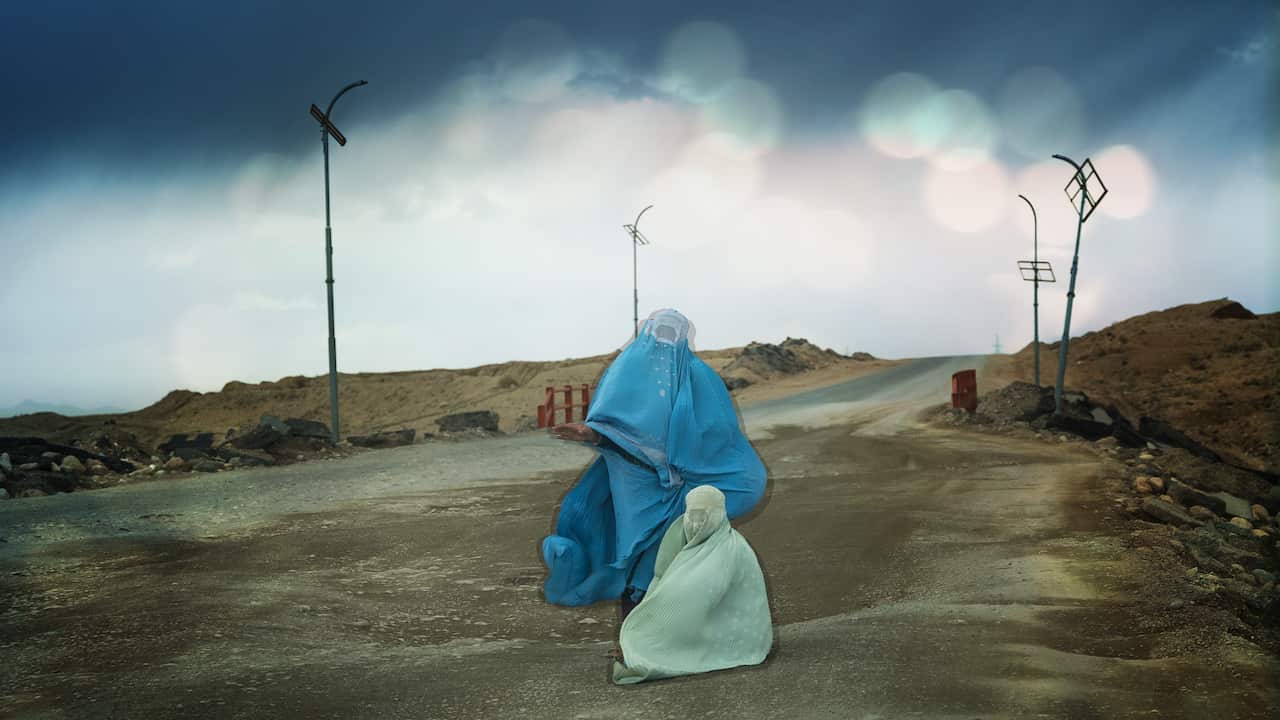
"When the school doors closed and they said girls could not study after year 6, it had a bad impact not only on me, but on all Afghan girls," she says.
"It is truly a great inequality that in foreign countries girls can pursue education and build a bright future, while in Afghanistan there are many girls who have no hope for the future to work for it and achieve it."
Afghanistan is the only country in the world where girls are banned from secondary education and most forms of work, but they can still be seen on the streets begging to financially support their families.
Mariam, who is now 14, says she is deeply disappointed by the ongoing injustice in Afghanistan, but still hopes the international community can help make education possible for girls.
"Seeing women begging while they do not have the right to go to school is an injustice," she says.
"My request to the international community is to reach an agreement with the Afghan government through negotiations so that they can open schools for girls and allow girls to continue their education."
SBS News contacted the Taliban for comment on the situation for women and girls in Afghanistan but did not receive a response.
In an August 2025 interview with SBS Pashto, the Taliban's spokesperson, Zabiullah Mujahid, stated that work has been done on women's rights, noting women are employed in various government sectors, including health, education and security.
He added restrictions on women's education are "temporary", and they are trying to address the existing challenges.
"Women have now found a place for themselves that was their rightful [Sharia-based] right, from which they had been deprived for many years. Nowadays, they have access to it, they can easily obtain their rights, make their own decisions, and determine their own destiny in life," he told SBS Pashto.
"It was initially stated that this is a temporary decision and that the needs would be assessed. We want to find a way that respects our Sharia principles and also achieves consensus in society."
Australian aid to Afghanistan
Since 2001, the Australian government has provided more than $1.7 billion in development and humanitarian assistance to Afghanistan.
This support continued even after the country fell under Taliban control in 2021, with Australia contributing more than $260 million to support the Afghan people in the years since. The Department of Foreign Affairs and Trade (DFAT) says this funding has a strong focus on women and girls.
As Australia has no diplomatic presence in Afghanistan, SBS News understands the funding has been instead distributed to UN agencies such as the United Nations Office for the Coordination of Humanitarian Affairs and the World Food Programme.
A spokesperson for DFAT says the Australian government is "committed to supporting the people of Afghanistan" during "one of the world's most protracted humanitarian crises".
"We also recently established the world's first autonomous sanctions framework for Afghanistan, which enables Australia to directly impose its own sanctions and travel bans to increase pressure on the Taliban, targeting the oppression of the Afghan people, particularly women and girls."
According to the spokesperson, a further $50 million is allocated for 2025/26.
SBS News understands aid is also provided in line with autonomous and UN Security Council sanctions, ensuring it does not directly benefit the Taliban. It is delivered through trusted partners, including UN agencies, to reach those most in need, including minority groups such as the Hazara.
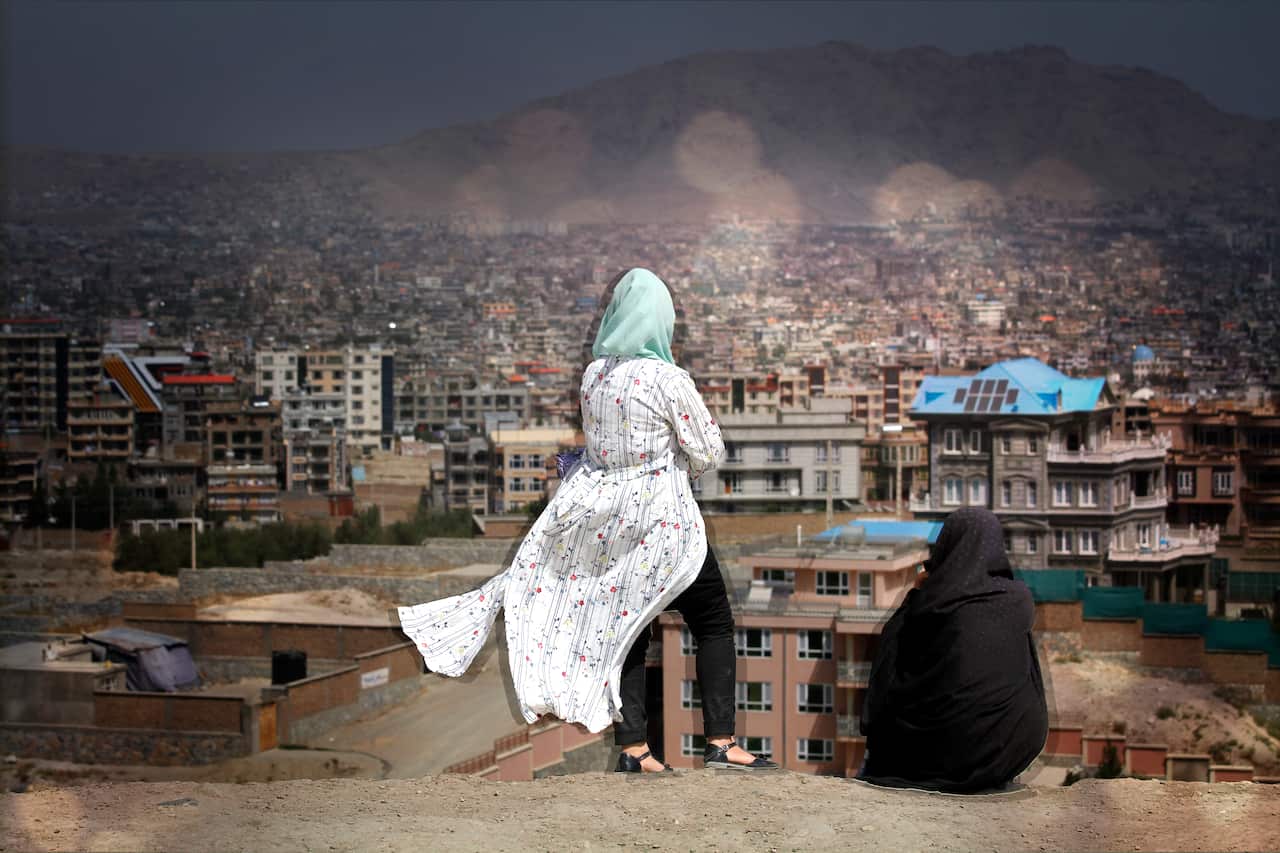
Arafat Jamal is the United Nations High Commissioner for Refugees' (UNHCR) country representative in Afghanistan. He explains that Australian aid is delivered through the UNHCR's "people-to-people approach", avoiding bureaucracies and adhering to the UN's policy prohibiting assistance to the Taliban.
"The overall picture for women is very bleak, whether it's in education or jobs. At the same time, I think this is really the strength of the United Nations and why the funding that Australia and others provide is so essential, is that with that funding, we do have leverage," Jamal says.
"We try to ensure that every dollar that we spend in Afghanistan goes to the people ... Wherever we can, whether it's in entrepreneurship, whether it is in community centres, whether it is in counselling, gender-based violence, we do focus on women.
"And in fact, in our statistics, we end up providing more assistance to women and children than we do to men."
Afghanistan's secret schools
Alongside the Australian government, Afghan communities in Australia are also contributing to humanitarian efforts. They are providing aid and helping to run secret education programs to support women and girls in Afghanistan.
Dr Nilofar Ibrahimi was a gynaecologist in Afghanistan and served as a member of parliament before the Taliban's return to power. After resettling in Australia in 2021, she has remained deeply committed to advocating for Afghan women and girls.
"Women in Afghanistan are living in the darkest period of history, and the world should not remain silent in the face of this darkness," Ibrahimi tells SBS News.
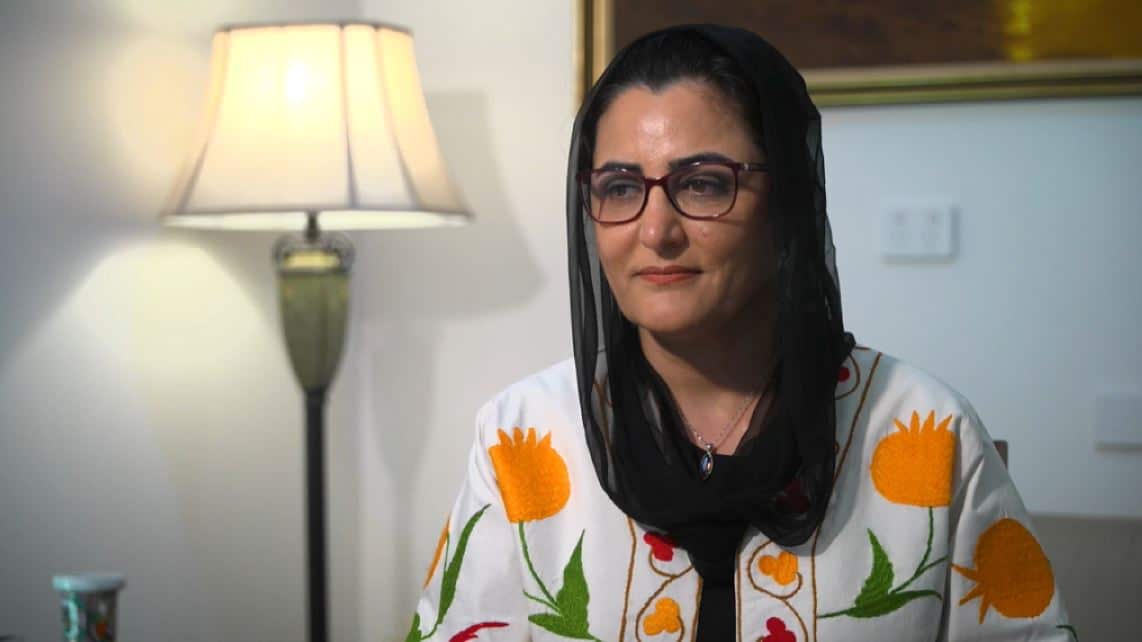
In 2019, she founded the ZamZam Foundation to support and empower vulnerable women and girls, particularly orphans and widows.
Following the fall of Afghanistan two years later, the Canberra-based foundation also started helping newly arrived Afghan refugees in Australia.
Ibrahimi says the focus of the foundation's work now is running secret schools in Afghanistan, where girls take risks to attend classes and learn.
"We gathered these girls very carefully and our classes focus mainly on the English language and science," she says.
"Through fundraising here, we send money to them to cover teachers' salaries and some expenses for the girls who travel from distant areas to different places where they study. Of course, their locations are confidential."
But she says the foundation's reach is limited.
According to the United Nations Population Fund, as of 2025 Afghanistan's population is estimated to be 43.8 million. Approximately half are women, according to World Bank statistics from 2024.
"If Afghanistan has a population of 40 million, certainly 20 million of them are women," Ibrahimi says.
"Among these 20 million women, who are deprived of the right to work, the right to education, and even the most basic human rights, our services are very insignificant."
The Afghan embassy in Australia — staffed by diplomats appointed by the previous Afghan government — continues to work with the Afghan community to organise programs supporting women.
Afghan ambassador in exile Wahidullah Waissi told SBS News in November 2025: "Afghanistan is an isolated land under the Taliban regime", adding that the embassy is "providing a platform for people" to come together.
He says its greatest responsibility is to "enable an environment for greater advocacy for the girls and women of Afghanistan who are under the biggest repressive regime".
We call it 'gender apartheid'.
"That's the biggest responsibility on us, when we are thinking about a free Afghanistan, to do something and be the voice of the silenced girls and women in Afghanistan and make the noise in a way that we see them and we are caring about their future, and we are caring about the future of our country."
This story was produced in collaboration with SBS Pashto.
For the latest from SBS News, download our app and subscribe to our newsletter.







