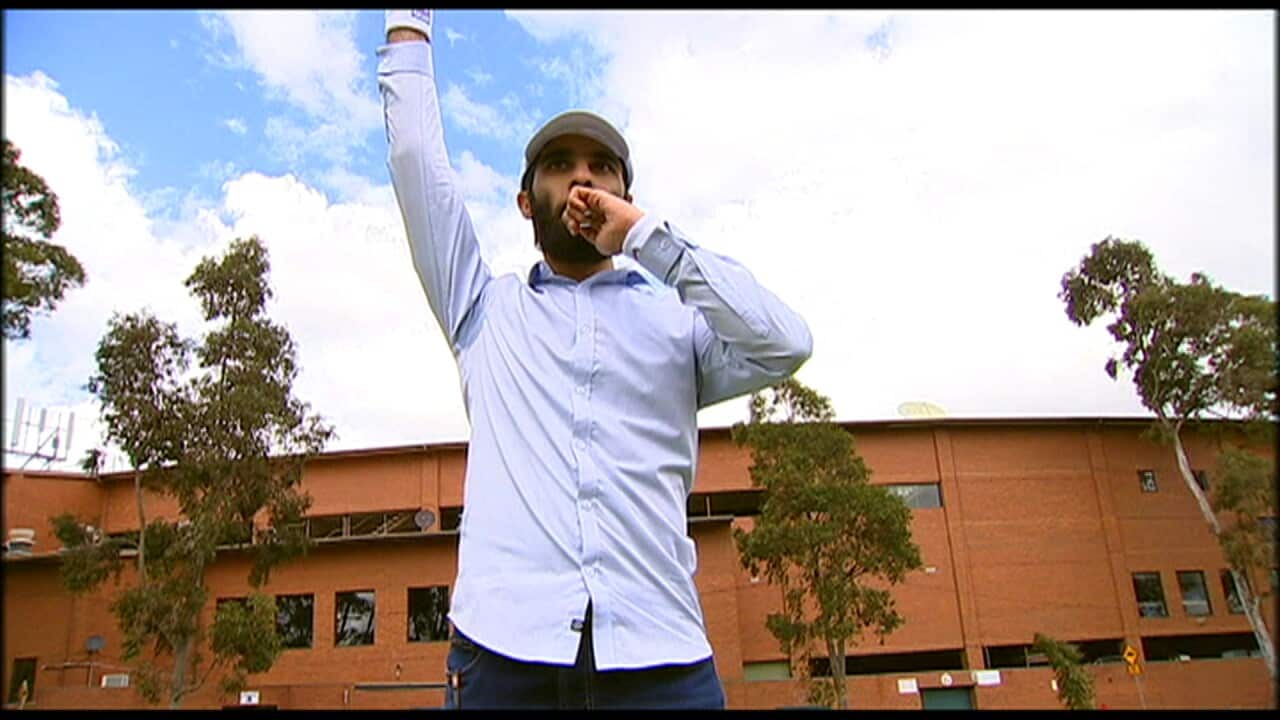
Migrants and refugees from as far afield as Vietnam, Afghanistan and Tibet are learning how to umpire.
It's all aimed at boosting diversity among the game's officials and getting them more closely involved in their new communities.
The calls and signals required of an AFL umpire are as many and varied as the backgrounds of these Melbourne novices.
"High tackle!!... Holding the ball!... Here's the mark, your kick! If I say push in the back you are going to blow your whistle, push in the back OK?" a referee calls out.
It's an intensive lesson in how to police the local game for eight migrants and refugees from Vietnam, Afghanistan, Pakistan, Myanmar and Tibet.
News that makes sense
Your trusted source for staying up-to-date with the world around you. Get free daily news updates and analysis, straight to your inbox.
Teaching them is an umpire with a wealth of experience.
Neville Nash officiated in 217 VFL and AFL matches, including the 1983 Grand Final.
"The AFL, together with us at AFL Victoria, are investing a lot of resources into diversity by taking umpiring to different community groups," he said.
For 21-year-old Abdullah Ziai from Pakistan who has been in Australia for just 10 months, it's a chance to immerse himself in the country's unique sporting code.
"The most important reason why I am doing this is that I want to know more (about) Australian culture. This game has become very interesting to me, the way they are playing. It was a new game," he said.
It's hoped the recruits will be officiating in local leagues as early as next season.
Neville Nash sees their first step would be as boundary umpires.
"I am encouraging them to start off on the boundary, so they can do boundary umpiring but also learn what the field umpire does," he said.
"Who knows? One of these students could umpire AFL football, for all we know. If that's what they want to do."
Lo Lo from Tibet is quickly adapting to the shape of the "Sherrin".
"In other countries the football it is round. This one is like an egg."
And it's not just a cultural experience, but a possible pathway to paid work, with local league umpires able to earn up to $30 an hour.







