IN BRIEF
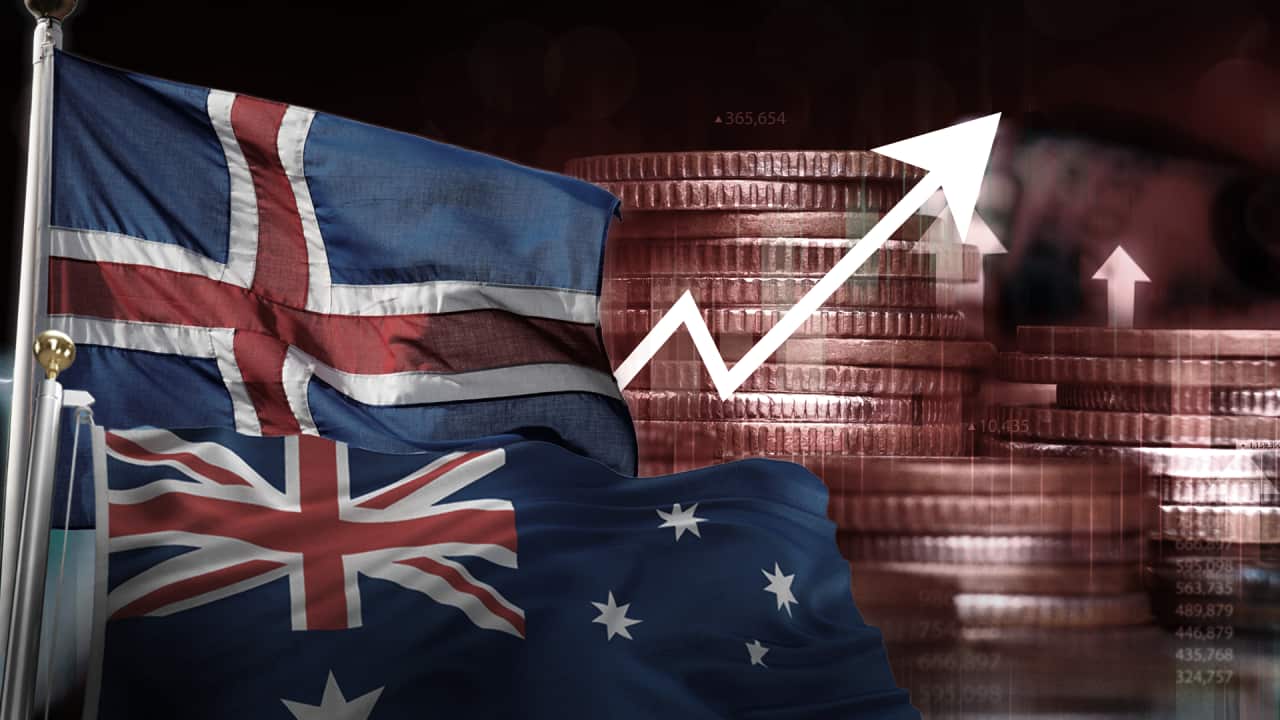
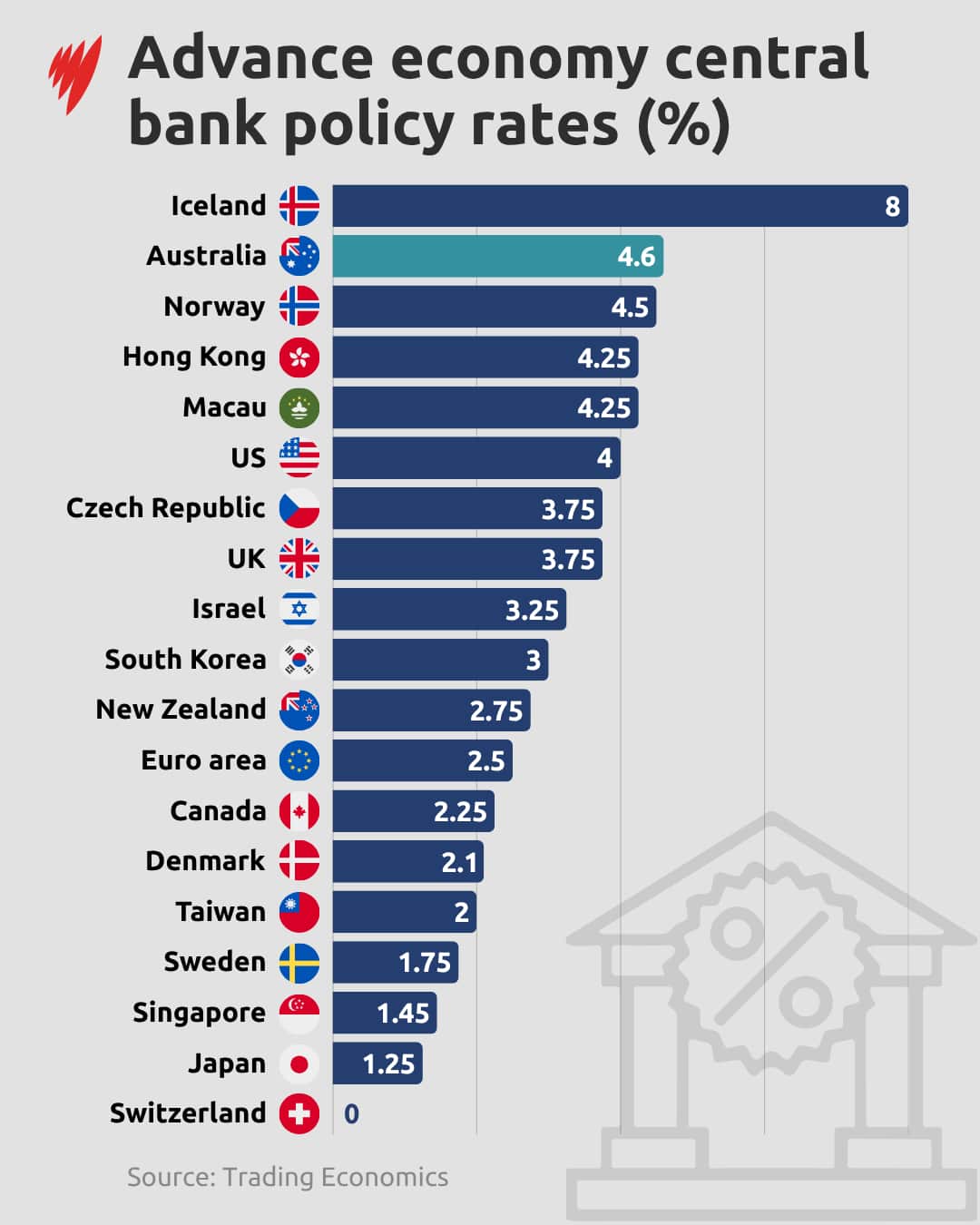
- Australia's cash rate is now one of the highest in the world, but lower than Iceland's.
- Experts say Iceland's dramatic rate is the product of over two decades of financial instability.
Australia has the second-highest interest rate among comparable economies after the Reserve Bank hiked rates to a 15-year high on Tuesday.
Taking the crown is Iceland, where the cash rate currently sits at 8 per cent — the highest of the 41 advanced economies as defined by the International Monetary Fund.
The Central Bank of Iceland set the historic rate in August, claiming the increase was "driven mainly by hikes in public levies and price increases caused by the war in the Middle East".
Similarly, the Reserve Bank of Australia (RBA) cited higher energy and fuel prices and the Middle East conflict as reasons for Australia's hike from 4.35 per cent to 4.6 per cent.
Treasurer Jim Chalmers denied a fair comparison could be made between Australia and Iceland's interest rates.
News that makes sense
Your trusted source for staying up-to-date with the world around you. Get free daily news updates and analysis, straight to your inbox.
"If you want to make a comparison with other countries and other economies, you need to acknowledge that growth here is faster than a lot of other economies," he said on Tuesday following the RBA announcement.
Chalmers said Australia currently has fast economic and employment growth, low debt and an economy "equal to the US".
"We've got a lot going for us in Australia, but we've got a lot coming at us from around the world as well — that's clear in the Reserve Bank's Statement," he said.
"We take all of those challenges very seriously. When you compare us to the world, there are some things that we are doing much better than the rest of the world."
Iceland, a small island nation that sits between Greenland and Norway in the Atlantic Ocean, has a population of almost 397,000 — almost 100,000 less than the ACT.
As of August, the national inflation rate was 5.6 per cent.
"While it does have considerable supplies of renewable geothermal energy ... it's reliant on transporting almost everything other than the food it can grow for itself," independent economist Saul Eslake told SBS News.
"It's very exposed to the increases in energy prices that we have seen since the outbreak of the conflict in the Middle East."
Eslake explained that Iceland's high interest rate can be attributed to a "fairly tumultuous" 25 years.
"It had an enormous boom in the lead-up to the global financial crisis of 2007/8. But then, Iceland faced the collapse of its banking system and house prices, and large parts of its economy."
He said Iceland had one of the most traumatic experiences of any country during the global financial crisis.
"That left Iceland more vulnerable than other economies might be to the kind of shocks that we've seen this year."
He said one of the major mistakes the Central Bank of Iceland made was decreasing interest rates as inflation unexpectedly rose after the COVID-19 pandemic.
"They pushed up their cash rate to 11 per cent in the aftermath of the COVID pandemic because inflation rose more than almost any other country," he said.
"They then cut interest rates in 2023, and cut them back down to 9.25 per cent in 2025 — only to find that inflation didn't fall, it rose again.
This followed further interest rate rises to tackle inflation.
Eslake said the RBA made the same mistake in 2025 when it didn't increase interest rates and so, in the face of rising inflation, was forced to increase rates in February this year.
In August, Iceland's government held a referendum on negotiating membership in the European Union, which would include replacing its Króna currency with the euro, and potentially easing financial pressure.
The European Central Bank interest rate is 2.25 per cent compared to Iceland's 8 per cent.
"It would not solve Iceland's structural faults, but it could become a catalyst to a more healthy economy," Vilhjalmur Hilmarsson, chief economist at Icelandic labour union Viska, told the Agence France-Presse news agency.
However, Iceland voted 52.8 per cent against the referendum's proposal. Instead, the nation's government will focus on strengthening its ties with the EU through the European Economic Area Agreement, which it shares with Norway and Liechtenstein.
Eslake was unsurprised by the verdict, believing Iceland a proud nation.
"Clearly, Icelanders value their independence," he said.
As for Australia, Eslake said Tuesday's interest rate hike was "entirely expected".
"It flows from the stronger-than-expected inflation data that we've seen over the past couple of months. It flows from the fact that most indicators for economic activity have been a little stronger than expected," he said.
"As the Reserve Bank board said today, it also reflects the renewed increases in energy prices as a result of the ongoing impasse or conflict in the Middle East, which is not looking likely to last much longer than anticipated."
Eslake said it isn't a fair or appropriate comparison to link Australia and Iceland.
"We are very different countries, with very different trading relationships and very different economic structures as well as being very different in scale and scope," he said.
However, the economist warned that both Iceland's Central Bank and the RBA should be more careful when betting on falling inflation.
"You don't want to be in an embarrassing position to reverse the interest rate cuts that you've previously instituted," he said.
"You have to have good reason to be confident you're on top of the inflation problem you're seeking to solve before cutting interest rates."
— With additional reporting from Agence France Presse.
For the latest from SBS News, download our app and subscribe to our newsletter.







