How Australia's interest rates compare globally
Even if the Reserve Bank doesn't raise the cash rate, Australia's will still be sitting above comparable economies.
Australia's cash rate target of 4.35 per cent is higher than those of other countries, such as the United States at 3.75-4 per cent, the UK at 3.75 per cent, and Canada at 2.25 per cent.
This month, Japan raised its interest rates to 1.25 per cent, equalling a 31-year high.
They are not necessarily like-for-like comparisons to the intricacies of the different economies and the pressures each faces.
Australia has higher core inflation, a measure stripping out economic volatility, than these other economies.
A hike today would push Australia's cash rate to the second-highest level among economies the International Monetary Fund ranks as advanced.
Norway's is sitting at 4.5 per cent and Iceland's at 8 per cent, despite an inflation target of 2.5 per cent.
Covering this topic in August, AMP chief economist Shane Oliver said the Australian economy has become more inflation-prone than that of some other countries over the past two years, which will likely keep the RBA's focus on rate tightening for some time.
You can read more on this here:
— Madeleine Wedesweiler
Big four banks predictions
All four big banks have predicted the RBA will raise the interest rate to 4.6 per cent, but one major player estimates the RBA won't stop there.
While CBA, Westpac and NAB all believe there will be just one more rate increase this year, ANZ expects the RBA to hike for a fifth time in November, taking the cash rate to 4.85 per cent.
The major banks typically all pass along interest rate rises to borrowers on variable home loans within weeks, pushing up mortgage repayments.
— Cameron Carr
Why some economists believe there'll be a hold
Most experts predict the cash rate will increase this afternoon, but a dissenting few believe the RBA could hold rates.
In a survey conducted by financial comparison site Finder, four out of 41 experts and economists predicted the cash rate would remain the same.
This is their reasoning:
Evgenia Dechter, UNSW: "It is a difficult call. Economic growth is weak and unemployment is rising, so the RBA has to weigh the risk of persistent inflation against the risk of slowing the economy too much."
Mark Crosby, Monash University: "Despite indicators of rising inflation there is equally evidence of a weakening economy that would warrant a wait-and-see approach for another few months."
Tim Reardon, Housing Industry Association: "Home prices are falling, that is a symptom of the previous rate increases that will, with time, flow through to reduced inflationary pressures."
Cameron Murray, Fresh Economic Thinking: "Momentum in the economy isn't picking up, and they expect continued softening in line with global trends."
— Cameron Carr
Housing stress nears decade-long high
The latest HILDA survey was released on Thursday, finding that cost of living has impacted Australia's wellbeing.
The annual survey is the largest longitudinal study of its kind in the country, tracking around 17,000 people across 9,000 households every year since 2001. This year's edition draws on data through to 2024 and covers everything from income and employment to relationships and mental health.
Housing stress hit 23 per cent of private renters and a similar percentage of social housing tenants, while 9.6 per cent of mortgage holders were affected — the highest since 2017.
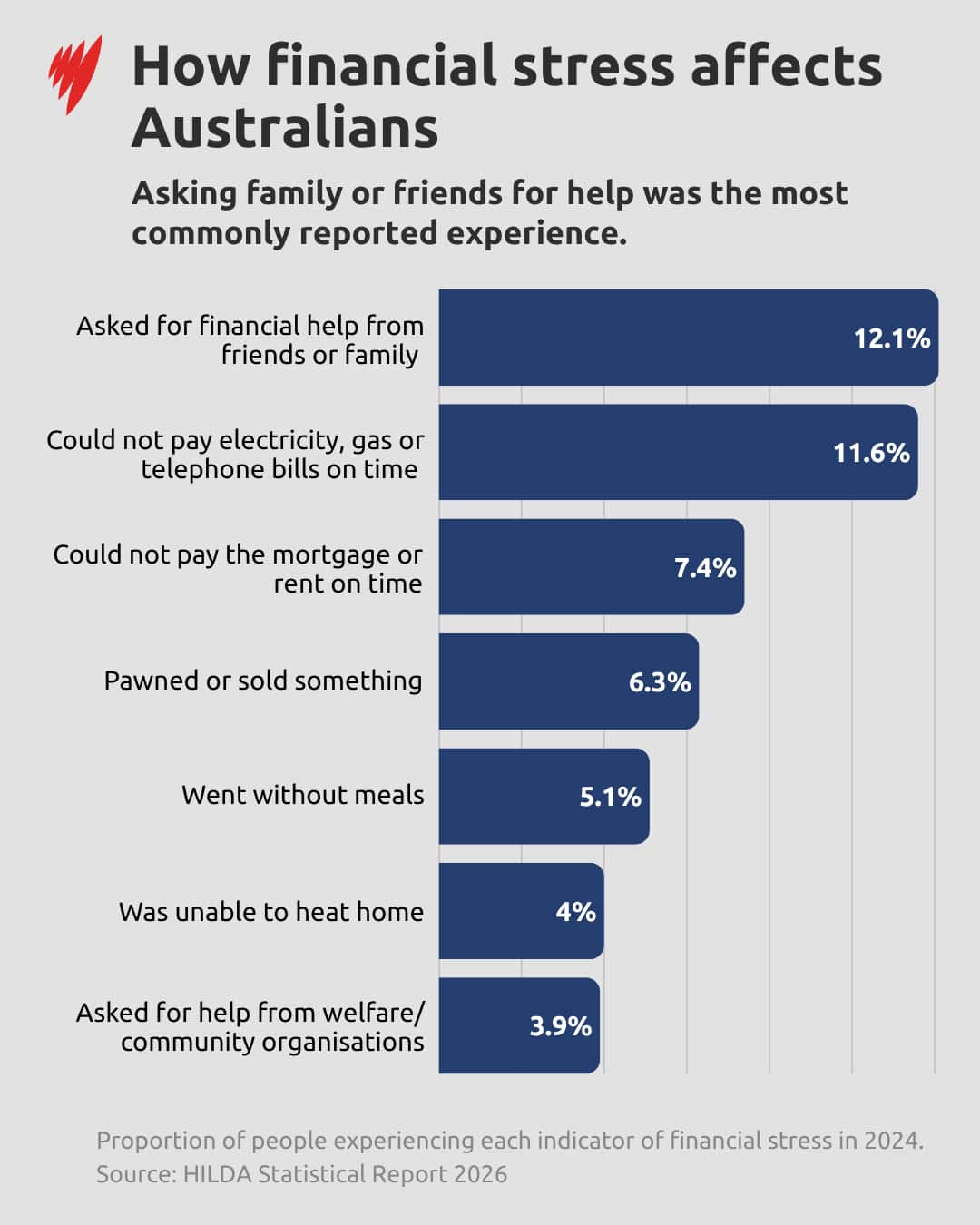
Across capital cities, 36 per cent of renters and 30 per cent of mortgage holders were spending over 30 per cent of their disposable income on housing, the standard metric for housing stress.
SBS News reporter Alexandra Koster has an in-depth snapshot looking at how Australian households are faring here:
— Cameron Carr
Opposition blames government spending for interest rate pressure
The potential 15-year high cash rate target is the fault of excessive government spending, according to the leader of the National Party.
Matt Canavan told News24: "The problem clearly is too much government spending, too much heat in the economy."
A final budget update for the year, released on Monday, showed forecast tax receipts as a percentage of GDP jumped from May's forecast of 23.6 to 24.1, showing growth.
But Treasurer Jim Chalmers was steadfast that government expenditure — now more than 26 per cent of GDP — was not the main reason for the looming rate rise, instead citing global issues.
— Cameron Carr, AAP
How would a rate hike impact you?
For many mortgage borrowers, another 0.25 percentage point increase would add to monthly repayments that have already soared by hundreds of dollars this year.
According to analysis by financial comparison site Canstar, a standard rate rise would add roughly $107 to the monthly repayments on a $700,000 loan on an average variable rate, bringing the cumulative increase this year to $424 a month.
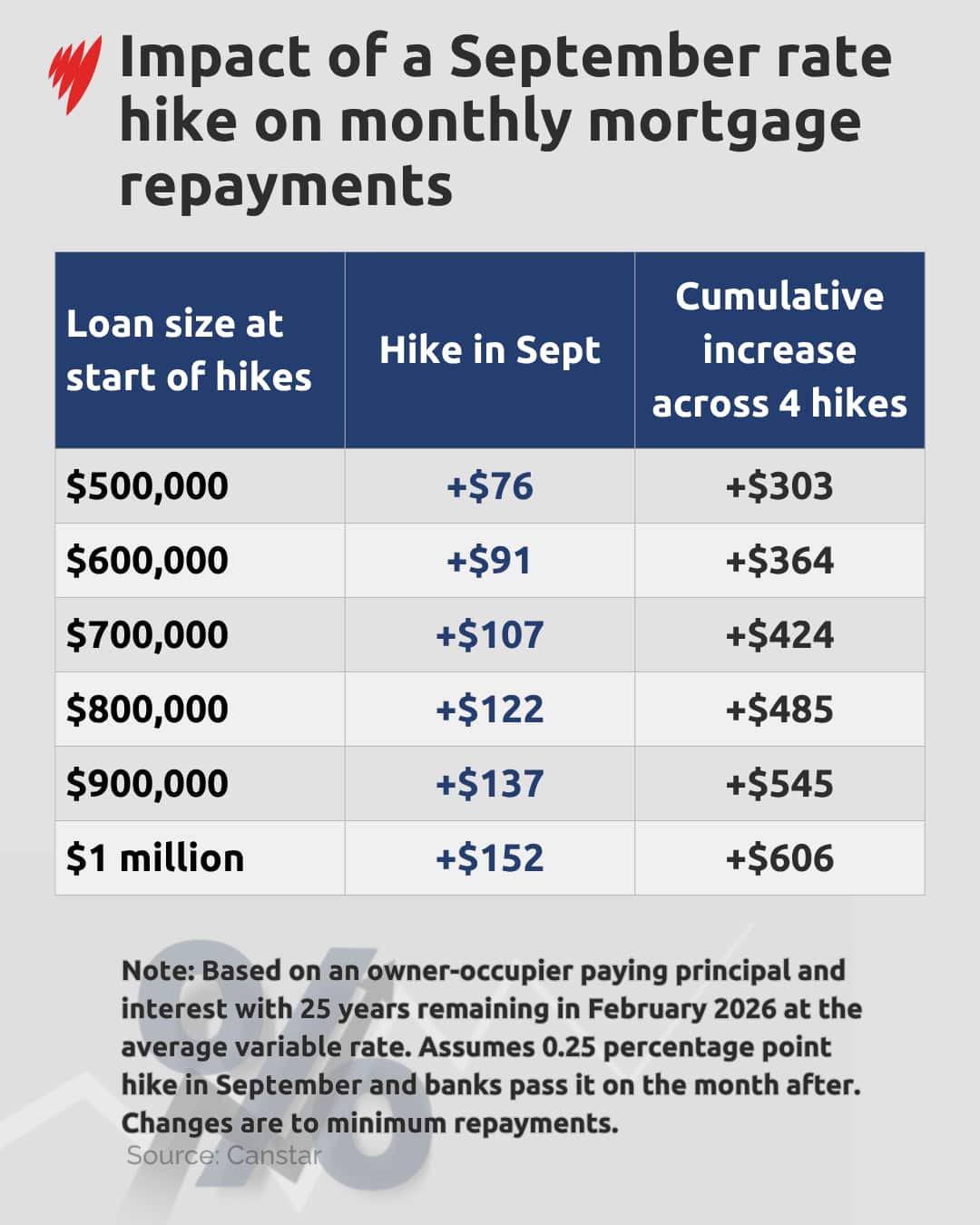
For a mortgage of $1 million, monthly repayments would rise by $152, bringing the total monthly increase this year to $606.
For Australians trying to enter the property market, another hike could shave thousands off the amount they can borrow.
A standard rate hike could cut an average wage earner's borrowing power by $11,200, according to Canstar analysis — a total fall of 9 per cent since the start of the year.
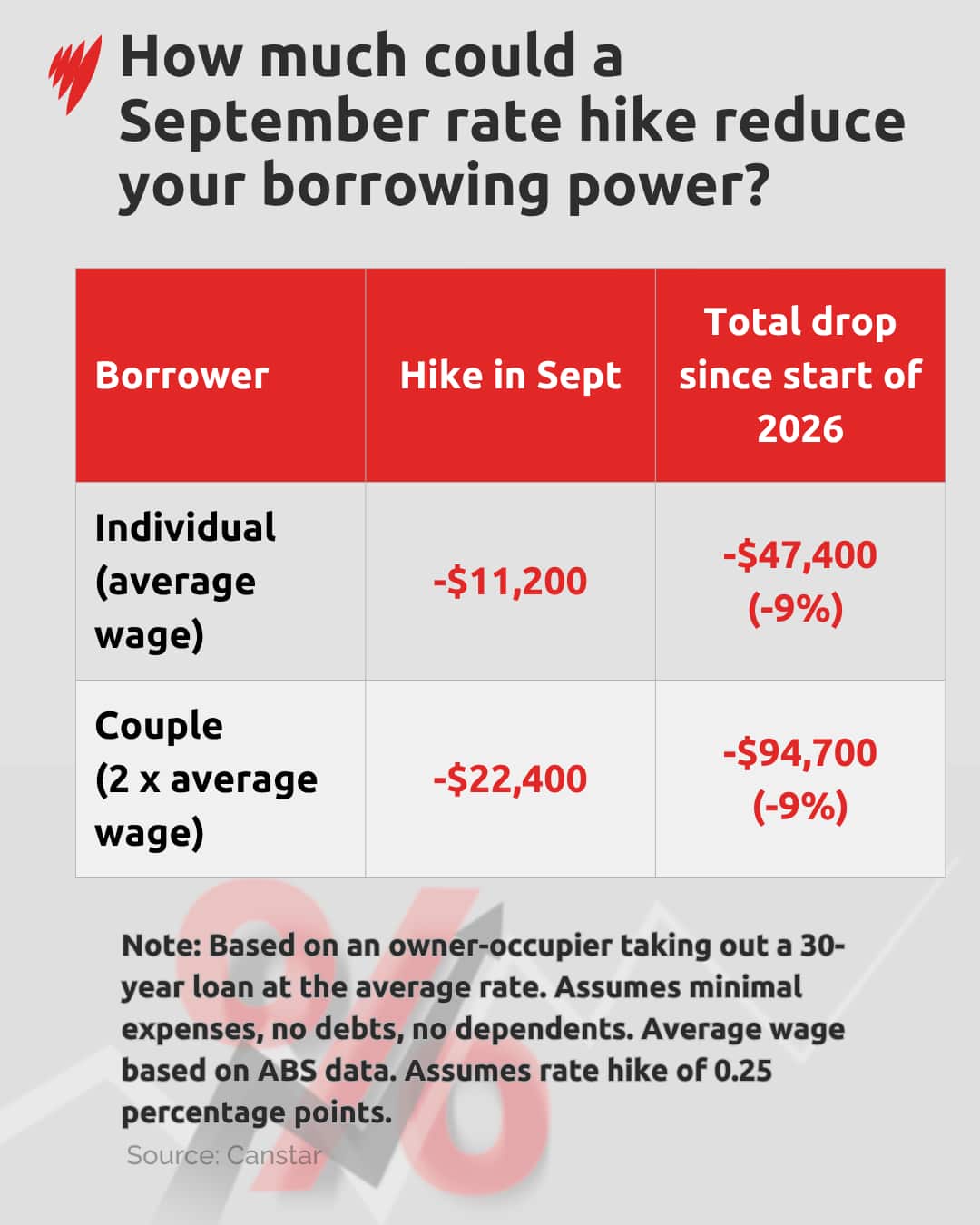
For a couple, that figure doubles to $22,400, bringing the total reduction this year to $94,700.
You can read more analysis by SBS reporter Josie Harvey here:
— Cameron Carr
Treasurer defends government's economic record
Treasurer Jim Chalmers has defended the government’s economic record as Australians brace for an almost certain Reserve Bank interest rate rise, insisting inflation is not out of control.
Chalmers has been on a media blitz this morning, appearing across television and radio to spruik the government's record while acknowledging the challenge of bringing inflation down amid the cost-of-living crisis.
He said the government was focused on two key priorities: bringing inflation under control while keeping unemployment low.
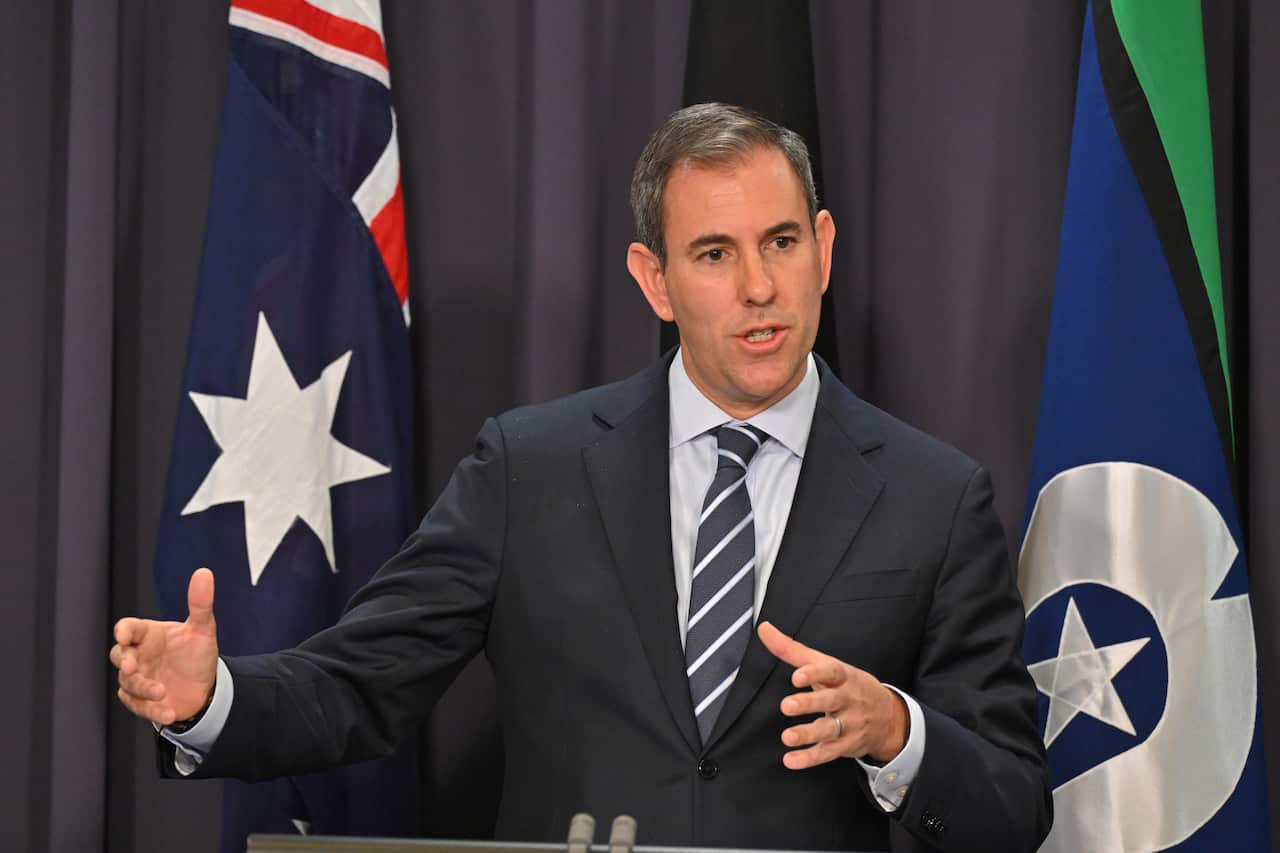
The Reserve Bank’s dual mandate also reflects those priorities, he said, with the central bank required to pursue price stability while maintaining full employment.
Chalmers also defended the government’s tax take as a share of GDP, arguing it remained below levels recorded under the Howard government.
"Well, it’s still lower than what we saw under Howard and Costello, is the first point."
Asked whether he would accept higher unemployment in return for lower inflation, Chalmers said the government was "not for higher unemployment".
"I think that’s pretty clear. And what we’ve seen in recent years is that it’s possible to have low and steady unemployment at the same time as we see inflation moderate to more normal levels."
— Cameron Carr
Home loan debt on the rise
The predicted cash rate of 4.6 per cent is set at the highest level a generation of borrowers has seen, and could exacerbate mortgage stress.
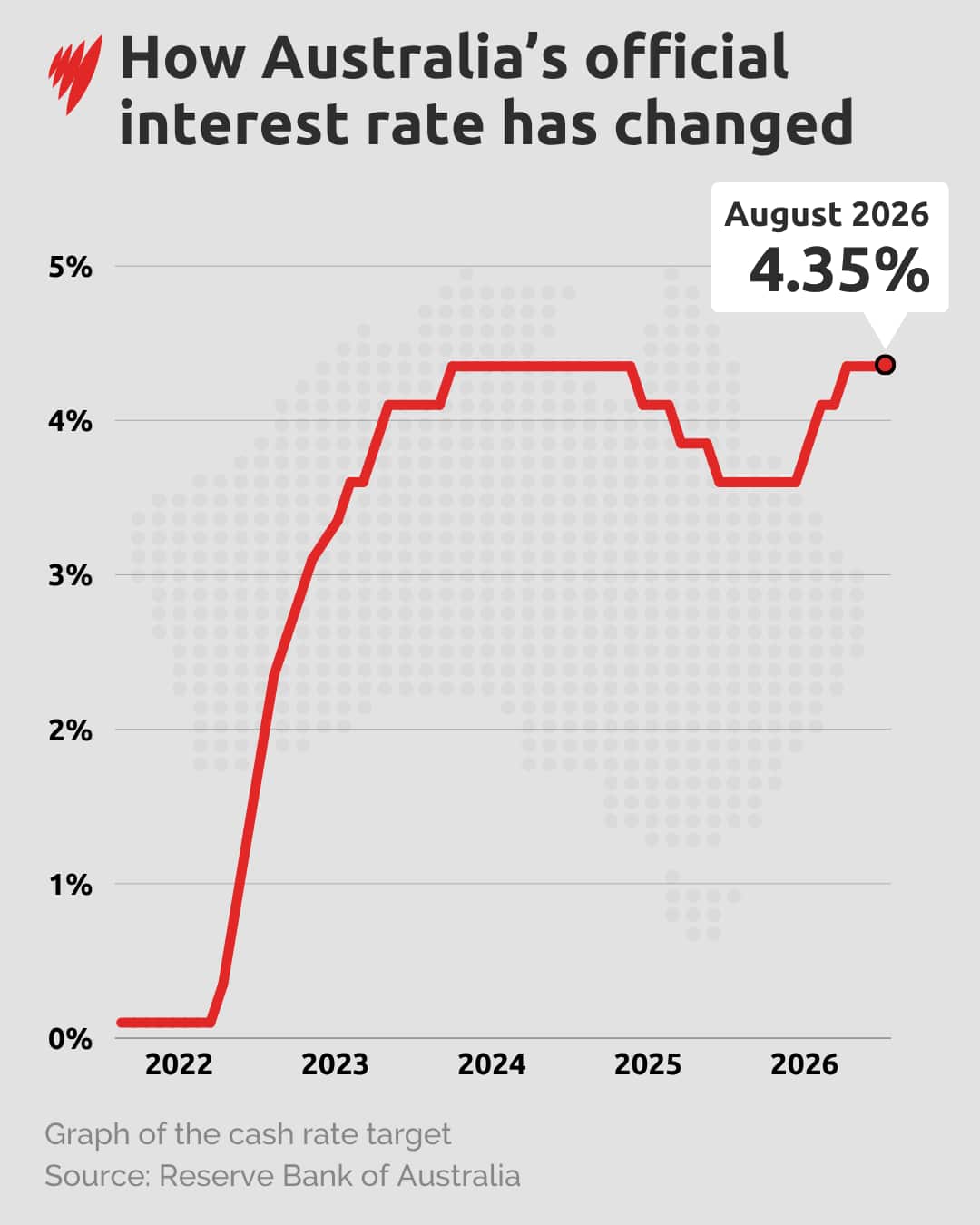
That will lift the average owner-occupier variable rate to 6.49 per cent, assuming the increase is fully passed on by lenders, which they usually are, according to analysis by Canstar.
The difference since October 2011 — the last time rates were that high — is that soaring house prices have driven home loan debt up from $1.05 trillion to $2.51 trillion over the same period.
— Cameron Carr, AAP
Welcome to today's coverage of the RBA rate decision
The RBA is poised to take interest rates to a 15-year high as it meets ahead of announcing the cash rate target this afternoon.
It is widely predicted that interest rates will increase for the fourth time this year to 4.6 per cent, amid sticky inflation and global uncertainty.
But Treasurer Jim Chalmers has said he doesn't want to see workers "carry the can" for economic disruption caused by the war in the Middle East.
We will bring you analysis, commentary and data throughout the day, unpacking how today's decision could impact homeowners and prospective buyers. Stay with us.
— Cameron Carr







