
In brief
- Interest rates are likely to rise for the fourth time this year.
- How much more will you pay, how much less could you borrow, and what number should your interest rate have in front of it?
The Reserve Bank of Australia (RBA) is widely expected to raise interest rates on Tuesday for the fourth time this year, taking the nation's cash rate to a 15-year high.
The RBA has signalled it will target persistent high inflation, driven in part by the Middle East conflict, the surging global demand for AI-related technology and stronger-than-expected spending at home.
The pain will be felt by existing borrowers and prospective homebuyers alike.
For many mortgage borrowers, another 0.25 percentage point increase would add to monthly repayments that have already soared by hundreds of dollars this year.
For Australians trying to enter the property market, another hike could shave thousands off the amount they can borrow.
News that makes sense
Your trusted source for staying up-to-date with the world around you. Get free daily news updates and analysis, straight to your inbox.
How much could another rate hike cost you?
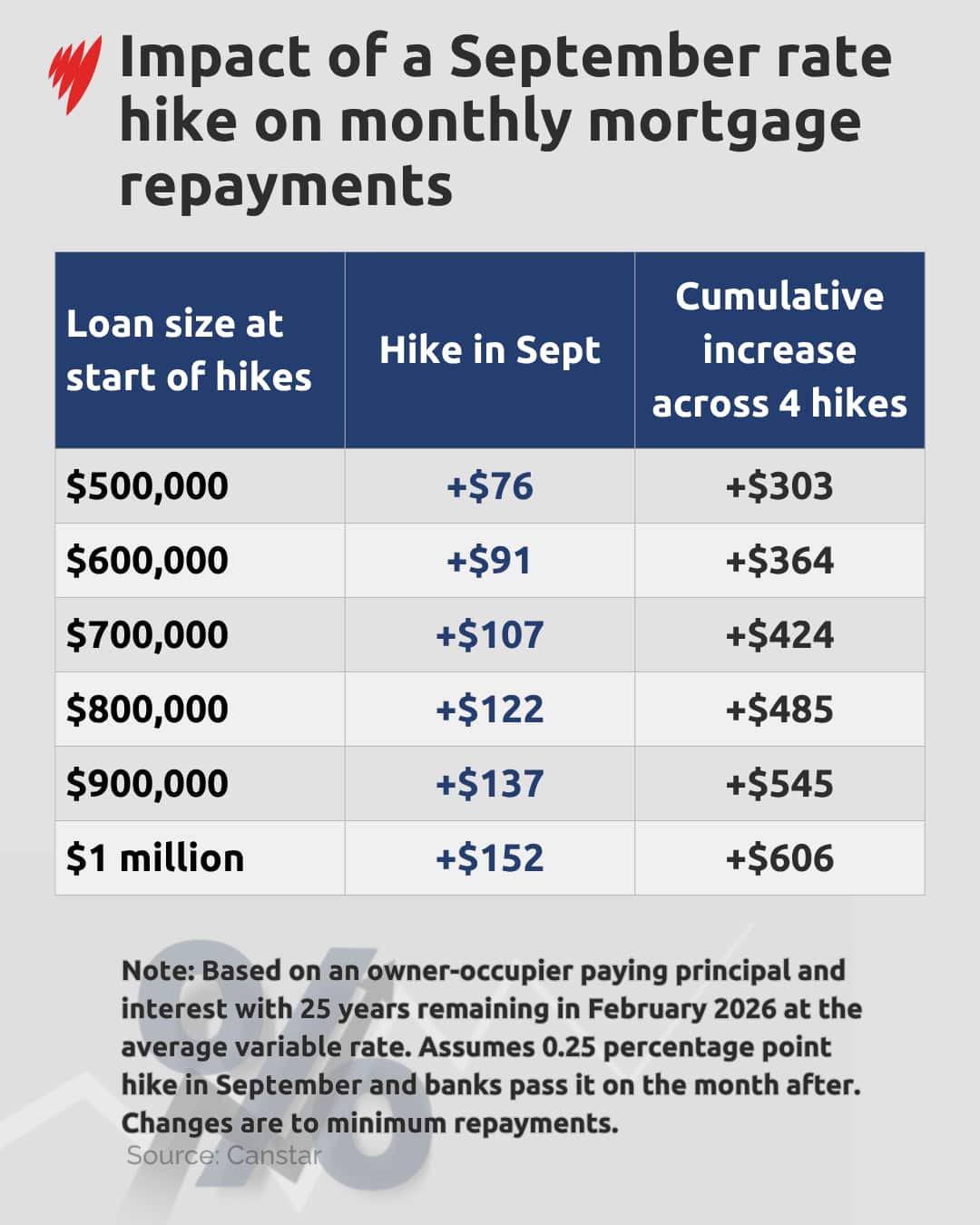
According to analysis by financial comparison site Canstar, a standard rate rise on Tuesday would add roughly $107 to the monthly repayments on a $700,000 loan on an average variable rate, bringing the cumulative increase this year to $424 a month.
For a mortgage of $1 million, monthly repayments would rise by $152, bringing the total monthly increase this year to $606.
"This could well be the straw that breaks the camel's back for some [borrowers]," Sally Tindall, Canstar's data insights director, told SBS News.
A recent survey by financial comparison site Money.com.au found 39 per cent of respondents were not confident they could continue to afford mortgage repayments if rates rise in September, with 9 per cent suggesting they might have to seriously consider selling their properties.
While the Commonwealth Bank, Westpac and NAB are forecasting just one more hike this year — bringing the cash rate to 4.60 per cent by the end of 2026 — ANZ is projecting two more hikes, in September and November, bringing the cash rate to 4.85 per cent.
If the RBA raises rates again in November, Canstar estimates repayments would rise by a further $107 a month on a $700,000 loan and $153 on a $1 million loan.
That would take the total increase in monthly repayments across five rate rises this year to $532 and $759 respectively.
One in five respondents in Money.com.au's survey said they would be forced to consider selling if there are two more standard rate hikes.
How could a hike affect those trying to buy?
Higher interest rates don't just increase repayments for existing home loan borrowers — they can also reduce how much banks will lend to new borrowers.
If rates rise again, Tindall says people looking to get into the property market will find that their maximum home-buying budget "has taken yet another haircut".
"It could be back to the drawing board for some people. It could force even more prospective home buyers onto the sidelines for the remainder of the year, maybe potentially even into next year," she said.
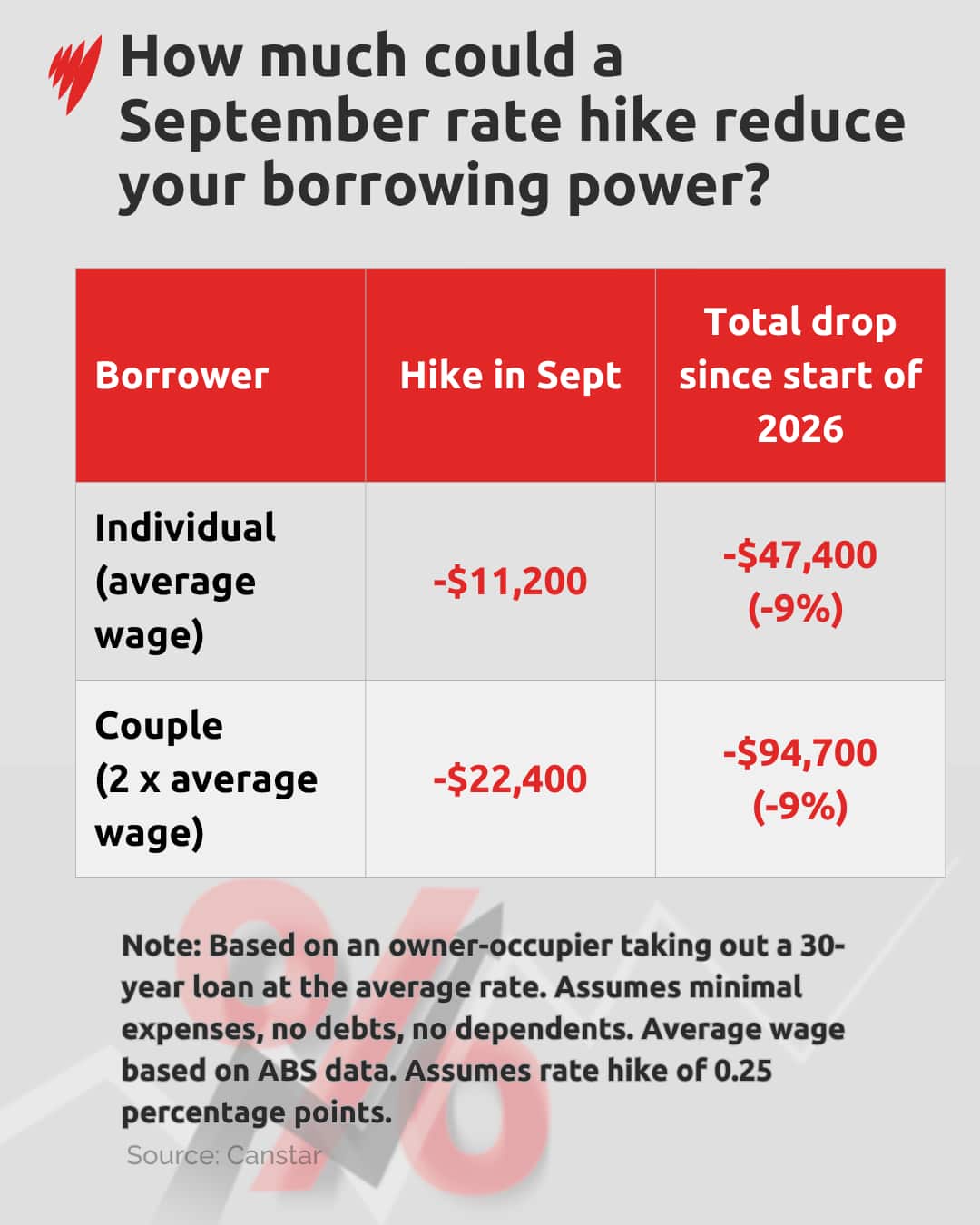
A standard rate hike on Tuesday could cut an average wage earner's borrowing power by $11,200, according to Canstar analysis — a total fall of 9 per cent since the start of the year.
For a couple, that figure doubles to $22,400, bringing the total reduction this year to $94,700.
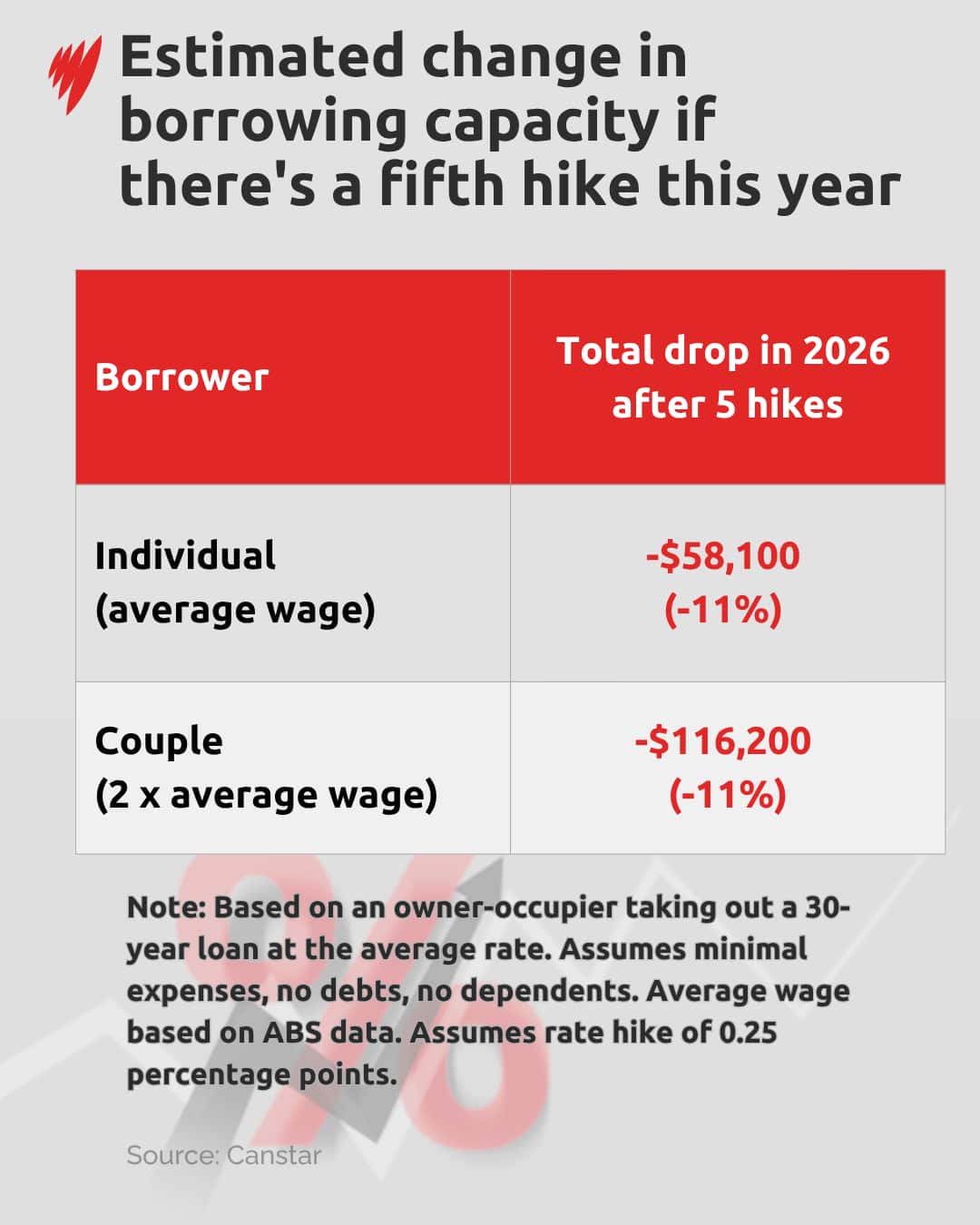
Should rates rise twice before the end of the year, this year's hikes will have shaved a total of $116,200 from a couple's borrowing power.
What can borrowers do?
Existing borrowers may be able to offset some of the impact by ensuring they're paying a competitive mortgage rate.
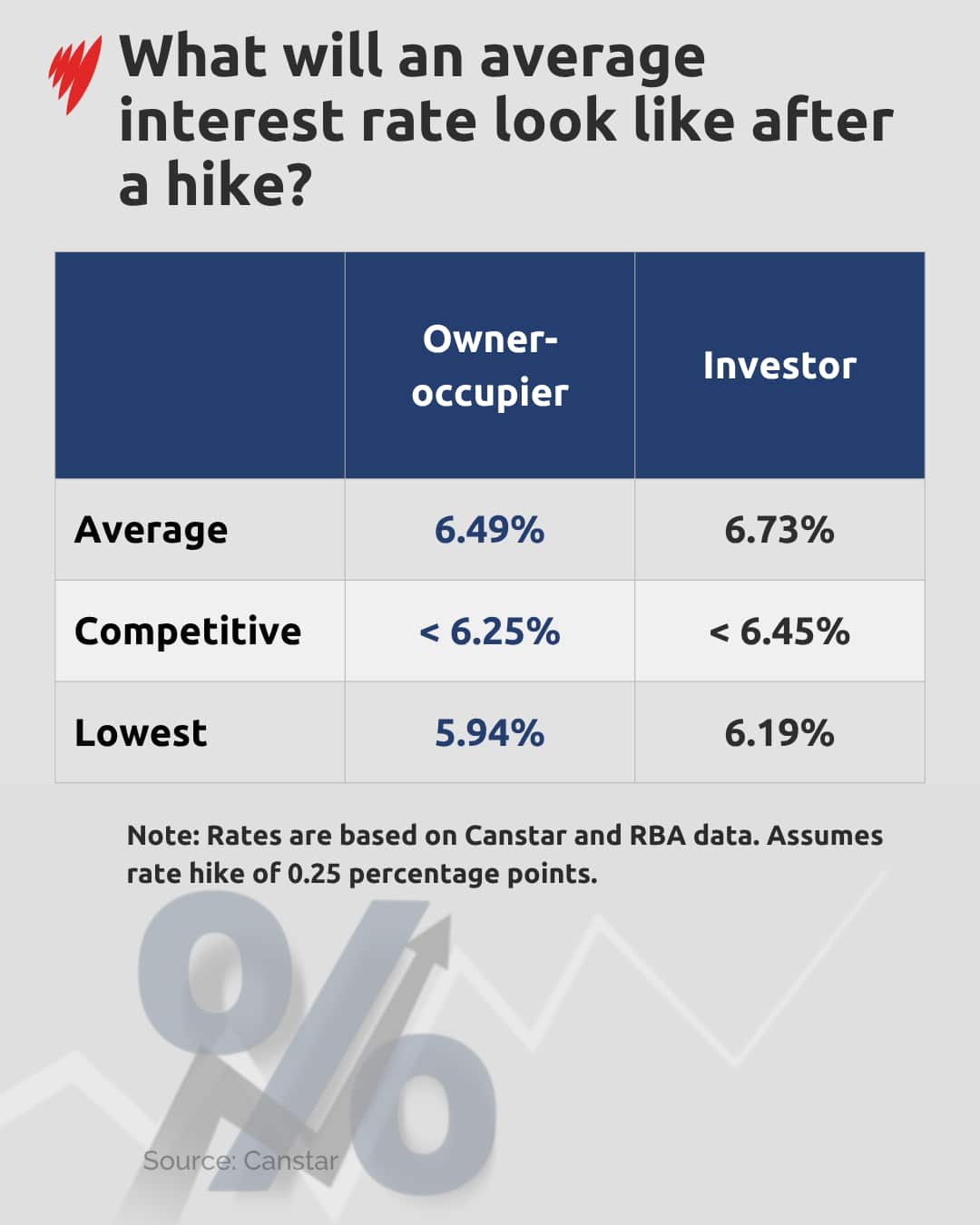
Canstar estimates the average variable rate for an owner-occupier paying principal and interest would rise to 6.49 per cent if Tuesday's expected hike is passed on in full.
But more competitive rates could still be available, with Canstar defining anything below 6.25 per cent as competitive after a rate hike, and the lowest variable rate on the market estimated at 5.94 per cent.
Tindall said borrowers should check how their rate compares with the market and with the rate their lender is offering to new customers.
"If your bank is offering a more competitive rate to new customers rather than you as a loyal existing one, you can ring them up and call them out on it," she suggested.
"Also have a couple of rates up your sleeve from other lenders."
If their bank won't budge, borrowers could consider refinancing with another lender, though Tindall said it was worth negotiating with their existing lender first given the additional paperwork and fees that can come with switching.
Mortgage broker aggregator Loan Market Group reported refinancing activity was up 14.9 per cent in September compared with the weekly average in August.
For borrowers who are worried they won't be able to meet their repayments, Tindall said they should consider contacting their lender as early as possible to discuss what hardship assistance may be available.
Options can include temporarily pausing repayments, switching to interest-only repayments for a period, or extending the loan term to reduce monthly repayments.
However, Tindall cautioned that some of these measures could leave borrowers paying more over the longer term, and recommended seeking independent financial advice before agreeing to any hardship arrangement.
"No one really wants to make that phone call, but if you're in that position, it's really important to do it and do it before you miss a repayment," she said. "They are required to help you."
This article is general information. Please see a professional if you need financial advice.
For the latest from SBS News, download our app and subscribe to our newsletter.







