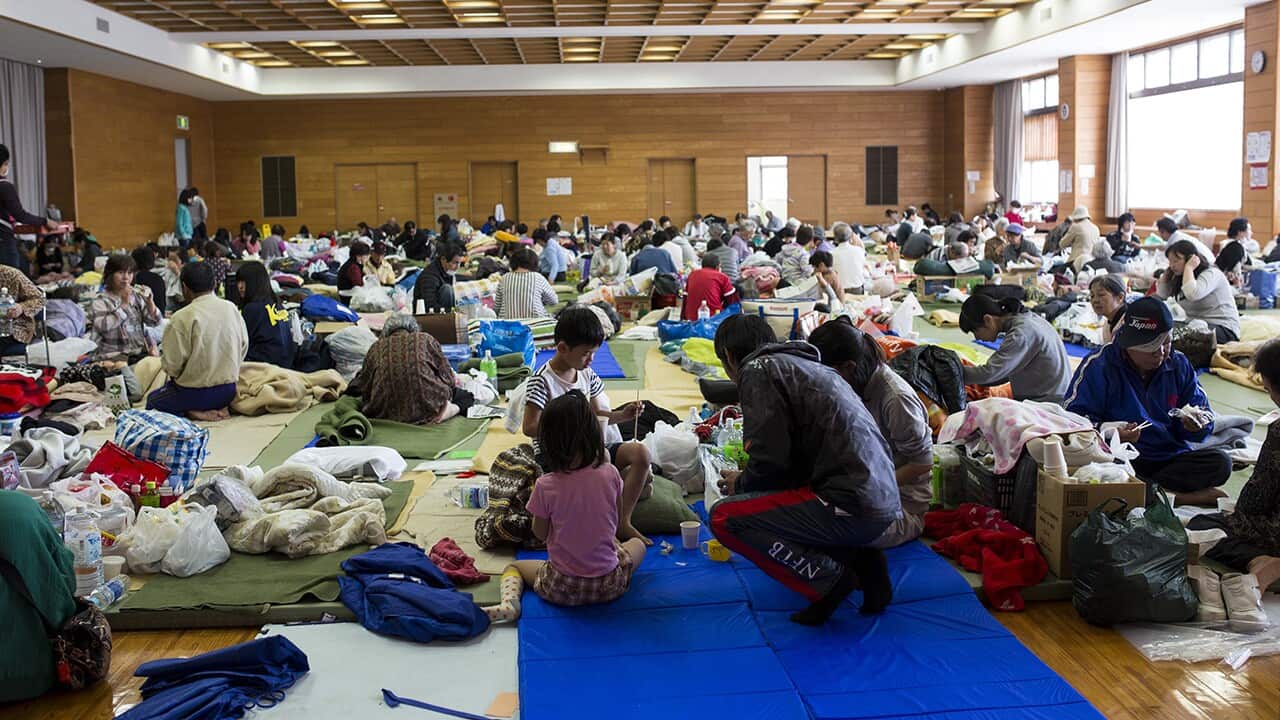
Aftershocks have rattled survivors of deadly Japanese earthquakes, nearly a week after the first one struck, as the area braces for heavy rain and the possibility of more landslides.
Rescuers using backhoes and shovels to dig through crumbled houses swept away in a landslide found a lifeless woman, one of several people still missing, taking the toll of dead to 47.
Hundreds of people in the Kumamoto area of southwestern Japan spent another night in their cars, afraid to return to damaged houses.
Medical experts warned of the danger of potentially fatal blood clots from sitting too long in cramped conditions - so-called economy class syndrome - after a 51-year-old woman died and at least 12 people were hospitalised because of it.
The first quake hit late on April 14 and the largest, at magnitude 7.3, some 27 hours later.
News that makes sense
Your trusted source for staying up-to-date with the world around you. Get free daily news updates and analysis, straight to your inbox.
"I keep thinking the earthquakes will stop, but they just go on and on," one woman at an evacuation centre in Mashiki, one of the worst-hit areas, told NHK.
"It's really scary."
A 5.5-magnitude quake hit on Tuesday night.
Of more than 680 aftershocks hitting Kyushu island since April 14, more than 89 have registered at magnitude 4 or more on Japan's intensity scale, strong enough to shake buildings.
Nearly 100,000 people are in evacuation centres, some huddling in blankets outside as night temperatures fell as low as 8 Celsius or queuing in long lines in the sun and 25C heat for bowls of noodles, their first hot food in days.
Heavy rain is expected over the area - 120mm for Wednesday and early Thursday - raising fear that slopes weakened by the quakes could collapse.
Authorities have begun condemning buildings and other structures deemed unsafe.
Hundreds, possibly thousands, of buildings collapsed, many brought down by their heavy roofs of traditional tiles.







