(Transcript from SBS World News Radio)
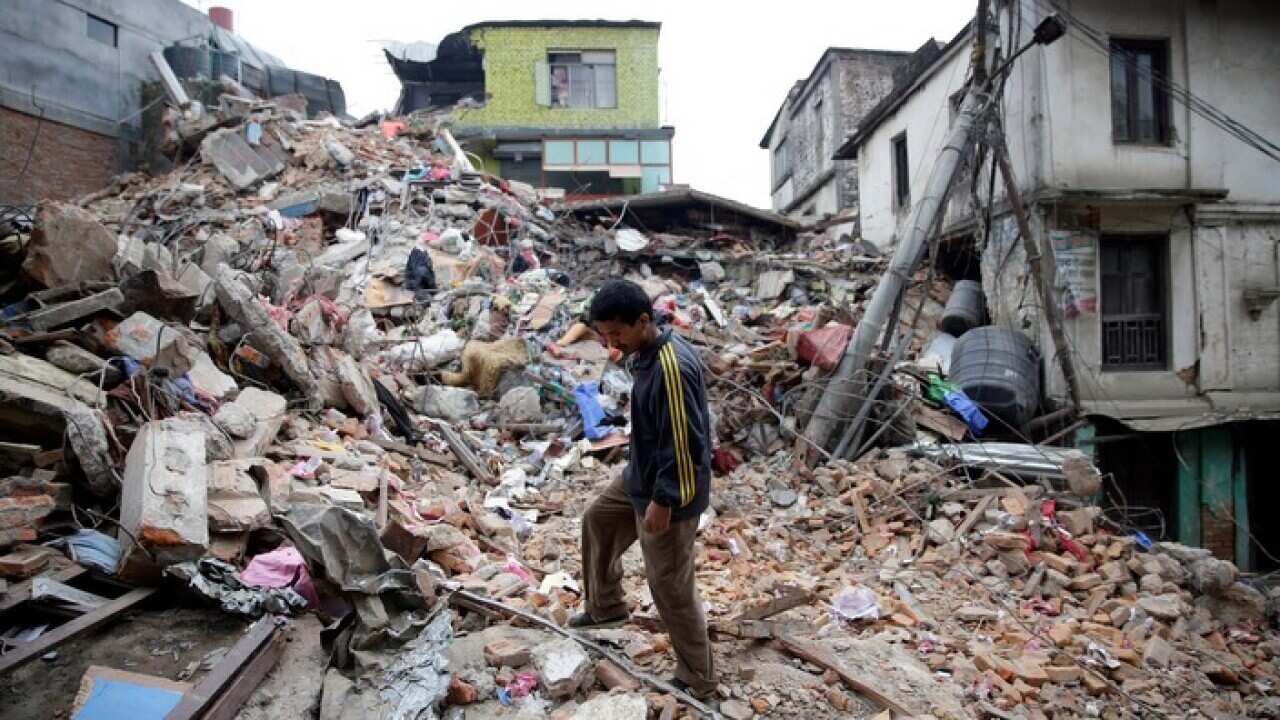
Hospitals in Nepal are struggling to treat thousands of earthquake survivors as aid groups and foreign governments intensify efforts to help.
Aftershocks continue to jolt Kathmandu and surrounding areas since Saturday's severe 7.8-magnitude quake that's killed more than 2,500 people.
Manny Tsigas reports.
(Click on the audio tab above to hear the full report)
At the base of Kathmandu's now destroyed Dharahara Tower rescue workers scurry to clear a sea of debris.
It's been two days since the quake hit and hopes of finding survivors are fading.
One resident tells the BBC of the moment the historic 19th century structure toppled to the ground.
"I saw people on the balcony at the top of the tower. They were clinging to the railings as it fell, and they suffered terrible injuries when it crashed to the ground."
The city is a popular tourist destination but these surrounding are now foreign to everyone.
One French traveller says he was overwhelmed by the sudden impact.
(Translated)"We ran into the hotel courtyard to avoid being crushed. When we came back to Durbar Square, we saw everything was damaged. We started helping people, trying to move bodies out of the debris. Last night we slept outside because we were afraid of aftershocks. All those hotels have high floors."
Most residents have the same fear.
Doctor Sandesh Dahal says he has no choice but to treat survivors in hastily erected tents.
"Because of the severe sequence of the after-quakes, most of the people are very afraid of getting into their houses, so they are living in this open area. We have a hospital out there, but it's very unsafe."
But as one woman confirms many simply don't have a home to go to.
"I was feeding my baby in the house when the earthquake struck. We managed to escape, but our home has been destroyed."
Among the latest pledges for help, the European Commission has released millions of dollars in emergency aid on top of assistance offered by individual EU countries.
Aid groups say their biggest concerns are in rural areas where some villages are hard to access at the best of times.
Cecelia Keizer is the director of Oxfam in Nepal.
She says help is trickling in.
"We have the capacity of getting water to 100,000 people, and we work together with the World Food Program also on getting food and shelters. It seems that it is going to start to rain during the night and it is quite cold during the night and we have to cover the shelters as fast as possible."
Meanwhile, video has emerged from the base camp of Mount Everest where the earthquake and multiple aftershocks have triggered avalanches.
A German climber captured the moment a wall of snow headed towards the area, burying everything in its path.
A number of climbers have since been flown to Kathmandu.
But, as is the case in so much of Nepal, not everyone is accounted for.
Share


