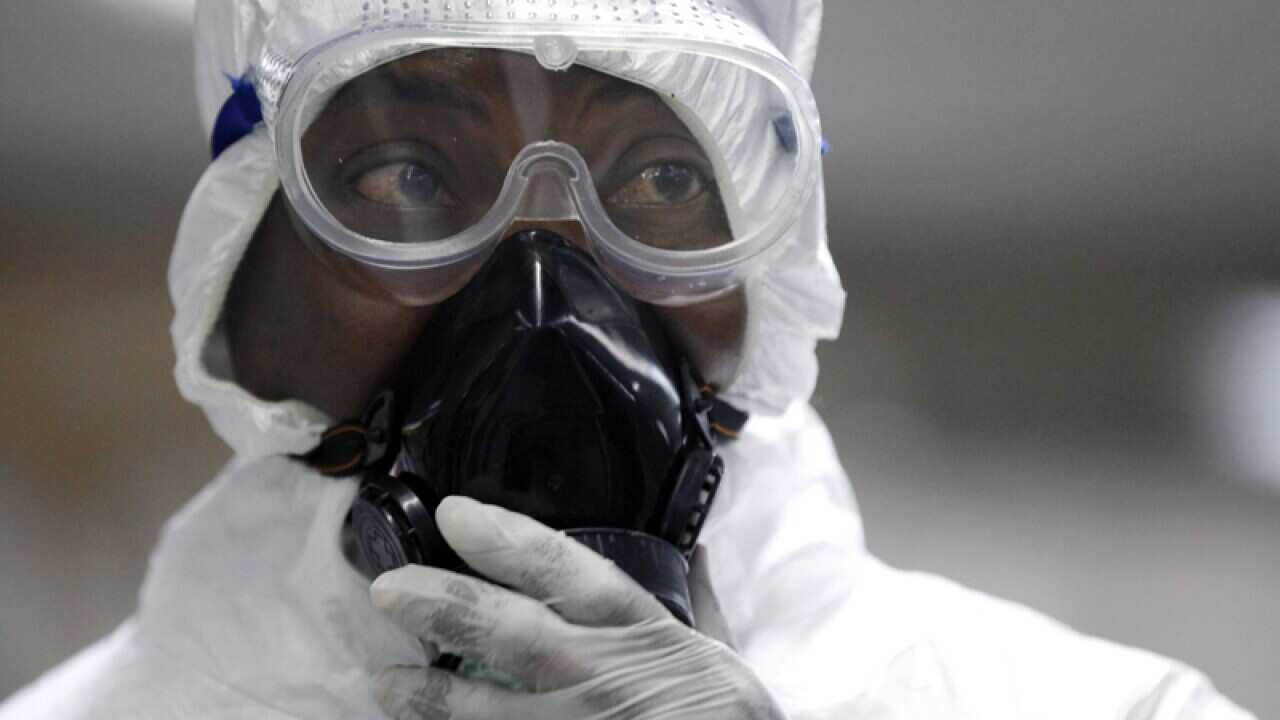
Medecins Sans Frontieres Australia (Doctors Without Borders) says the $2.5 million offered on Wednesday would be better spent providing the same sort of logistical help as provided by military assistance in major disasters.
"Let's be very clear. It's not MSF's role nor should it be to substitute the responsibility of the Australian government or any other state in addressing this (epidemic)," MSF Australia executive director Paul McPhun told AAP.
"This money would be better spent providing capacity that Medecins Sans Frontieres and other NGOs cannot.
"Our teams have been overwhelmed for some time now, and are forced to turn away patients that are highly infectious. What is needed is a massive increase in personnel, equipment and logistical support."
The government has promised $2.5 million each for MSF and the World Health Organisation, and $2 million to the UK to help its efforts to combat the disease in Sierra Leone.
The extra money brings Australia's contribution to $8 million.
Prime Minister Tony Abbott said the government was monitoring the outbreak in west Africa and more money could be committed if it worsened.
The announcement came just hours after US President Barack Obama called for a global response to the "out of control" epidemic.
MSF has described the response so far as "lethally inadequate."
"The emergency we're facing is not just an emergency of containing an Ebola epidemic," Mr McPhun said.
"This is also a massive public health emergency where health infrastructure has collapsed and thousands of people are dying now of non-communicable diseases over and above the Ebola emergency.
"Sooner or later it will not be contained."
The UN says nearly $US1 billion ($A1.08 billion) will be needed to stop the worst-ever outbreak of the disease, which has killed more than 2400 people in Guinea, Liberia, Nigeria and Sierra Leone.
The UN predicts 20,000 people could be infected by Ebola by the end of the year, while President Obama says the virus could infect hundreds of thousands if it's not stopped now.
Labor supported the government's increased contribution, but noted the coalition had cut $118 million in aid to Africa in its first budget.
Share


