In brief
- Australia says Israel's investigation into Zomi Frankcom's death leaves "many unanswered questions".
- Relations have deteriorated from close ties to sanctions and recognition of a Palestinian state.
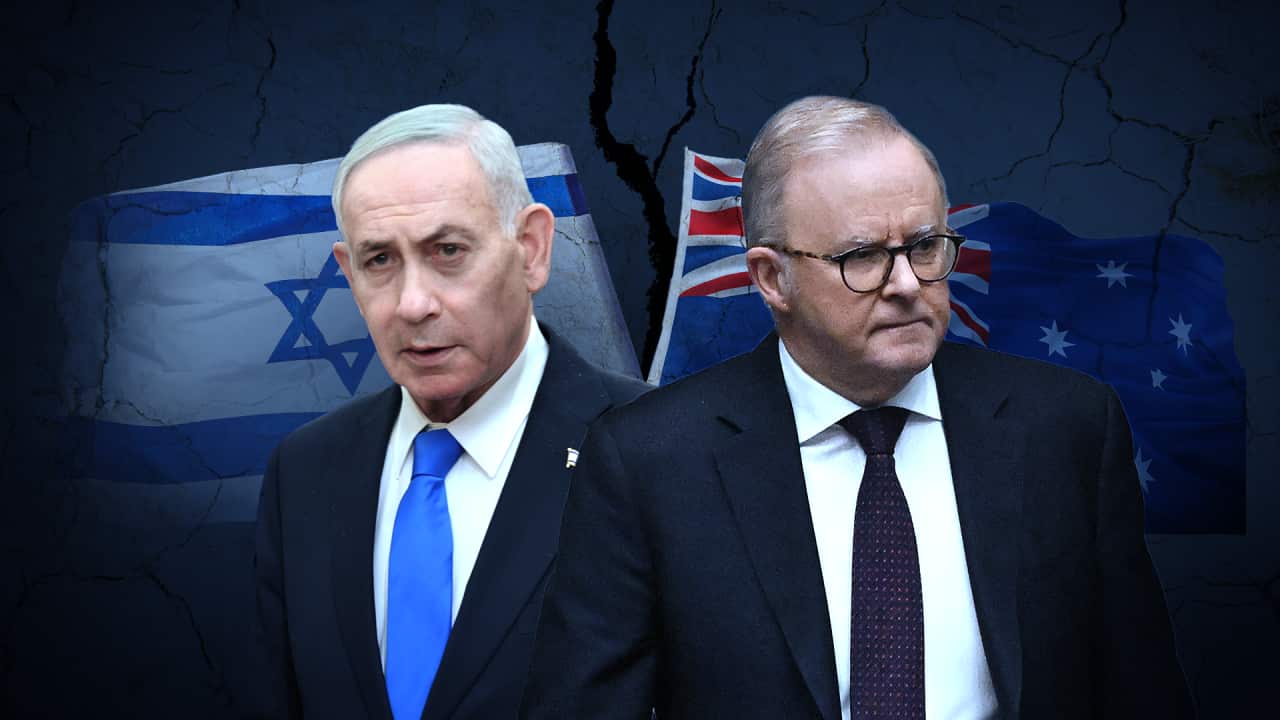
Israel's decision not to pursue criminal proceedings over the killing of Australian aid worker Zomi Frankcom has sparked "outrage" from the federal government, signalling a new low for relations between the two countries.
The decision comes after almost three years of increasingly strained ties, with Australia moving from backing Israel after the October 7 attacks to imposing sanctions on Israeli government ministers and recognising a Palestinian state.
Despite previously conceding there had been "serious failures", the Israeli Defense Forces (IDF) on Wednesday announced it would not prosecute those responsible for the death of Frankcom and six of her World Central Kitchen colleagues in an IDF strike in Gaza in April 2024.
Foreign Minister Penny Wong said the decision "falls far short of the accountability we expect" in some of her most critical comments against Israel since the Gaza war began.
Asked about Australia's relationship with Israel, Wong said it was facing a "difficult time".
News that makes sense
Your trusted source for staying up-to-date with the world around you. Get free daily news updates and analysis, straight to your inbox.
She said the federal government only became aware of the decision moments before it was publicly announced, and it was "especially insulting" to Frankcom's family that it came on World Humanitarian Day, a point echoed by Zomi's brother Mal in a statement.
The Greens called for the Israeli ambassador, Hillel Newman, who was summoned by the government for an explanation on Thursday, to be expelled.
Opposition defence spokesperson James Paterson said the news was "incredibly concerning", but he needed to receive a full briefing before making further comment.

Frankcom and her colleagues were travelling in a marked aid convoy in Khan Younis, southern Gaza, when they were hit by three Israeli drone strikes on 1 April 2024.
The Israeli military initially said the convoy had been mistaken for a group of Hamas fighters before later acknowledging the vehicles had been misidentified and there had been serious failures in the decision-making leading to the attack.
A low point in relations
Australia and Israel have historically enjoyed warm relations, with Australia supporting Israel at international forums such as the United Nations.
The Australian government's Department of Foreign Affairs and Trade states in a current country briefing on its website that "Australia and Israel share a close relationship with significant people-to-people links and broad commercial engagement."
There have been previous periods of tension, most notably in 2010, when then-prime minister Kevin Rudd expelled an Israeli diplomat after Israel's intelligence agency Mossad was accused of 'misusing' Australian passports for agents involved in the assassination of a senior Hamas operative in Dubai.
But Ian Parmeter, a research scholar in Middle Eastern affairs at the Australian National University and a former diplomat, said Israel's response to the Hamas October 7 attacks had seen the relationship sink to new depths.
"I think at this stage you can judge it to be the worst that it's been," he told SBS News.
"With the terrible pictures that we were seeing on the television screens of Palestinian civilians being killed by Israeli bombs, there was a substantial deterioration in the Australian public's attitude towards Israel, and the Australian government started to reflect that."
Hamas killed more than 1,200 people and took 251 hostages in its 7 October 2023 attack, according to Israeli authorities.
Israel subsequently launched a military campaign in Gaza, with 73,000 people killed in the territory, according to the Gaza health ministry.
A tentative ceasefire was reached in October last year, but both sides have accused each other of breaching it. More than 1,200 Palestinians in Gaza have been killed since it came into effect.
How did we get here?
Parmeter said Australia's position had progressively hardened as the war continued.
According to a study by the US-based Pew Research Center study published in June, 79 per cent of Australians held an unfavourable view of Israel, up five percentage points from a year earlier.
As Israel's military operations in Gaza expanded, the federal government increasingly emphasised the protection of civilians, allowing humanitarian access and the release of the hostages held by Hamas.
In December 2023, Australia voted at the United Nations in favour of a humanitarian ceasefire in Gaza, a move criticised by Israel and a shift from Australia's previous decision to abstain.
Throughout 2024, Australia increasingly backed calls for a ceasefire, Palestinian self-determination and a two-state solution.
Frankcom's killing in April 2024 became another major point of tension, with Prime Minister Anthony Albanese calling for "full accountability" from Israel.
By July, Australia, Canada and New Zealand had issued a joint statement describing the humanitarian situation in Gaza as "catastrophic" and saying Israel needed to listen to international concerns about civilian protection.
In September 2024, Wong addressed the United Nations General Assembly about the deteriorating situation in Gaza, including the deaths of more than 11,000 children and the risk of food insecurity for two million people.
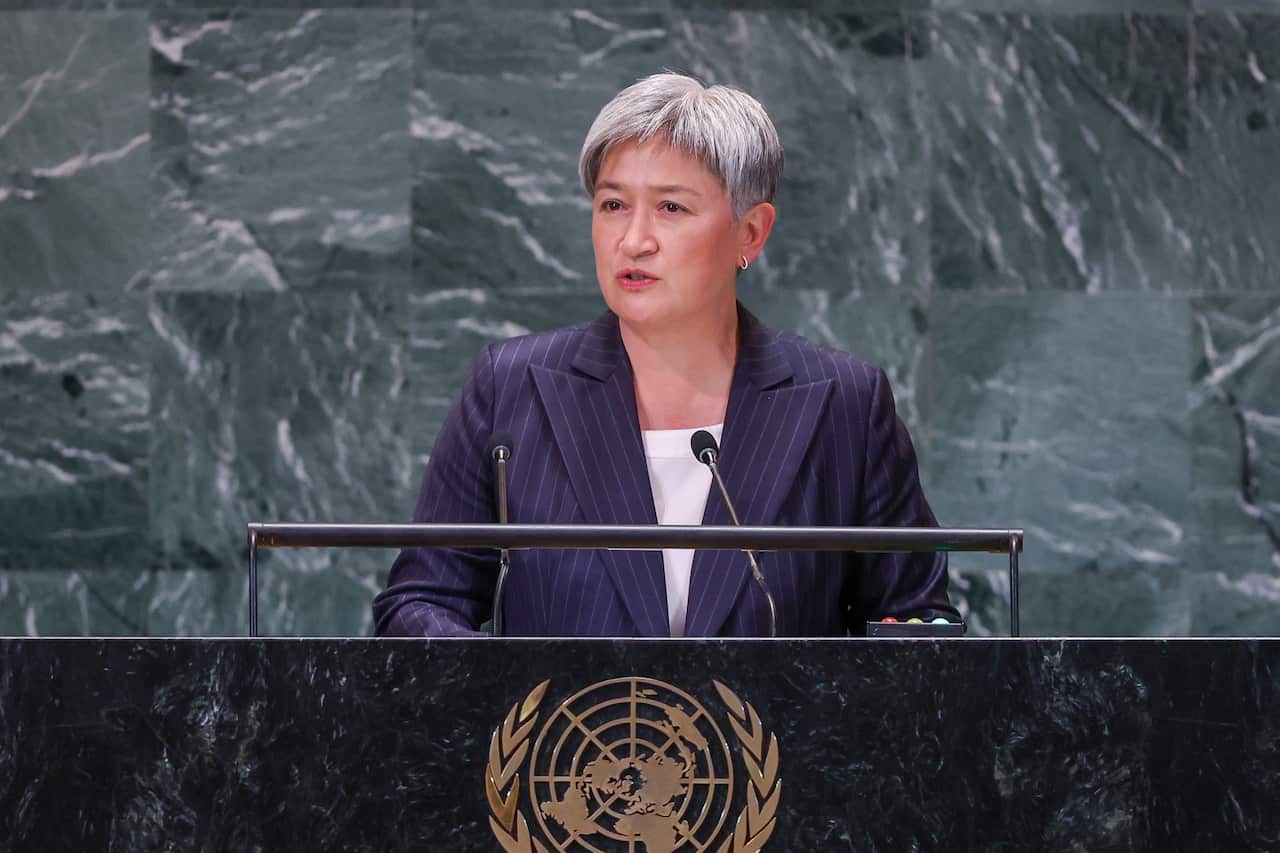
"Palestinian civilians cannot be made to pay the price of defeating Hamas," she said.
"All lives have equal value."
In June 2025, Australia announced, also in a joint statement with four other nations, financial sanctions and travel bans against Israeli ministers, Itamar Ben-Gvir and Bezalel Smotrich, for inciting violence against Palestinians in the West Bank.
Recognition of Palestinian statehood
Parmeter said a turning point in relations came in September 2025, when Australia formally recognised the State of Palestine — a historic shift in Australia's policy towards Israel.
Israeli Prime Minister Benjamin Netanyahu personally criticised Albanese, describing him as a "weak politician" who had "betrayed Israel and abandoned Australia's Jews".
"This was pretty strong stuff," Parmeter said.
"I've not seen that sort of personal abuse come from the leader of a nominally friendly country towards an Australian leader in my time over the past 50 years."
Albanese did not directly respond to the criticism, but Home Affairs Minister Tony Burke said Netanyahu had "lashed out" at countries which had shown support for Palestinian statehood.
"Strength is not measured by how many people you can blow up or how many children you can leave hungry," he said.
The relationship was further strained after the Bondi Beach shooting, in which gunmen killed 15 people attending a Hanukkah event in an alleged terrorist attack last December.
Netanyahu accused Albanese of pouring "fuel on the antisemitism fire" by recognising a Palestinian state and failing to act against antisemitism.
"You took no action. You let the disease spread and the result is the horrific attacks on Jews we saw today," he said at the time.
Israeli President Isaac Herzog's visit to Australia in February was seen by some analysts as an opportunity to reset relations but was met with widespread protests, underscoring the depth of public opposition to Israel's conduct in Gaza.
The tensions between the two countries returned to the fore on Thursday following Wong's comments.
The federal government has so far stopped short of expelling the Israeli ambassador or other diplomats, but it could take further steps to pressure Israel, including imposing additional sanctions or reducing the level of diplomatic engagement between the two countries.
"We'll have to see if any of them are taken," Parmeter said.
How does Israel see Australia?
Dr Ran Porat, from the Australian Centre for Jewish Civilisation at Monash University and a research affiliate at the Australia Israel & Jewish Affairs Council, told SBS News that from Israel's perspective, Australia was "walking away from its support of Israel" and abandoning shared values around combating extremism.
"Over the last five years, and especially after October 7, we've seen a shift from the Australian government distancing itself from at least the current Israeli government in a series of decisions that started with the cancellation of the recognition of West Jerusalem as Israel's capital."
Despite the deterioration in relations, Porat said strong ties remained between Israel and Australia, with much of the current tension stemming from the relationship between the two governments.
Israel is due to hold elections in October, with Netanyahu's right-wing coalition trailing in the polls, raising the prospect of a reset in relations if a new government is elected.
"I'm hopeful that the countries can go back to the strong ties between themselves, because the platform for that exists," Porat said.
Parmeter noted that relations between Israel and Australia remained strong at the community level, with the Australian Jewish community playing a key role.
"There always is the opportunity for basically restoring a good sense of relationship between countries, and that well may happen," he said.
"In diplomacy you never say never."
Whatever happens after Israel's next election, the Frankcom case is likely to remain a sore point in the relationship.
On Thursday afternoon, Wong said the Australian government did not have confidence in the IDF's internal investigations, which had left "many unanswered questions".
"We will consult with Zomi Frankcom's family before we announce further steps," she said.
Wong also called on Israel to apologise to Frankcom's family.
Israel's ambassador to Australia, Hillel Newman, expressed sorrow over Frankcom's death on Thursday but stopped short of an apology, saying it could have "legal ramifications".
For the latest from SBS News, download our app and subscribe to our newsletter.







