This audio is voiced by AI and may occasionally mispronounce words.
Share your feedback and help us improve this feature. Read more about how we use AI at SBS here.
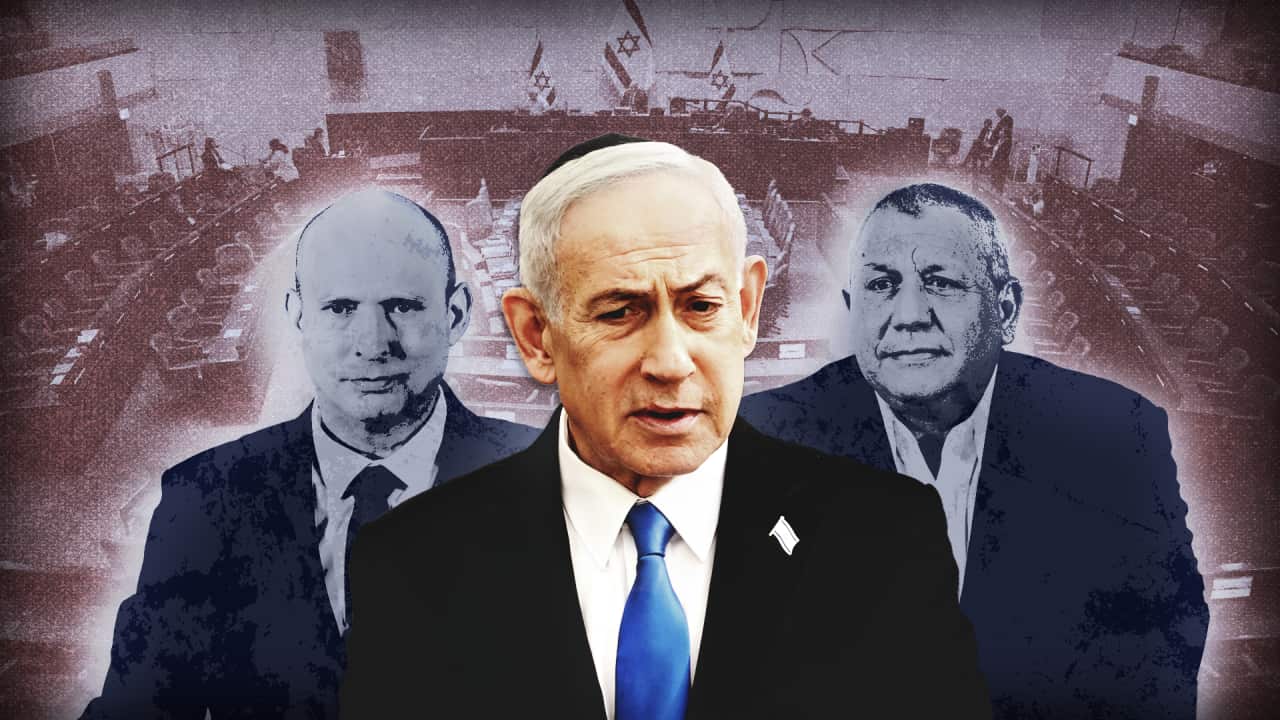
There's an enormous amount at stake for Israelis — and Prime Minister Benjamin Netanyahu — as the country prepares to head to the polls later this year.
Things look very different in Israel since its last elections. The country suffered the deadliest attack in its history on 7 October 2023, precipitating a prolonged conflict in Gaza that has been followed by a wider regional escalation involving Iran and Lebanon.
Surveys indicate public support of Israel has deteriorated significantly in the United States and among other Western allies since the start of the Hamas-Israel war.
And Netanyahu, embroiled in a long-running corruption trial domestically, is also the subject of an International Criminal Court (ICC) arrest warrant over alleged war crimes in Gaza, allegations Israel rejects.
Polls suggest Netanyahu, who has served nearly 19 non-consecutive years in office since he was first elected in 1996, remains a dominant political figure, but enters the election period vulnerable.
News that makes sense
Your trusted source for staying up-to-date with the world around you. Get free daily news updates and analysis, straight to your inbox.
While his Likud party generally leads in the polls, it can't form a government alone, and an alliance of new and existing opposition parties could end up with more seats than his broader right-wing coalition.
His frayed coalition government, composed of five parties and considered the most right-wing in Israel's history, moved last month to dissolve parliament, setting the stage to move the election up from its original date of 27 October.
Some have billed it as one of the most consequential votes in Israel's history, and a referendum on Netanyahu's leadership following the October 7 attacks.
The election is set to be a defining test of Netanyahu's leadership and of how more than two years of conflict have reshaped Israel’s political landscape.
Where does Israel's longest-serving prime minister stand as the vote looms?
Netanyahu's balancing act
Netanyahu's coalition has been at odds over a controversial issue that has long divided Israeli society: the exemption of some ultra-Orthodox Jews from military conscription.
Ran Porat, affiliate research associate at Monash University's Australian Centre for Jewish Civilisation, who specialises in Israel and Middle Eastern affairs, says the issue became one of the defining challenges facing Netanyahu's government.
"The reason [the government] did not survive the whole four years … is the tensions inside the coalition, specifically around the bill to draft young Orthodox religious men into the Israeli army," he tells SBS News.
"That bill hit a rock and was not progressing."
Netanyahu faced sustained pressure from some coalition partners, including far-right nationalist and ultra-Orthodox parties, to pass a law guaranteeing the exemption would remain in place.
But other factions, including within Netanyahu's own Likud party, were opposed, as were opposition leaders and a growing majority of the public.
Netanyahu has been "walking a fine line between trying to appease the demand of his ultra-Orthodox parties" and juggling public disagreement and efforts to block the bill's passage in the Israeli parliament, the Knesset, Porat says.
Who are Netanyahu's key rivals?
To answer that, it helps to first understand Israel's electoral system, which is quite different to Australia's.
Israelis don't vote directly for individual candidates or elect a representative for the area where they live.
Instead, the entire country is treated as one electorate, and voters cast their ballots for a political party.
The Knesset's 120 seats are then allocated based on each party's share of the national vote.
After the election, parties negotiate to try to form a government. The leader who can assemble a majority coalition becomes prime minister.
That means the key question isn't just which party wins the most votes, but who can forge the deals needed to assemble a coalition of at least 61 seats.
No single party has ever won an outright majority of seats in Israel's parliament.
As a result, coalition negotiations are often as important as the election result itself, and governments can rise or fall based on shifting alliances between parties.
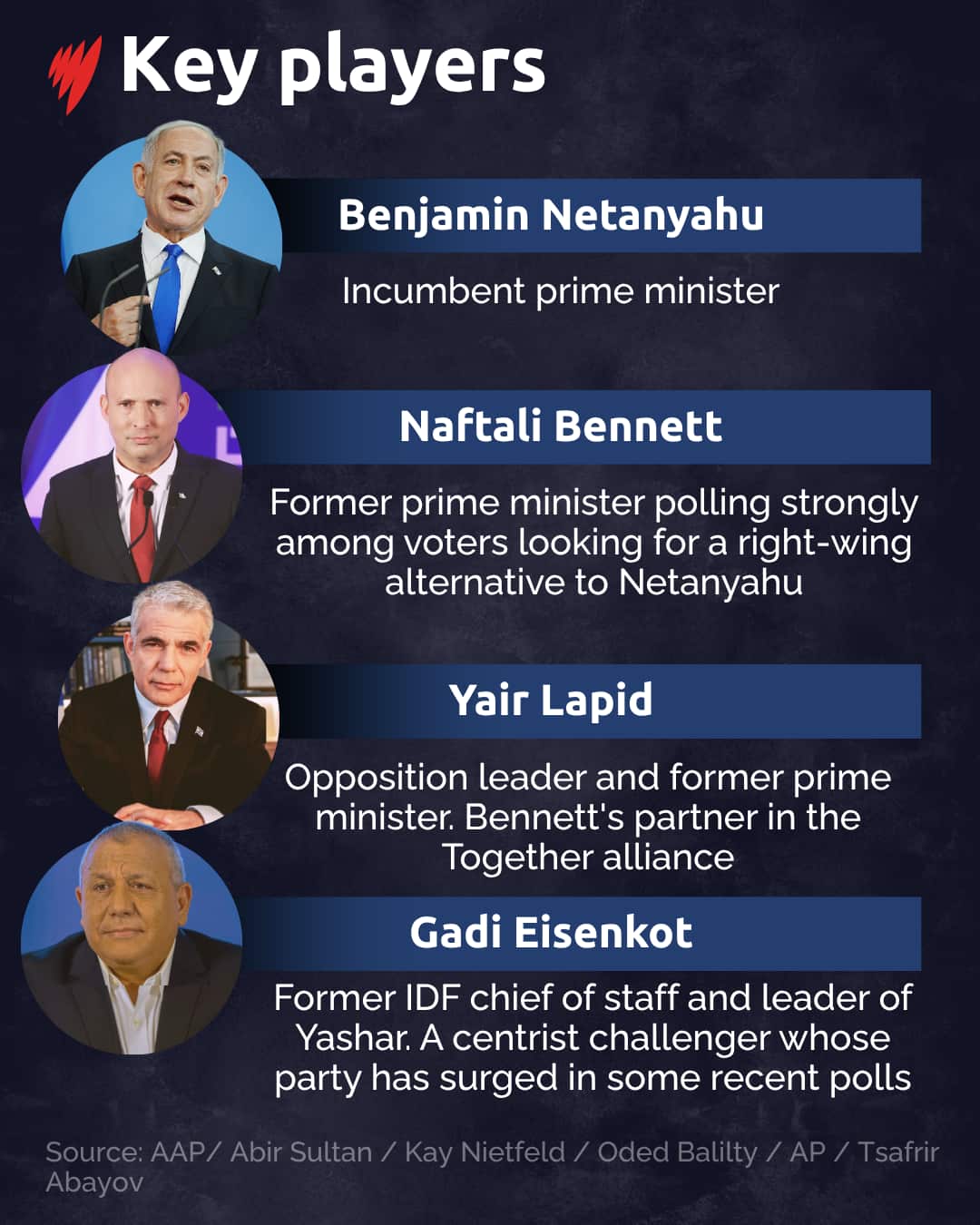
In the lead-up to this election, Israel's political parties can broadly be divided into two camps: those willing to serve in a government led by Netanyahu, and those who aren't.
Earlier this year, two of Netanyahu's former allies joined forces, merging their parties to form a new one, called Together, in a bid to consolidate support within the anti-Netanyahu bloc.
Dahlia Scheindlin, a Tel Aviv-based political scientist and public opinion researcher who has advised on nine Israeli electoral campaigns, says: "They are currently the closest to Likud [in the polls], sometimes they're just around tied."
"But nevertheless, you don't need to be the biggest party in Israel to form the coalition," she tells SBS News.
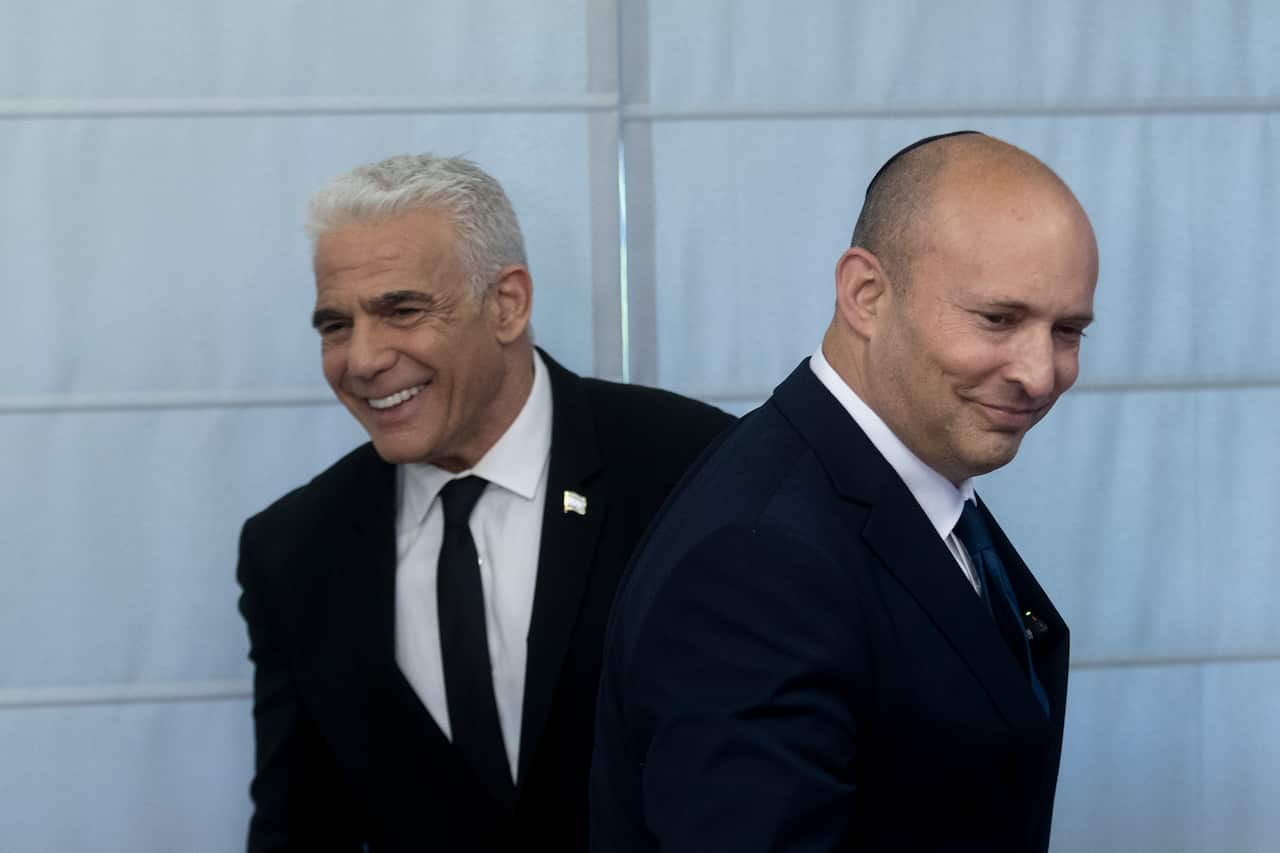
Together's leaders, right-wing Naftali Bennett and centrist Yair Lapid, have bested Netanyahu before.
After Netanyahu failed to form a government following the 2021 election, the pair assembled a broad coalition that ended his 12-year run in office.
Both went on to serve brief stints as prime minister.
However, their ideologically diverse governing coalition — the first in Israel's history to include an Arab party — held only a razor-thin majority.

It was deeply divided over key issues and collapsed after about a year, triggering a new election in November 2022. That was Israel's fifth vote in less than four years.
Bennett is considered one of the main contenders to succeed Netanyahu. His appeal, in part, lies in his ability to attract some right-wing voters who oppose Netanyahu.
However, Scheindlin says it remains unclear how voters will respond to Bennett's decision to merge with a centrist party.
The two parties that make up Together had higher combined totals before they joined forces.
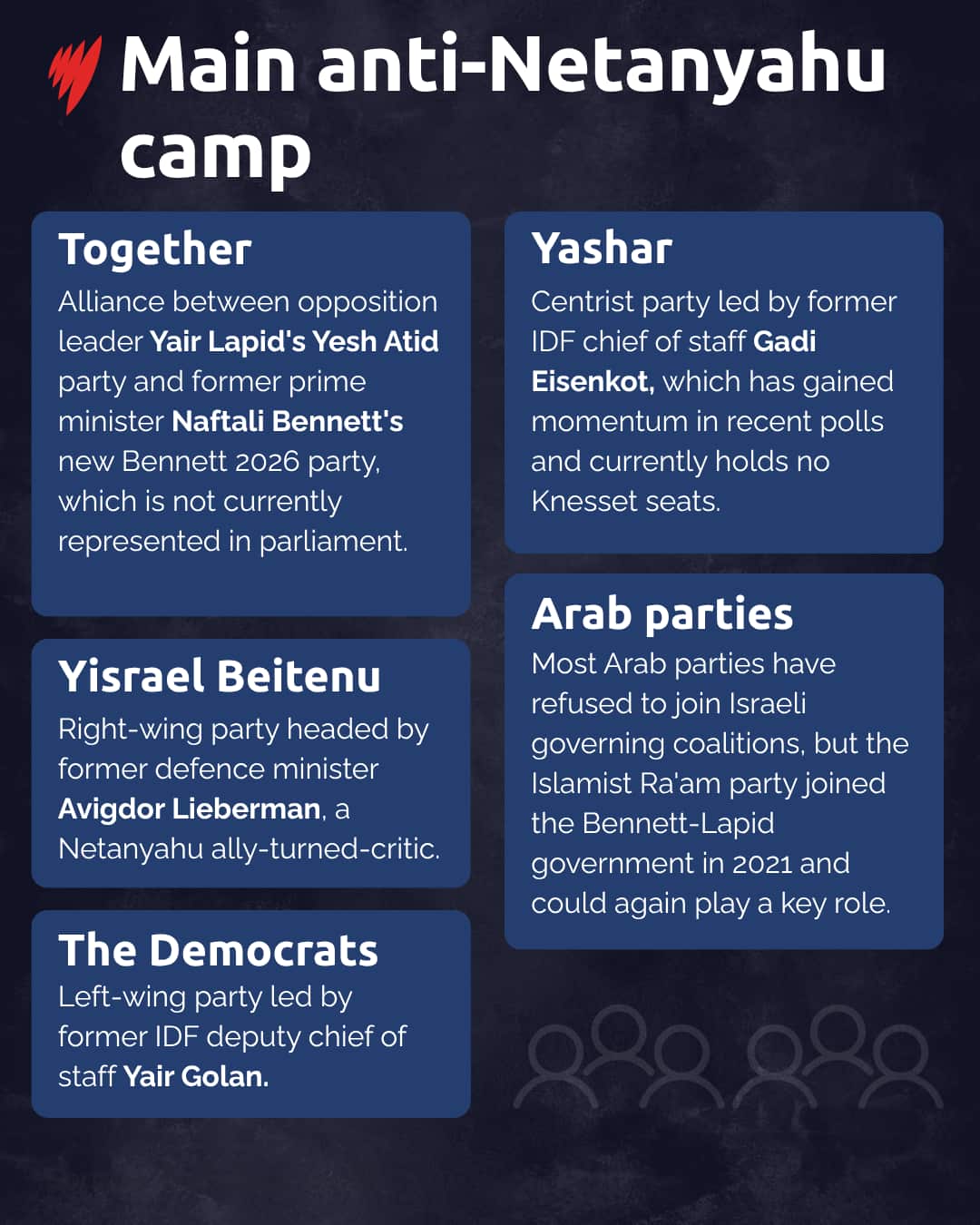
Another prominent name in the mix is former Israel Defense Forces (IDF) chief of staff Gadi Eisenkot, who founded the Yashar party last year after resigning from the National Unity party.
Yashar, which roughly translates from Hebrew as 'straightforward' or 'honest', does not currently hold any Knesset seats, but it has been making gains in the polls.
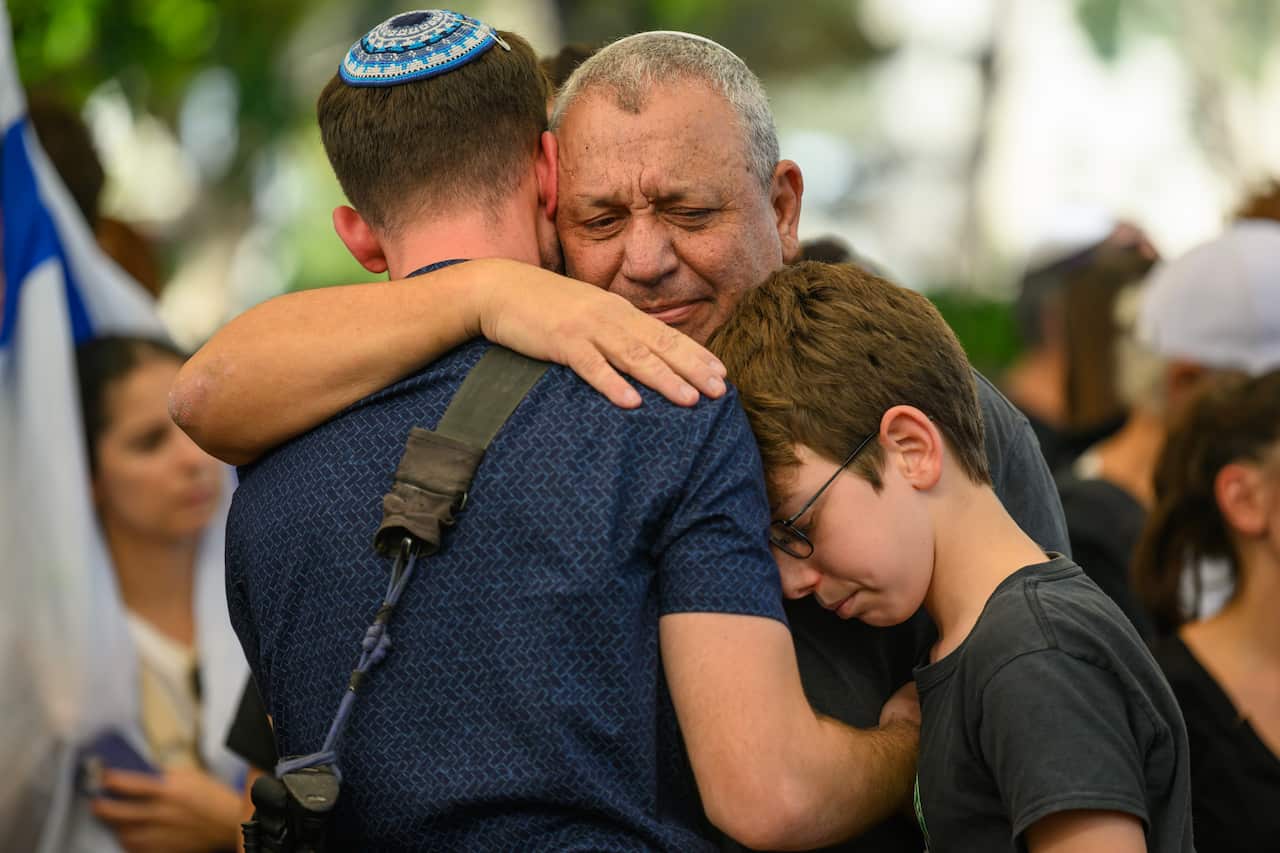
Some recent surveys suggest the party is narrowing the gap or tied with Together.
"People find him somehow honest, you know, they see him as a person of integrity, as a professional," Scheindlin says of Eisenkot.
His star is on the rise right now. He's also a bereaved father. Not only his son, but also his nephew, were killed in these recent wars.
Together and Yashar are both part of the broader anti-Netanyahu camp and would most likely need to cooperate to form a government.
Why defeating Netanyahu may not be enough
In most polls, the parties in Netanyahu's current coalition are falling short of the majority needed to win.
That suggests parties opposed to Netanyahu collectively command broader support. But converting that advantage into a governing majority is far from straightforward, given the deep divisions that remain within the anti-Netanyahu camp, Scheindlin explains.
The strongest divisions lie between the Arab and the Zionist parties.
Members of the latter have effectively vowed not to work with other opposition parties that represent Arab and Palestinian citizens of Israel.
The divide reflects broader disagreements over Israel's identity, security and relations with Palestinians, and the role Arab parties should play in government.
"That's a long-standing taboo," Scheindlin says.
And it creates a maths problem for the opposition.
"Right now, for the purposes of building a new coalition, we're looking at a tie in terms of the coalition-building prospects of each side," she says.
But Scheindlin notes a lot can change between now and the election. A complicated "coalition-building puzzle" and "a lot of musical chairs" is on the horizon.
'The camps are not left versus right'
Shahar Burla, a contributing editor at the Jewish Independent, holds a PhD in political science from Israel's Bar-Ilan University.
He says the definition of left and right in Israel has shifted and blurred over the past two decades.
"At the moment, the camps are not left versus right," he tells SBS News.
It's basically Bibi [Netanyahu] … versus not Bibi. So that's the two main camps. That's the opposition, and the coalition is parties that are willing to sit with Bibi.
The election takes place against the backdrop of a deeply polarised Israel.
"There is a very, very strong community … that supports Netanyahu and will support him in any scenario, and there is a strong cohort of people against Netanyahu, and the two camps have little negotiation possible between them," Burla says.
Concerns have also been raised among analysts about heightened political polarisation, distrust in democratic institutions, the potential for disinformation and even violence during the campaign period.
Central issues for voters
"The next elections are seen by many Israelis as very much crucial. A lot is at stake," says Porat, who is also a research associate at the Australia/Israel & Jewish Affairs Council.
"Israel has to work hard to remanoeuvre itself to a better position in the world and deal with major problems in Gaza, Lebanon, and vis-à-vis Iran."
Voter turnout is typically high in Israel, but Porat expects this election in particular to draw significant engagement.
While security and the ongoing regional conflict remain dominant issues for voters, concerns about democracy and the rule of law are also shaping political debate.
Netanyahu has also faced fierce public backlash over security failures preceding the October 7 attacks, which many critics hold him responsible for.
The ultra-Orthodox military draft law is also expected to be a major talking point.
Israel has compulsory military service for most Jewish citizens, but ultra-Orthodox Jews engaged in religious studies can be exempt.
"After October 7, this has become unsustainable because the army needs more soldiers, and there is a big pressure by the supreme court and by the Israeli public that changes to the draft law will be made," Burla says.
The IDF has repeatedly warned of severe personnel shortages, saying it is short of about 12,000 to 15,000 troops.
What a Netanyahu defeat could mean politically and legally
A loss could have implications for Netanyahu in domestic and international legal matters.
In 2019, Israeli prosecutors charged Netanyahu with bribery, fraud and breach of trust. He rejects the allegations and characterises the case against him as a politically motivated witch hunt.
His ongoing criminal trial began in 2020, but has faced repeated delays due to the size and complexity of the case, as well as the prime minister's official duties and national security responsibilities.
"It will be a disaster for him if he will lose the election because all his leverage at the moment in the trial is him being the prime minister," Burla says.
"It gives him a lot of leverage and ability to also use the international community, people like [US President Donald] Trump, to try to press [Israeli President Isaac Herzog] to give him a pardon or to press these judges. He used his role as a prime minister to change his testimony days."
It's going to be much more than just a political fight. It's a personal fight.
If Netanyahu loses, he could still serve as opposition leader.
Scheindlin is sceptical that removing him from office would necessarily result in a jail sentence.
"He'll have a nice long life, making a great deal of money on the private speaking circuit," she says.
"He'll probably build a big career being involved in various businesses and boards."
While in office, Netanyahu has more levers at his disposal regarding his trial. But Scheindlin notes that he has so far been unsuccessful.
"I think that we might be overstating the case to assume that he has to stay in power in order to stay out of jail," she says.
On the international front, a loss would not change how Netanyahu is treated by the ICC, but it could expose him to greater risk of arrest or prosecution by other countries, according to Rosemary Grey, co-director of the Sydney Centre for International Law and a senior lecturer at the University of Sydney's law school who specialises in international criminal law.
As prime minister, Netanyahu is covered by "personal immunity", a form of protection that generally shields sitting heads of government from prosecution in the domestic courts of foreign states unless waived by their own state. He would lose this protection if voted out.
The ICC, however, is an international court operating under the Rome Statute, and its position is that such immunities do not apply before it, meaning Netanyahu's position would be largely unchanged if he left office, Grey says.
"The status quo is: he can be prosecuted only by the ICC, but if he loses the prime ministership, then he can also be prosecuted by any foreign national court that has jurisdiction over the alleged crimes. So genocide, war crimes, crimes against humanity," she says.
There is ongoing debate within the legal community over the scope of immunity protections in ICC-related cases, which has made some of the ICC's 125 member states cautious about arrest obligations involving visiting officials.
Becoming a private citizen could therefore reduce that element of uncertainty for member states and make international travel riskier for Netanyahu.
What Israel could look like under another Netanyahu term
Scheindlin says it's not hard to guess Netanyahu's likely approach should he win re-election, given his governing record over the past few years.
She says his government has pursued open-ended conflicts, an increasingly expansionist foreign policy, and strategies that critics argue have weakened Israel's democratic institutions.
She argues that if the same coalition remains in power, those trends are likely to continue, alongside a hardline approach towards Palestinians.
"If it's Netanyahu but a different coalition, it's very hard to imagine, because there aren't too many other parties that will go in with them," she says.
While it's not yet clear what path the prime minister has to retain office, Porat notes Netanyahu's record of political resilience.
Never bet against Netanyahu. If I learned anything, it's never to bet against him. He's the ultimate comeback kid.
For the latest from SBS News, download our app and subscribe to our newsletter.







