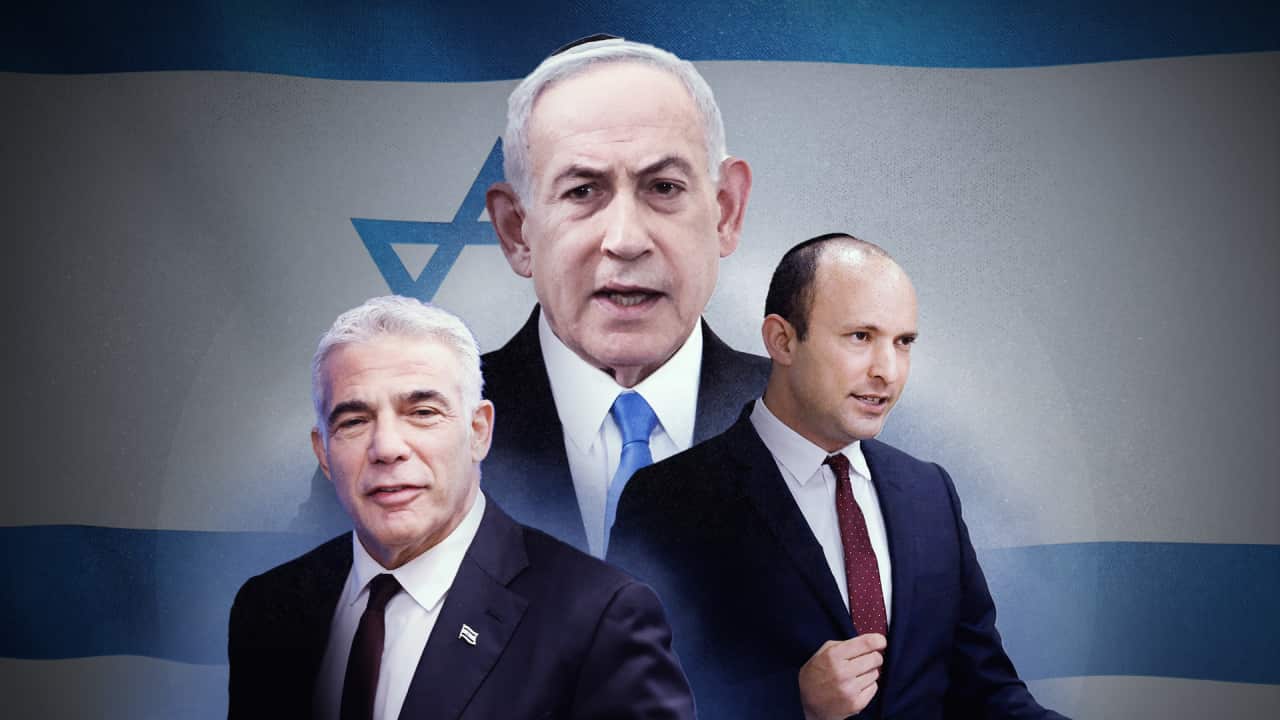
He's been a mainstay of Israeli politics for three decades but many are wondering whether 2026 will spell the end of Benjamin Netanyahu's time as prime minister.
Israelis are due to head to the polls by 27 October in a consequential election to determine the make up of the parliament, or Knesset.
Recent polling has shown Netanyahu's personal approval ratings have slipped.
An 11 April survey by Hebrew University's Agam Labs found only 10 per cent of Israelis viewed the war with Iran as successful, while support for Netanyahu was at 34 per cent, down from 40 per cent at the start of the war. More than half rated his leadership as poor or very poor.
With the legislative elections due this year, the political risks he faces are rising. Two of his major political rivals have now joined forces in a bid to force his coalition government.
News that makes sense
Your trusted source for staying up-to-date with the world around you. Get free daily news updates and analysis, straight to your inbox.
Can the new opposition take on Netanyahu?
The former prime ministers — right-wing Naftali Bennett and centrist Yair Lapid — merged their parties to form a new one, called Together.
"After 30 years it is time to part with Netanyahu and open a new chapter for Israel," Bennett said during a joint press conference with Lapid on Sunday.
A new poll issued on Tuesday by Israel's Channel 12 shows the Together party would win 26 seats if an election was held today, placing it just slightly ahead of Netanyahu's ruling Likud party.
On April 10 polls released showed Zionist parties in opposition to Netanyahu winning more seats than Netanyahu's party — a Kan poll gave the parties, which included Bennett's at the time, 59 seats, a Channel 12 poll gave them 60, and a Channel 13 poll gave them 55, according to the Times of Israel.
Bennett and Lapid have joined forces before, putting an end to Netanyahu's successive 12-year tenure in a 2021 election. However their coalition government, which had a thin majority, was deeply divided over major issues including the Israeli-Palestinian conflict and survived barely 18 months.
Netanyahu, Israel's longest-serving prime minister, made a comeback when he won the November 2022 election and formed the most right-wing government in Israel's history.
But Hamas' 2023 attack on southern Israel, which plunged the Middle East into turmoil and saw Israel fighting on multiple fronts, left Netanyahu's security credentials in tatters and polls since then have predicted that he will lose the next election.
"Netanyahu is really in a bad political situation at the moment, and I don't see a way for him to come out," Eyal Mayroz, a Senior Lecturer in Peace and Conflict Studies at the University of Sydney, told SBS News.
"Netanyahu has been struggling in the polls for so long, more than two years, and small changes ... in his approval rating is not making any changes, and I don't think it will continue to do so."
Mayroz said the new party was a "consequential move".
"The political opposition in Israel has been half-paralysed the last two-and-a-half years, since seven of October, and this is the first move that may bring some kind of power and excitement to the opposition forces in Israel that may, I would say, have very important implications, potentially for the elections during the six months."
Mayroz says the Israeli opposition was hoping to replicate the outcome of recent elections in Hungary — where veteran nationalist Viktor Orbán's 16 years in power ended after a unified opposition mounted a successful election campaign.
"The Israeli opposition has taken a leaf off the Hungarian book in terms of uniting together, in this case, around what you would call right wing politicians, but with support from the centre and the left that may cause a lot of problems for Netanyahu come election."
'Netanyahu has been proven to be adaptive'
However, Netanyahu, the most dominant Israeli politician of his generation, has shown remarkable political survival skills in the past.
Anas Iqtait, a lecturer at the Australian National University and expert on Israeli politics, says it is too early to write off Netanyahu.
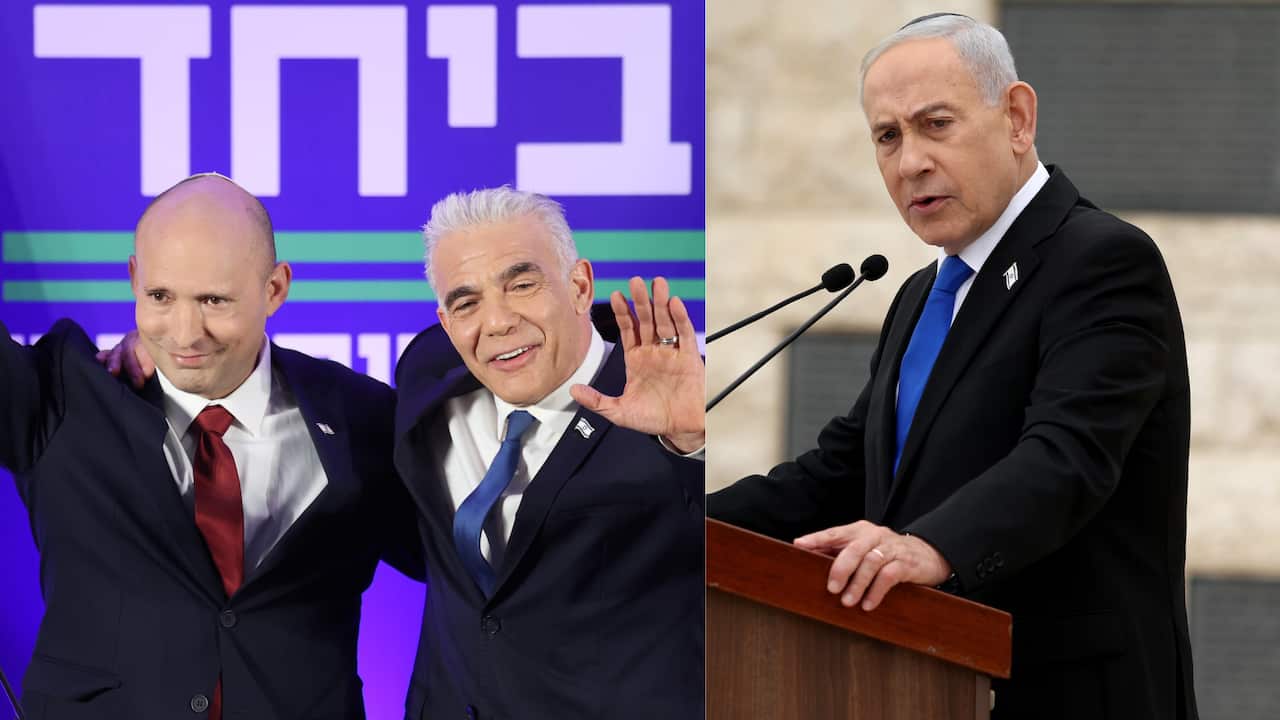
"I would never rule him out, because he has proven to be adaptive, as well as proven that he has the capability to form and make alliances with political blocs that nobody thought about," Iqtait told SBS News.
Iqtait says Netanyahu's popularity within circles that value the Israeli-US relationship could prove significant.
"From the Israeli voters perspective, he's the only politician that is actually capable of building and harnessing this relationship. Unlike Naftali Bennett and Lapid, who are viewed as mid-level ... politicians who are centrists, don't necessarily stand for much in terms of the political output for the state.
"That may push him (Netanyahu) over the edge and actually allow him to form a government to deal with the consequences of what has been happening over the past three to four years."
Why the Arab bloc could prove consequential
The success of the opposition on the other hand, could come down to a further alliance with another party — such as the Arab bloc, which could prove 'kingmakers' this year. At the last election, this bloc won a significant 15 seats in parliament.
"They do have a very good chance of forming a government, particularly if they work with the ... Arab Israeli political parties," Iqtait said.
Such a move however, could be unlikely. Bennett has said that he will not seek a coalition with Arab parties again and ruled out ceding any land to "enemies", an apparent reference to the Palestinians' goal of establishing an independent state in territories occupied by Israel.
"Most likely, the Arab bloc is going to win at least 10 seats, and they may be kingmakers at the end," Iqtait said.
While domestic issues like military conscription for the ultra-Orthodox are expected to be the Together party's focus, it's unlikely they will waiver from Netanyahu's foreign policy positions.
While they have not released a formal policy platform, on issues like Iran, Gaza and Lebanon, the joint party is expected to pursue a security posture similar to that of Netanyahu.
At the start of Israel's aerial bombardment in Iran nearly two months ago, Lapid told Reuters in an interview that it was a "just war against evil".
Both Bennett and Lapid have since criticised Netanyahu for what they describe as a failure to achieve Israel's main objectives in the war, including toppling Iran's clerical government. A source close to their new party told Reuters that Bennett and Lapid were "hawkish" and "tough on Iran."
On Lebanon, Bennett and Lapid have also both staunchly supported Israeli military operations in Lebanon while questioning a 17 April ceasefire that has failed to halt fighting between the Israeli military and Iran-backed Hezbollah militants.
- With additional reporting by Reuters news agency
For the latest from SBS News, download our app and subscribe to our newsletter.







