
In Brief
- Hungary's veteran nationalist leader Viktor Orbán has conceded a "painful but clear" defeat.
- The landslide election victory by the opposition Tisza party brings hope both in Hungary and Europe.
Hungary's veteran nationalist leader Viktor Orbán has conceded defeat after a landslide election victory by the upstart opposition Tisza party, in a setback for his allies in Russia and US President Donald Trump's White House.
But the outcome is being seen as a win for Europe, with Orbán at constant loggerheads with most other members of the bloc, particularly over foreign policy issues and the rule of law.
"Europe’s heart is beating stronger in Hungary tonight," EU Commission President Ursula von der Leyen said in a post on X. "Hungary has chosen Europe. A country reclaims its European path. The Union grows stronger."
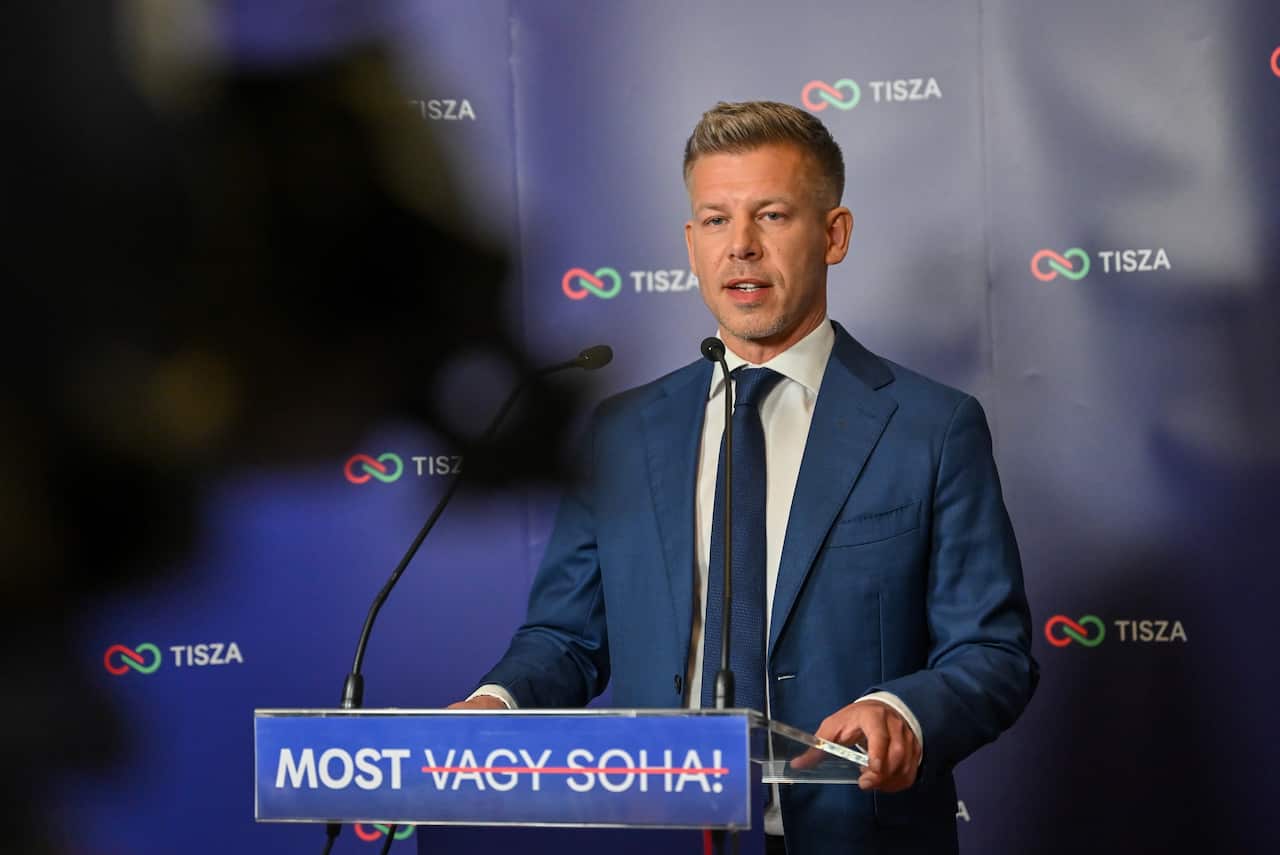
Results based on 46 per cent of votes counted showed the centre-right, pro-EU Tisza party of Péter Magyar winning 135 seats — or a crucial two-thirds majority — in the 199-member parliament, ahead of Orbán's Fidesz party.
News that makes sense
Your trusted source for staying up-to-date with the world around you. Get free daily news updates and analysis, straight to your inbox.
"The election results are not final yet, but the situation is understandable and clear," Orbán said at the Fidesz campaign offices.
"The election result is painful for us, but clear."
Pollsters predicted a record voter turnout, with Hungarian television showing long queues outside some voting stations in Budapest. Data half an hour before polls were due to close showed 77.8 per cent of voters casting their ballots, up from 67.8 per cent four years earlier.
Significant implications for Europe
If the final results confirm the early readings, an end to Orbán's time in power after 16 years would have significant implications not only for Hungary, but for the EU, Ukraine and beyond.
It would likely spell an end to Hungary's adversarial role inside the EU, possibly opening the way for a 90 billion euro ($150 billion) loan to war-battered Ukraine blocked by Orbán.
Defeat for Orbán could also mean the eventual release of EU funds to Hungary that the bloc had suspended due to what Brussels said was Orbán's erosion of democratic standards.
Orbán's exit would also deprive Russian President Vladimir Putin of his main ally in the EU and send shockwaves through Western right-wing circles, including the White House.
In Hungary, a Tisza victory could open the way for reforms that the party says would aim to combat corruption and restore the independence of the judiciary and other institutions.
However, the extent of such reforms will depend on whether Tisza can secure the two-thirds constitutional majority it would need to reverse much of Orbán's legacy.
Economic stagnation hurt Orbán
Orbán, a eurosceptic, carved out a model of an "illiberal democracy" seen as a blueprint by Trump's Make America Great Again movement and its admirers in Europe.
But many Hungarians have grown increasingly weary of Orbán, 62, after three years of economic stagnation and soaring living costs as well as reports of oligarchs close to the government amassing more wealth.
Tisza's leader Magyar appears to have successfully tapped into this frustration.
Casting his vote for Tisza in the Hungarian capital, Mihaly Bacsi, 27, said the country needed change.
"We need an improvement in public mood, there is too much tension in many areas and the current government only fuels these sentiments," he said.
Another voter, who gave her name as Zsuzsa, said she wanted continuity.
"I would really like if all the results that have been achieved in recent years remain — and I am terribly afraid of the war," she said, referring to the conflict raging in Ukraine, Hungary's eastern neighbour.
Orbán sought to cast Sunday's election as a choice between "war and peace".
During campaigning, the government blanketed the country with signs warning that Magyar would drag Hungary into Russia's war with Ukraine, something he strongly denies.
For the latest from SBS News, download our app and subscribe to our newsletter.







