In Brief
- Hungarians go to the polls on Sunday with Viktor Orbán widely expected to be removed from power.
- The election is a "fork in the road" moment for the European Union, an expert says.
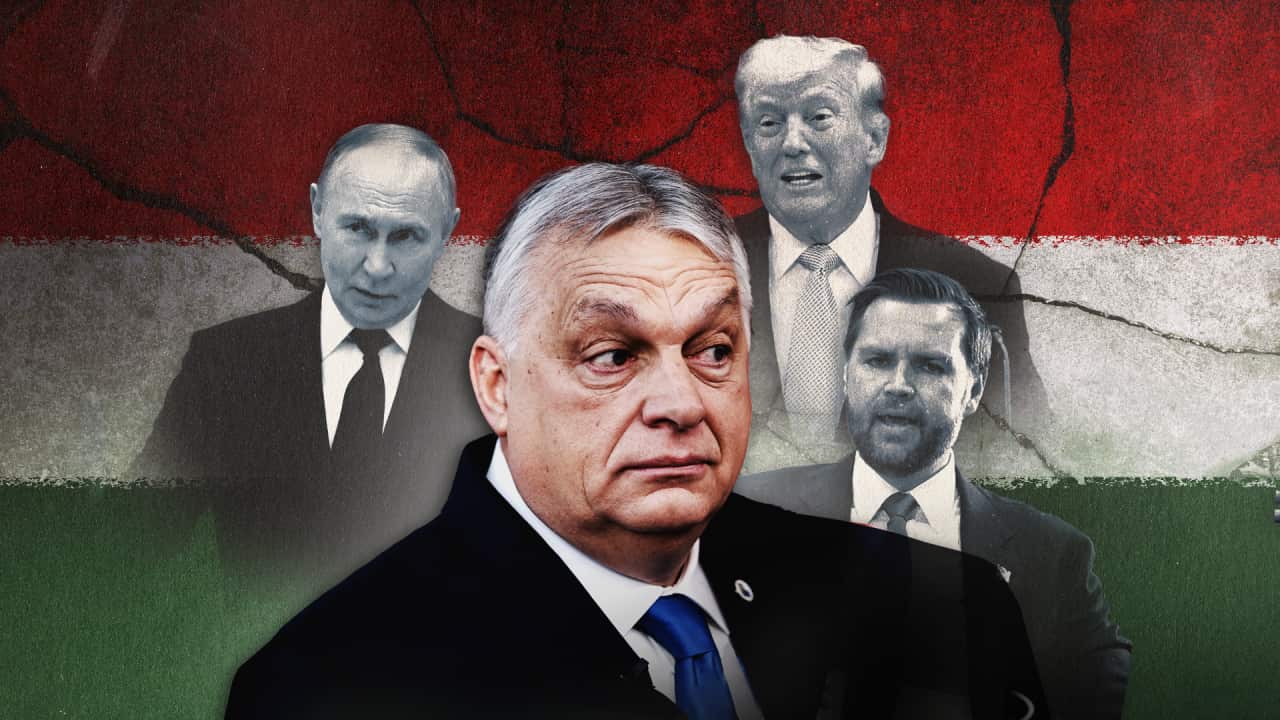
United States vice president JD Vance stood on stage at a rally in Budapest earlier this week and called his boss, pressing his phone into the microphone so the fans gathered to support Hungary's leader, Viktor Orbán, could hear his words.
"I love that Viktor, I'll tell you, he's a fantastic man, we've had a tremendous relationship," Donald Trump's voice echoed through the speakers.
"Remember this, he didn’t allow people to storm your country and invade your country, like other people have, and ruin their countries.
"He's kept your country good. He's kept Hungarian people in your country, and he’s done a fantastic job."
In November, Russian President Vladimir Putin warmly received Orbán at the Kremlin, similarly praising the 62-year-old as a "champion" of the Hungarian people.
News that makes sense
Your trusted source for staying up-to-date with the world around you. Get free daily news updates and analysis, straight to your inbox.
"I am particularly pleased that, despite the undoubted challenges of the present time, our relationship remains strong and continues to move forward," Putin told Orbán. according to Kremlin media notes. "Ours is a relationship with a long and complex history, but today it is built on the strongest foundation of the best in our shared past, as well as on pragmatism — a pragmatic approach to our bilateral ties."
Conservative nationalist Orbán occupies a unique place in Europe — praised by Trump and maintaining close ties with Russia, while increasingly at odds with the European Union over liberal democratic norms.
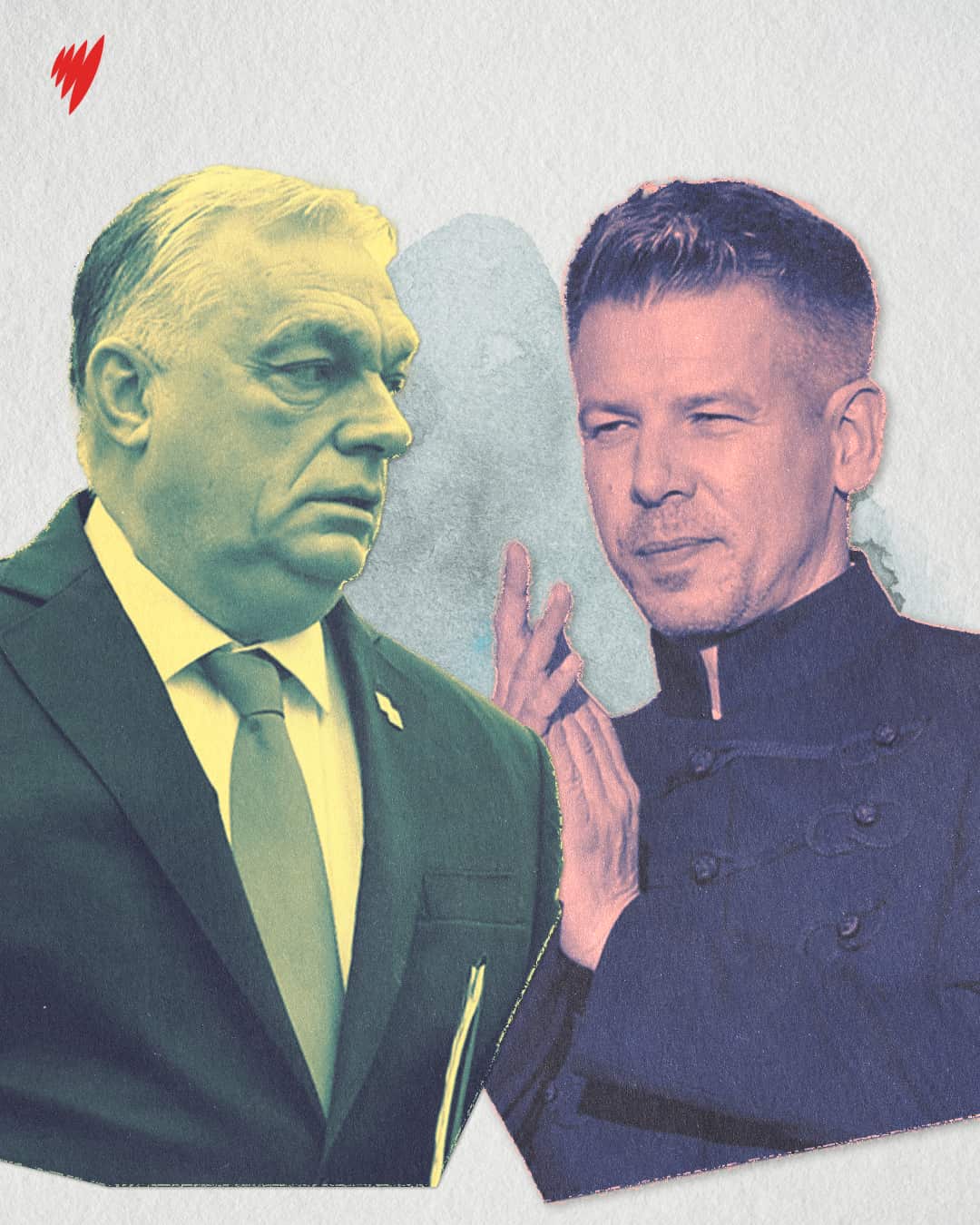
If Orbán loses this Sunday's election to his rival Péter Magyar, the conservative but pro-European Tisza Party is expected to strengthen ties with the EU, distance the country from Russia, and re-direct Hungary toward the centre.
The rise of Viktor Orbán
Having stood for broadly popular liberal democratic values in 1989 during the fall of communism, Viktor Orbán drifted toward populist, right-wing politics and was eventually elected prime minister as leader of the centre-right Hungarian Civic Alliance — Fidesz — in 1998. His tough-on-crime, pro-Western, and pro-economic welfare rhetoric led the country into the North Atlantic Treaty Organization in 1999 before his defeat in 2002.
After eight years in opposition, Orbán returned to government in 2010 following the collapse of the left-liberal government in the wake of the global financial crisis. He promised to create a million jobs, restore order and safety, and draw a line under what he cast as the failed era of the centre-left Socialist Party, which had led the country for the previous eight years.
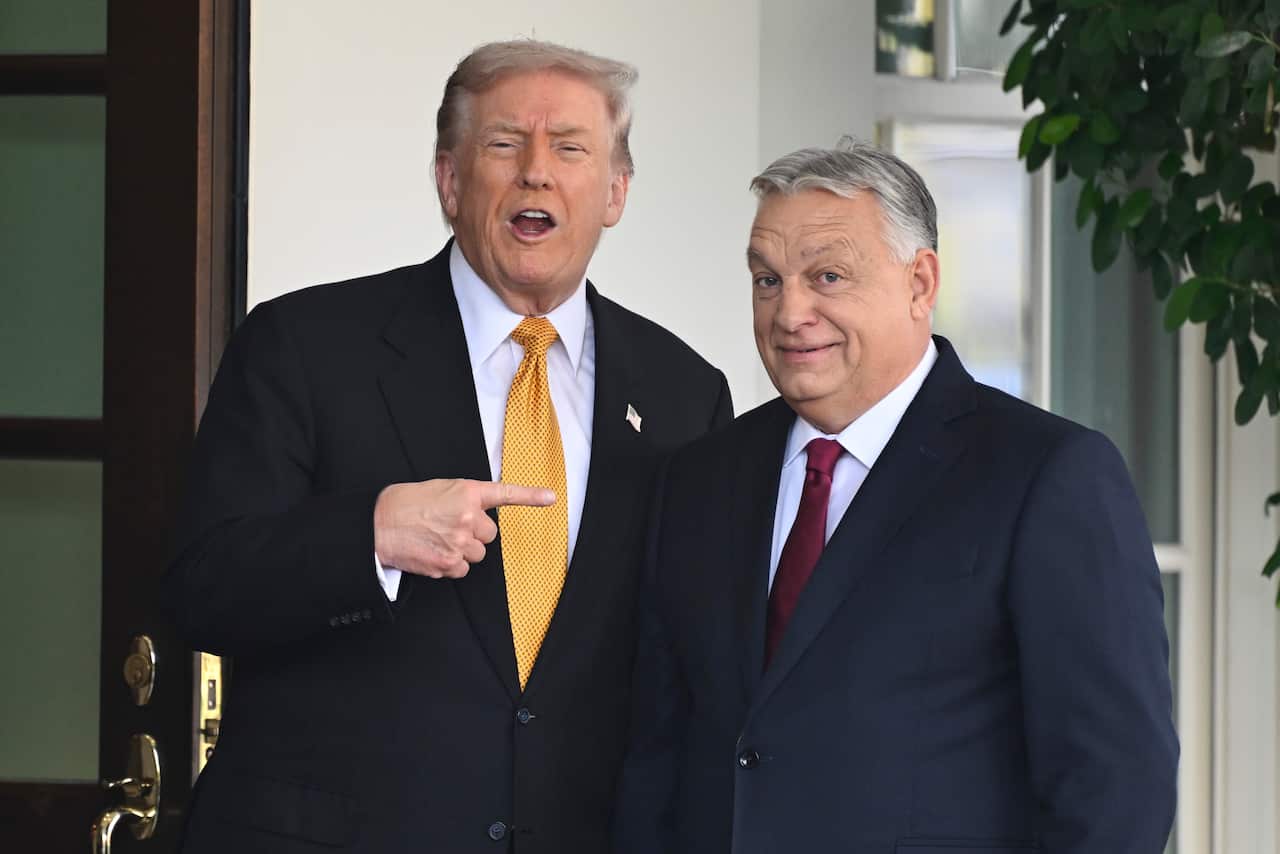
Orbán has entrenched his power by curbing independent media and democratic rights.
Under his rule, Hungary has been downgraded by the United States-based pro-democracy NGO Freedom House from a semi-consolidated democracy to a hybrid regime. The Sweden-based V-Dem Institute, which measures democracy around the world, has characterised Hungary as an "electoral autocracy" since 2018, owing to the decline of free and fair elections, freedoms of expression, and the appointment of party-loyalists in powerful judicial positions.
Reporters Without Borders describes Orbán as a "predator" of press freedom, and says independent media outlets in the Hungary face political, economic and regulatory pressures.
Marton Dobras-Vincze, 52, a filmmaker and third-generation journalist who fled Hungary to Brisbane in 2014 due to the rising authoritarianism in the country, told SBS News Hungary that has transformed under Orbán's leadership.
"Free speech was no longer available in the country," Dobras-Vincze said. "That was one of the reasons why I left."
For his part, Orbán has sought to build what he has dubbed an "illiberal democracy", arguing a country can be democratic without being liberal, and should prioritise national sovereignty, culture and economic strength.
"The new state we are building in Hungary is an illiberal state, not a liberal state. It does not deny the fundamental values of liberalism, such as freedom ... but it does not make this ideology the central element of state organisation, but it contains a different, specific, national approach," he said in a 2014 speech.
Why this election is different
Hungary now holds the unfortunate title of "most corrupt member state of the European Union" for the fourth year in a row, according to Transparency International's 2025 Corruption Perceptions Index.
Polling suggests that Hungarians increasingly feel as though Fidesz' 16-year rule have left them behind economically while Orbán, his family, and those in his inner circle have vastly increased their wealth.
"Orbán is spending a lot of money on fancy renovations and building a lot of football stadiums and so on, but in the country, the roads are terrible, the hospitals are in very bad shape, and the economy is not working," Dobras-Vinzse said.
The government has also been rocked by a series of scandals, the most significant of which involved Orbán's close political allies pardoning a man involved in a child sexual abuse case in 2024.
Then Hungarian president Katalin Novak and her justice minister, Judit Varga, resigned over the scandal.
Maygar, a former Orbán loyalist, defected from Fidesz in the wake of the scandal and joined the Respect and Freedom Party, known as Tisza, campaigning against corruption and gaining 30 per cent of the vote at the European Parliament elections in June 2024.
Positioned as a conservative without corruption, his party has given traditionally right-leaning Hungarians a viable alternative with a real chance to end Orbán's reign.
"This is one of the most momentous elections in Europe and for Europe in many years," said Gregoire Roos, director of the Europe, Russia and Eurasia Programmes at the London-based think tank Chatham House.
"In Moscow, Hungary has been seen as a precious trouble-making interlocutor within the EU — maintaining energy ties... and adopting, by far, the toughest tone vis-a-vis Ukraine than any other EU country. In the United States, Hungary has drawn attention as a laboratory of sovereigntist politics."
Putin and Trump's ally in the EU
Orbán is one of the few political leaders in regular contact with the Russian president, with the pair having first met in 2009.
Bloomberg, citing the transcript of a phone call, reported on Tuesday Orbán had offered to help Putin "in any way" and that he was at the Russian president's "service".
"Yesterday, our friendship reached such heights that I am willing to help in any way I can," Orbán reportedly told Putin in October 2025. "I am ready to help immediately ... In any matter where I can be of assistance, I am at your service."
The Hungarian government and the Kremlin have not addressed the report, which SBS News has not independently verified.
Hungary remains a significant importer of Russian pipeline gas and continues to block EU resolutions to sanction the Eastern power in order to protect its energy security.
"Orbán has been the main roadblock when it comes to to stymieing EU attempts to fund Ukraine," associate professor Matthew Sussex of the Australian National University told SBS News. "He has consistently refused to back aid packages, and he's had to be talked around, sometimes with money, sometimes with pressure."
"From the Kremlin's perspective, it's very, very useful to have someone like Viktor Orbán within the European Union."
From the US' perspective, Orbán is the most influential of the far-right leaders that the Trump administration is seeking to support in Europe. The Hungarian poll is the first major European election since the US published its National Security Strategy last November.
That document argued that Europe faced "civilisational erasure" due to so-called mass migration, and committed to supporting far-right parties like the AfD in Germany, Reform in the United Kingdom, and Fidesz in Hungary.
"The view of this White House is that there's a 'great replacement' going on, where those with traditional Christian values are being drummed out of society," Sussex said. "Orbán, as a highly conservative leader, represents a key plank in that."
"If he were to lose, then it's a repudiation of that MAGA [Make America Great Again] agenda ... yet another loss in terms of their own ideological vision of where the world should be."
'A real fork in the road'
Magyar has pledged to crack down on corruption, unlock billions of euros of frozen EU funds and tax the wealthiest, while reforming Hungary's crumbling healthcare.
Orbán says he wants to reform the EU from within and not leave the bloc. He has framed this election as a stark choice between "war or peace", saying his opponents would drag Hungary into the war raging in Ukraine. Tisza denies the accusation.
"This is a real fork in the road in terms of the European Union and in terms of the broader West," Sussex said.
"If Orbán loses, it will be very much a vindication of the types of values that the European Union has been promoting, and it'll be Hungarians effectively turning their back on authoritarianism and saying no to Russian influence.
"If Orbán somehow wins, or if he doesn't accept the result of the election, then that will certainly be a fillip for the White House and for Putin."
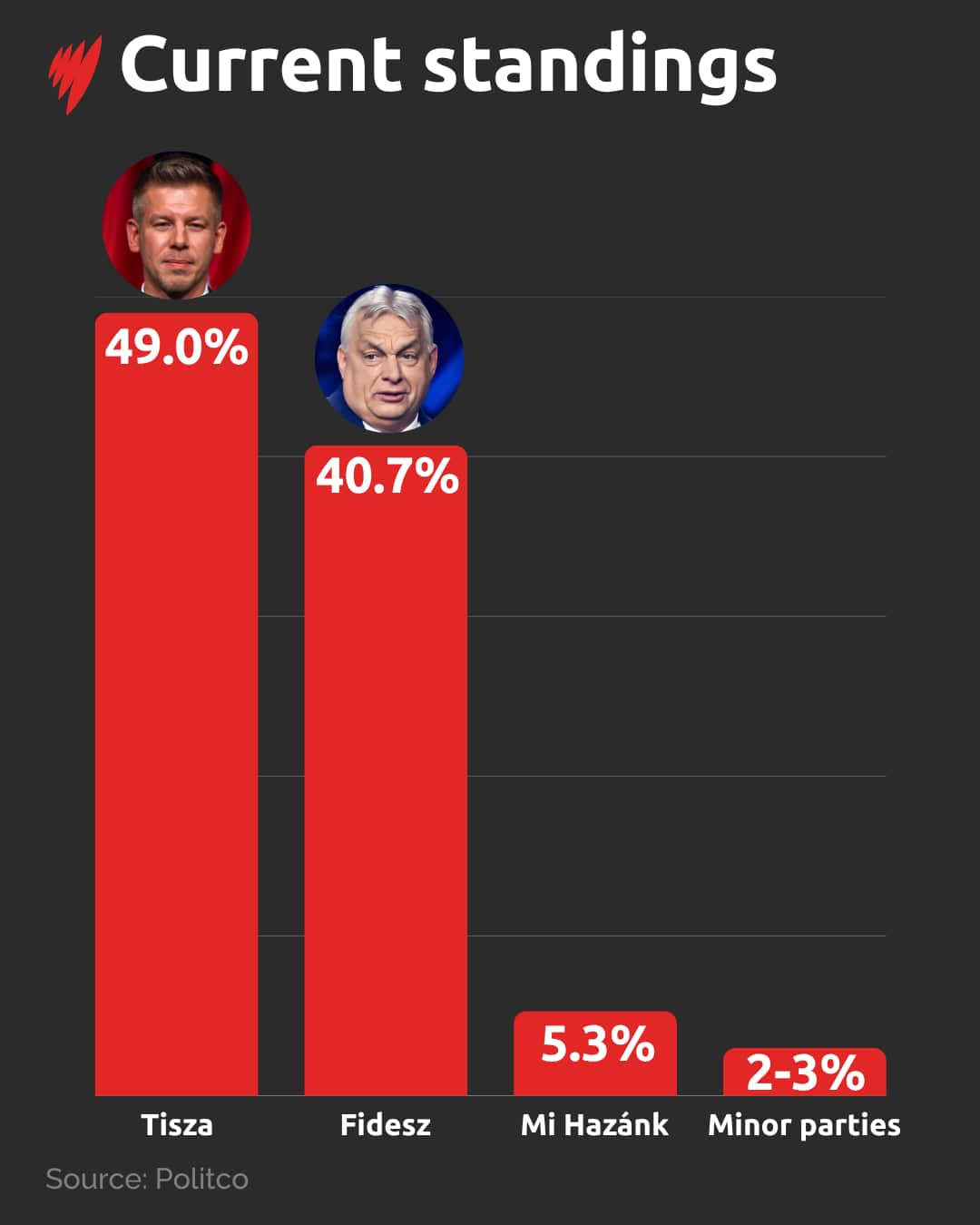
While most polling puts Magyar far ahead of his incumbent opponent, his victory is by no means guaranteed.
But political analysts have cautioned that undecided voters, a redrawing of the electoral map in favour of Fidesz and a high proportion of ethnic Hungarians in neighbouring countries — who mostly back the ruling party — create a mood of uncertainty.
They say anything from a Tisza supermajority — able to change the constitution — to a Fidesz majority remains possible.
Fidesz has also been recruiting and training what it calls its own "digital infantry" to fight AI-disinformation campaigns online while billboards cover Budapest depicting Ukrainian President Volodymyr Zelenskyy as the real architect of Hungarian suffering.
Earlier this week, Orbán accused Ukraine of trying to blow up a major gas pipeline funnelling Russian fuel into the country after explosives were found in what Magyar described as a "false flag" operation. The country is on edge and considerations are being made as to what happens if the Fidesz ruler rejects a democratic loss.
"It potentially sets the stage for significant social upheaval in Hungary," Sussex said. A 'colour revolution' in Budapest would not necessarily be be out of the question".
Hungary goes to the polls on Sunday with a result likely known that evening (Monday morning, AEST).
— With reporting by the Reuters news agency.
For the latest from SBS News, download our app and subscribe to our newsletter.







