This audio is voiced by AI and may occasionally mispronounce words.
Share your feedback and help us improve this feature. Read more about how we use AI at SBS here.
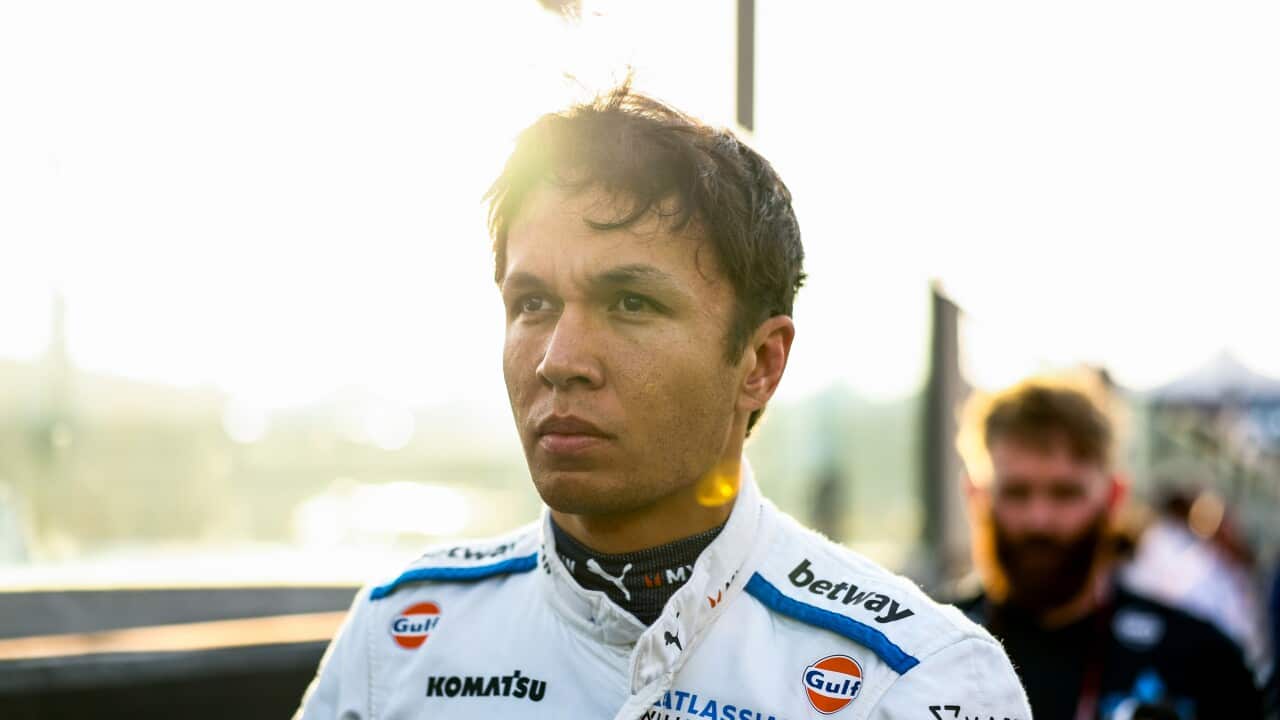
In Formula 1's loudest era, Alex Albon is choosing silence.
Crowds are bigger than they've ever been, audiences are getting younger, and the paddock (F1's exclusive trackside hub) is now just as much about celebrity as it is about racing — fuelled in part by Netflix's Drive To Survive and an online fan culture that can make (or break) drivers.
More than 460,000 people are expected to attend this weekend's Australian Grand Prix in Melbourne, with millions more expected to tune in on streaming platforms.
But in the middle of it all, driver Albon has logged off.
"I kind of just stay present, which I think is what social media doesn't let you do," he tells SBS News.
News that makes sense
Your trusted source for staying up-to-date with the world around you. Get free daily news updates and analysis, straight to your inbox.
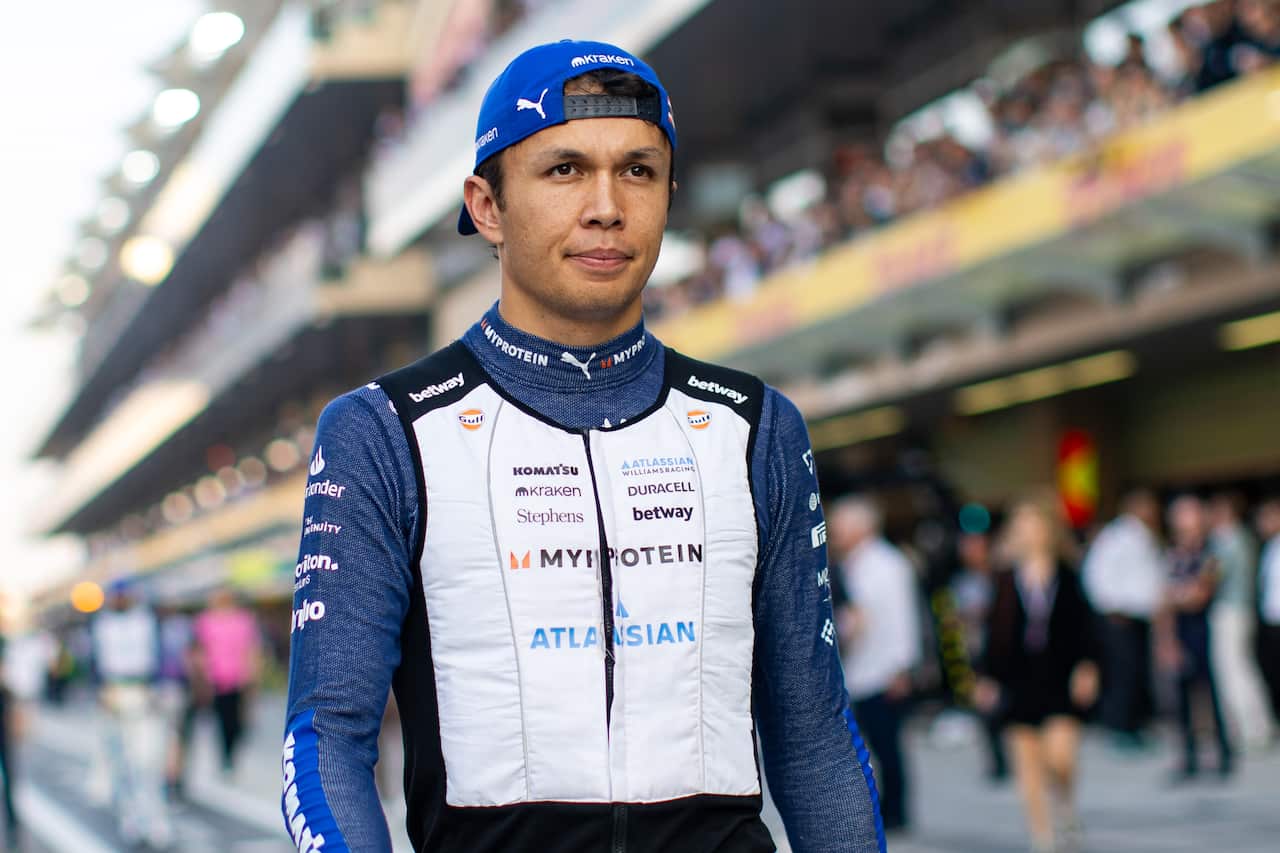
"I try to be as genuine as I can. I don't try to pretend to be someone that I'm not," Albon says.
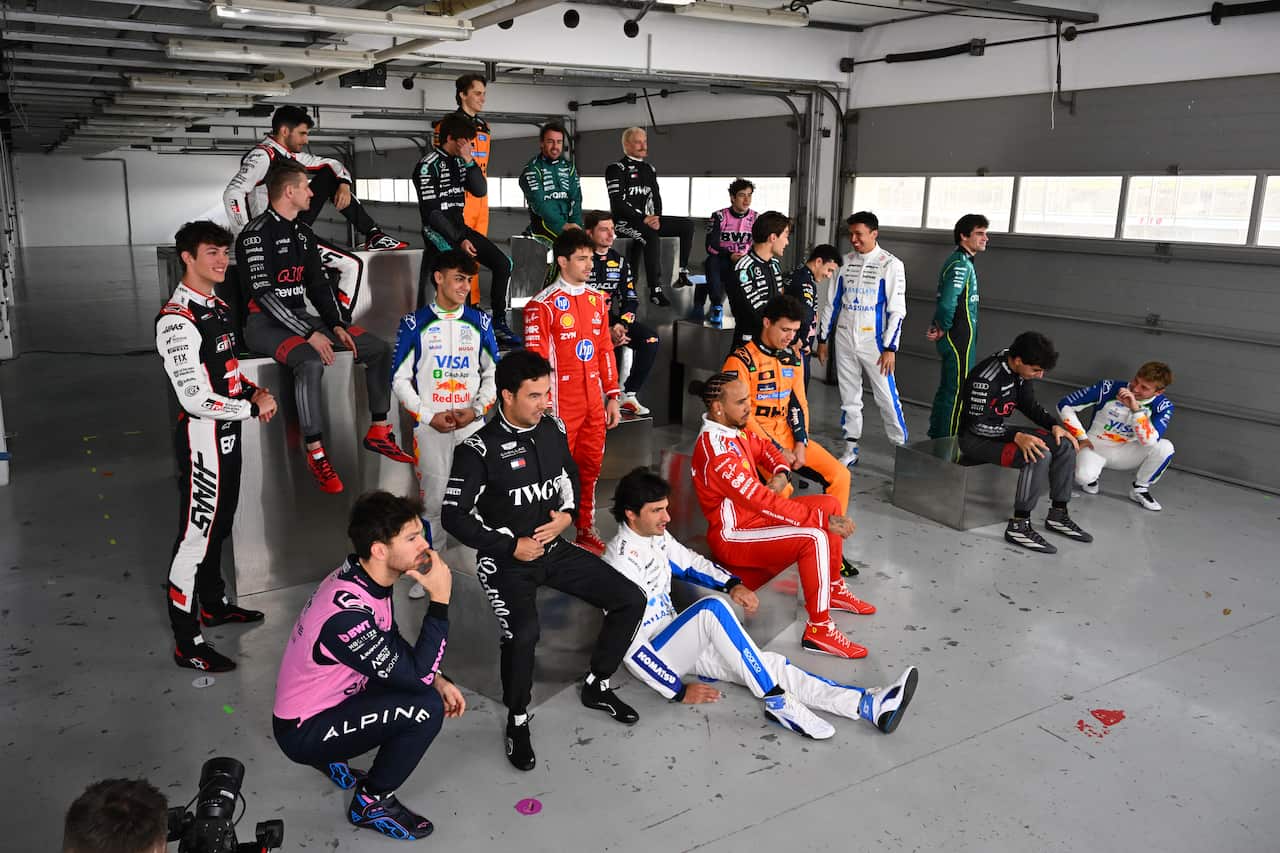
Only 22 drivers in the world get to call themselves Formula 1 racers. Albon is one of them, entering his sixth season and his fourth with the renowned team Williams Racing — currently competing as Atlassian Williams F1 Team.
I think it's not that enjoyable to be in the spotlight.
In an era of parasocial fandom, meme accounts and constant discourse, deleting social media from his phone has been liberating for the 29-year-old.
"Honestly, when you do it, it's so freeing. It creates such a false narrative of the world," Albon says.
"There's toxic media. There's always a story. There's always a meme page floating around. There's always drivers who are on the bad end of most jokes," Albon says.
"For the most part, I think it's not that enjoyable to be in the spotlight."
Nobody puts Albon in the corner
Albon was born and raised in London. He learned to race in the United Kingdom. But the flag stitched onto his suit is Thailand's.
He is only the second Formula 1 driver in history to race under the Thai flag — a decision that has, at times, prompted online scrutiny. He doesn't speak Thai fluently. He didn't grow up there.
"A lot of people try and put you in a corner — are you British or are you Thai?" he says.

"My mum is Thai. I am a Buddhist. I'm also English. I grew up in the UK. I learned my racing craft and I went to school in the UK. So I see myself very much as both," Albon says.
"I spend more time in the UK, especially with the job that I have, but at the same time — and what speaks to me the most — is when I do go to Thailand, I do feel like I'm at home. I do feel like I belong."
For licensing purposes, he had to choose one nationality, but identity, he says, is less administrative.
It's a feeling. I don't think there's a specific narrative that makes you Thai.
"I feel much more Thai than I am English in many ways."
A ladder built from invoices
Formula 1 oozes luxury: superyachts, private jets, high-end glamour.
It also has one of the highest financial barriers in global sport.
To make it to the grid, most drivers start in karting before they are teenagers. Between training, competition fees, equipment, travel, and relocation, the costs can reach well into six figures per year.
"It's already expensive to race in go-karts. You're talking at least ... US$150,000 ($212,500) nowadays when you're 10, 12 years old," Albon explains.
"It's ridiculous numbers."

"You then have to go to Europe. Most of these kids, they stop going to school, they start getting a home tutor. It's a completely different lifestyle. You can imagine the kind of costs that implies is huge," Albon says.
The sport's feeder leagues — Formula 4, Formula 3 and Formula 2 — still operate under a 'pay to participate' system and can cost millions more.
Talent matters — but funding often decides who survives long enough to prove it.
Several current drivers have spoken publicly about the financial strain their families endured.
British driver Lewis Hamilton — who has the world record for most all-time wins (105) and seven World Drivers' Championship titles — has previously described Formula 1 as a "billionaire boys' club", saying there is "no way" he could break into the sport now from a "normal working class family". France's Esteban Ocon has said his family sold their home and lived in a caravan to keep his racing dreams alive.
Albon's own pathway was disrupted in 2012 when, at 15, his mother was jailed for fraud and their family's assets were seized.
"I didn't have any money, of course, but I did have my Thai heritage — so we found some sponsors in Thailand," Albon said on season two of Drive To Survive.
"That was the only way I could really go back into racing."
A mission beyond the grid
While Albon was able to secure sponsorship for parts of his junior career, he says class remains a deciding factor for most aspiring drivers.
"Accessibility of motor sport in general is far away for most people," he says.
"In places like Southeast Asia, where you have quite a high class society difference, it is tough."
Accessibility of motor sport in general is far away for most people.
Change, he says, will take time.
"It's not going to happen overnight."
He wants formal programs introduced in the region — not just to train drivers, but to open technical and engineering pathways adjacent to the sport.
"I would love to see Southeast Asian people working in Formula 1, that's not necessarily just tied down to driving. There are so many more opportunities out there — whether it's within communications and marketing or being a mechanical engineer," Albon says.
He points to STEM programs run by teams like Williams as a model — a way to introduce young people to motorsport and make it more geographically and financially accessible.
Growing into it
Formula 1 has tested Albon in more ways than one — a rapid promotion to partner with world champion Max Verstappen at Red Bull in 2020 was followed by a ruthless demotion to reserve driver the next season. In 2022, he returned to the grid with Williams.
Looking back, he says the expectations felt overwhelming at first.
"You think of these drivers, we come in at our low twenties, early teens or late teens, and then we're suddenly presented to a thousand people and then these people actually listen to us. They want direction, they want leadership. You don't really have that at that age," he says.

Now, approaching 30, Albon feels more settled.
"I feel like I've grown into that role.
"I'm not the most outspoken person, but I've learned to find my sweet spot, my happy place where I've grown in confidence and being able to get what I want and grow the team."
For the latest from SBS News, download our app and subscribe to our newsletter.







