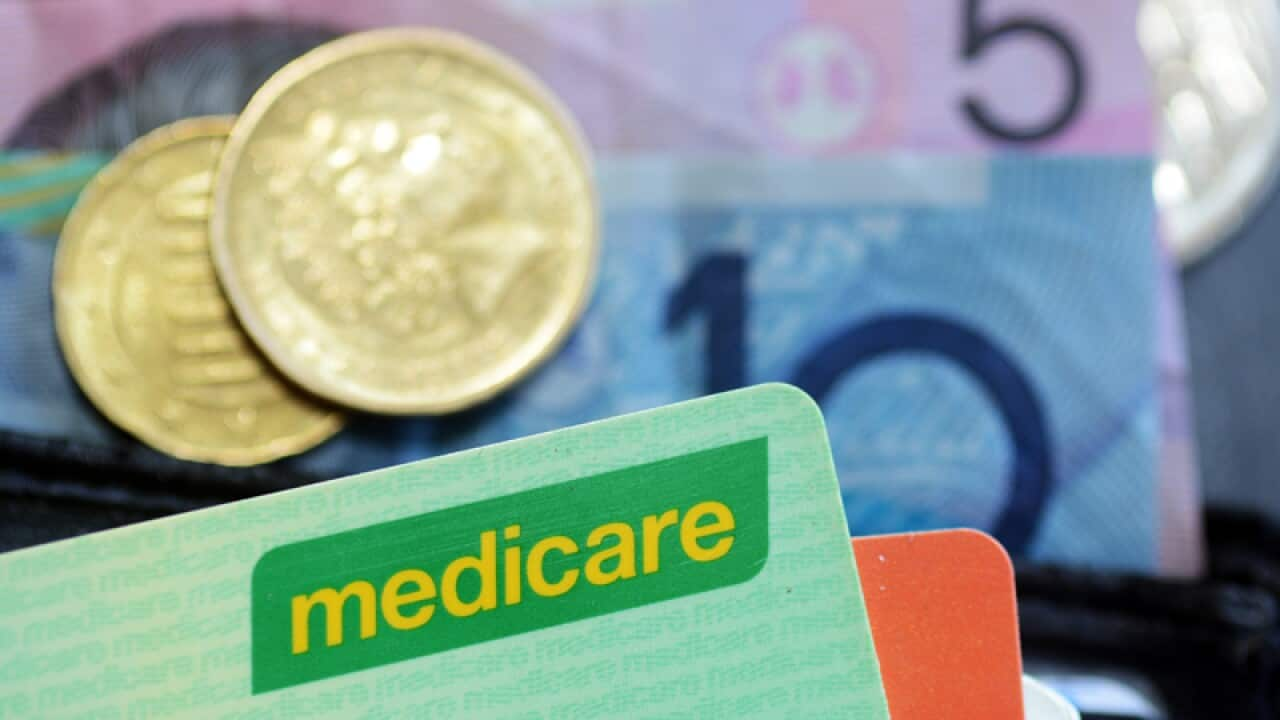
Australian Medical Association (AMA) has outlined an alternative to the proposed GP co-payment plan, which includes a minimum co-payment charge but doesn't change the Medicare rebate, and builds in protections for the elderly, the young and the vulnerable.
AMA chief, Dr Brian Owler says the AMA model is all about maximising the benefits of high-quality primary care and general practice, keeping people well - and keeping people out of more expensive hospital care.
The Coalition is struggling to garner Senate support for its co-payment plan, with Labor, the Greens and crossbenchers opposed to the amount and scope of the charge.
The government wants a $7 co-payment rising to just over $14 in the bush.Aged care and home visits would be exempt under the Association's plan, as would treatment for mental health and chronic disease.
The group also wants a proposed $5 cut in the Medicare rebate to be scrapped saying it would leave doctors out of pocket if they bulk bill patients and don't charge the co-payment.
Doctors also want plans to charge an extra $7 for blood tests and scans to be put on hold for at least two years.
Government must invest in general practice
Dr Owler says if the government wants a sustainable healthcare system, the government must invest in general practice.
He says the AMA model is an attempt to support quality general practice and Australia's health system which is largely based on the provision of excellent primary health care.
"It aims to allow GPs the opportunities to spend more time with patients to provide preventative health care and chronic disease management and to place a value on the valuable service they provide," he says.
"The focus is on the quality of the services and this benefits the GP, the patient and the broader health system. The AMA model is all about maximising the benefits of high-quality primary care and general practice, keeping people well, keeping people out of more expensive hospital care."
Dr Owler also warns the government's co-payment plan will widen the health gap between Indigenous and non-Indigenous Australians but says he's not opposed to co-payments in principle.
"The health centres that provide services to Indigenous people would not only have to absorb the rebate cut, but also meet the co-payment for pathology and diagnostic imaging."
"This would significantly affect their capacity to provide services. I'd like to remind you that the AMA is not opposed to well-designed, well-intentioned co-payments in principle. They already exist."
"About 20% of GP visits currently attract a co-payment and for those consultations the average is more than $7. The AMA supports a role for GP co-payments for those that can afford to contribute to the cost of their health care."
Various proposals being considered
Federal Health Minister Peter Dutton says the Coalition is considering the AMA proposal and is having it costed by his department.
But Mr Dutton says there's plenty of time to continue the discussions and the government is in no hurry to finalise the policy.
"The AMA and others have put different proposals to the government. We've done some financial analysis around what the AMA's proposed but discussions otherwise with independent Senators have produced different proposals which we are looking at the moment as well," he says.
"It's important to bear in mind that the co-payment has a start date of 1 July next year and we will work towards that. So there's no rush as it were to have this negotiation concluded over the coming weeks. This is a long-run negotiation."
Compromise deal still possible
Prime Minister Tony Abbott has not ruled out a compromise deal although it's unlikely he would agree to the government paying doctors the co-payment for seniors and children.
He says pensioners and concession card-holders already pay less for medicines subsidised under the Pharmaceutical Benefits Scheme.
Mr Abbott says he is not trying to undermine the health system, only to strengthen it.
"I respect and value Medicare. I think Medicare is an iconic Australian institution and I think if there is a modest co-payment, over time that will help us to value even more the vital services we get from Medicare on an everyday basis."
Labor continues to oppose any co-payment, with opposition Treasury spokesman Chris Bowen saying people's wealth should not determine their health.
"To go to the doctor for free is an important part of the universality of healthcare."
"We will defend that. And of course there are various charges when you need medicine but going to the doctor is the most important part of being able to get the healthcare that you need and that is a principle that the Labor party will continue and will always stand up for and always fight for."
"Any compromise that still leaves a charge to go to the doctor is not one that we would support."
As the parliament prepares to return to work after the long winter break, welfare and health groups are urging senators to reject any deal between the AMA and the government.
They say they have been left out of negotiations and should be approached for their views, particularly as they represent the elderly, the disadvantaged and the vulnerable.
Share


