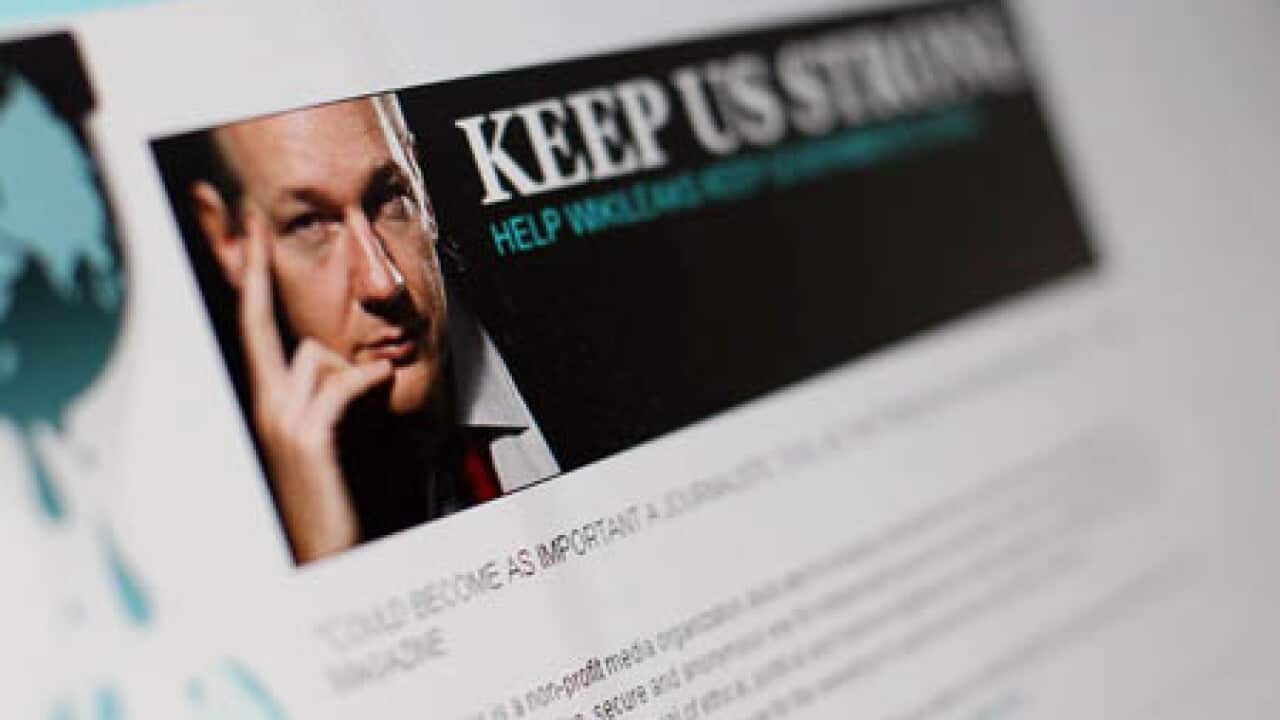
The public opinion is split on whether WikiLeaks founder Julian Assange is risking people's lives by disrupting the diplomatic processes that help humanity avoid conflicts or whether he's ensuring the future of democracy by making western leaders accountable.
The Drum: Julian Assange is not your friend:
The Drum's Luke Walladge slammed WikiLeaks and its founder as "an agenda-driven group of deceptive megalomaniacs, endangering troops and diplomacy in an attempt to damage the United States and its allies for reasons largely derived from a conspiratorially paranoid view of the world".
The Guardian: Live with the WikiLeakable world or shut down the net
The Guardian's John Naughton says what WikiLeaks is really exposing is the extent to which the western democratic system has been hollowed out. "The political elites of western democracies have discovered that the internet can be a thorn not just in the side of authoritarian regimes, but in their sides too".
News that makes sense
Your trusted source for staying up-to-date with the world around you. Get free daily news updates and analysis, straight to your inbox.
"Our rulers have a choice to make: either they learn to live in a WikiLeakable world, with all that implies in terms of their future behaviour; or they shut down the internet," he says.
The New York Times: Julian Assange - Neocon Tool?
Assange thinks a basic problem with the world is “authoritarian regimes,” a term that he uses — in stark contrast with its American usage — to include America, the New York Times' Robert Wright writes.
"The biggest lesson from all of this is a fact that's already dawned on Tiger Woods, Michael Phelps and Mel Gibson: privacy ain't what it used to be. Technology has made secrets hard to keep.
"We have to face the fact that secrets are less keepable in the age of the Internet, when a single malcontent in any organization can share newsworthy information with the whole world. So incendiary secrets should be avoided.
"Sooner or later, America was bound to wake up to the implications of modern technology. Julian Assange just made it a particularly rude awakening," Mr Wright said.
The New Republic: A Defense of WikiLeaks
These Wikileaks revelations are the third major episode of this type which occurred during the past century, The New Republic's John B. Judis writes.
"The first was the new Bolshevik government's release in 1917 of secret treaties signed by Great Britain, France, and Czarist Russia during World War I. The second was the Pentagon Papers in 1971. They have something in common. Each was—and I use the word advisedly, and will explain how—a protest against great power imperialism".
As more individuals handle more secrets in more places around the world, it naturally becomes harder to keep track of them, Times' Massimo Calabresi writes.
But more than that, it diminishes the credibility of the government's judgment about what should be secret.
That development has happened at the same time as the information-technology revolution, which has made the dissemination of data, views, memos and gossip easier than it has ever been in human history, Calabresi says.
Time's Managing Editor on WikiLeaks
The Economist: Missing the point of WikiLeaks: With or without WikiLeaks, the technology exists to allow whistleblowers to leak data and documents while maintaining anonymity. With or without WikiLeaks, the personel, technical know-how, and ideological will exists to enable anonymous leaking and to make this information available to the public, this blog on the Economist says.
Just as technology has made it easier for governments and corporations to snoop ever more invasively into the private lives of individuals, it has also made it easier for individuals, working alone or together, to root through and make off with the secret files of governments and corporations. WikiLeaks is simply an early manifestation of what I predict will be a more-or-less permanent feature of contemporary life, and a more-or-less permanent constraint on strategies of secret-keeping.
ZDNet: Is WikiLeaks' Assange actually a terrorist?
ZDNet's David Gerwitz has no mercy for the WikiLeaks founder. He says Assange "represents a new breed of activist, one who blurs the edge between activism and terrorism for the purpose of fomenting disruption and using the Internet as his weapon of mass distraction.
"He does not appear to have a direct goal, nor does he seem to be in it for the money. He does, without a doubt, appear to be completely grooving on the fame.
"He is not a spy or a traitor. He is a borderline extortionist and blackmailer. He is not a terrorist. He has not — directly — caused violence or physical damage. He is, without any doubt at all, a threat".
SBS does not endorse the content of these commentaries.







