By Jonathan Albright, University of Auckland
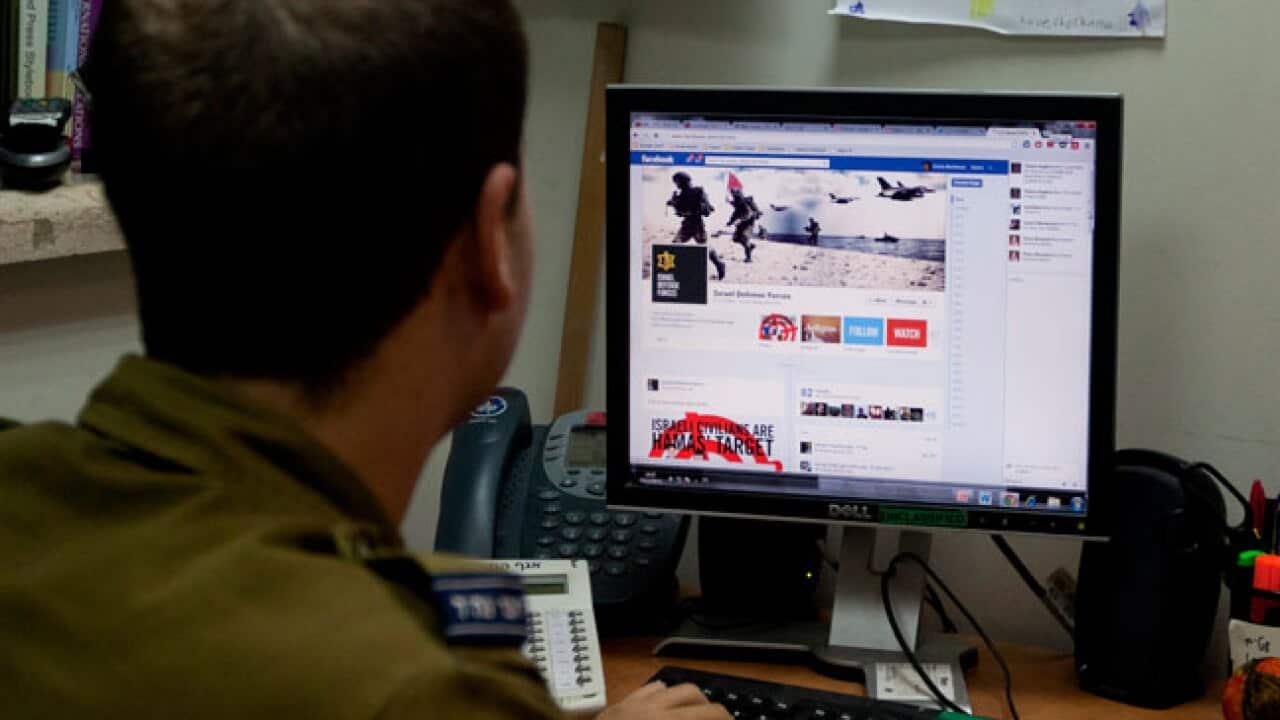
With #PillarofDefense, Israel this week launched the world's first-ever hashtag-driven social media military offensive in Gaza Strip, followed by action on the ground. In direct response, the defensively-worded hashtag #GazaUnderAttack appeared on Twitter shortly afterwards.
After 24 hours, #GazaUnderAttack has now overtaken #PillarofDefense, possibly due to several highly influential Twitter accounts such as Anonymous becoming involved in what amounts to a PR battle with grave human consequences.
News that makes sense
Your trusted source for staying up-to-date with the world around you. Get free daily news updates and analysis, straight to your inbox.

And, of course, we need to consider non-English hashtags, such as #GazzeateÅŸaltında – meaning “Gaza Under Fire” in Turkish – which is now “trending” globally, along with satirical hashtags such as #HamasBumperStickers.

What does this mean? With Anshel Pfeffer from Israel's Haaretz declaring the Israeli Defense Force operation “War By All Means”, quite simply, hashtags – reaching ubiquity in news and synonymous with politics over the past two years – are becoming leading instruments of war.
From recent political campaigns such as #Obama2012 to future campaigns such as the already-pertinent #Hillary2016, we are moving into a news culture driven by streams of information with no boundaries or “off” switch.
And with this, our ability to maintain social affiliations with news is being stretched to new dimensions.
Hashtags, in many ways, are a crowd-sourced tool to gain some degree of control over real-time news media. And for online audiences in particular, hashtags are “the people's headline” – as well as a highly effective container for “memes”.
In a recent “memo” to the Associated Press, GigaOM writer Matthew Ingram not-so-subtly declared: “Twitter is the newswire now.”
Looking at the image below, it could also be debated whether Instagram, recently acquired by Facebook, might be the new press photo wire:

Similar to the way in which online “consumers” are now “prosumers”, the line separating so-called “citizen” and “media” has undergone a rapid transformation or, as some might argue, an evolution, led in part by the #hashtag, which in many ways represents the “new” social news headline.
#ideacontainers
Following the success of #OccupyWallStreet, #StopKony, and other activist-focused #hashtags, media organisations and advertisers aren't letting the hashtag go easily; and Twitter has run a new advertising campaign for its new “#hashtag” feature pages.
So far, these have included Hurricane #Sandy, the Indian festival of lights #Diwali as well as the 2012 Republican GOP Convention in the US.
These new hashtag pages are hand-curated by Twitter staff for a better news experience.

# = {Framing} device
Hashtag “battles” are an important part of news dissemination, but an equally important part of its creation and manifestation; they embody the “digital” aspect of online news as they are infinitely replicable, easily expandable and – unlike a hyperlink – initiated on supporting sites simply by the addition of the “#” character.
As #HurricaneSandy moved through the Atlantic Coast of the US, along with the 20+ million tweets, new #Sandy iterations emerged: #SandyNY, #SandyMA, and even a hashtag “mash-up” in aid-focused #OccupySandy.
The US magazine TIME created the hashtag #TIMEWireless to collect “31,429 submissions, from more than 120 countries and all seven continents” to procure a collage of 288 photos for the cover of its August 2012 “Wireless” issue.
And during Hurricane Sandy, the #Sandy hashtag, according to Mashable, attracted around 10 related user photos per second. TIME sent out professional photographers during #Sandy with nothing more than an iPhones, mimicking perhaps what modern news audiences now desire most – content seemingly obtained from everyday, ordinary people – and used one of the iPhone images for its November 12 cover on #Sandy.
Instagram has occupied a starring role in this year's #hashtag-driven news media revolution.
Hashtags such as #PillarofDefense and #GazaUnderAttack are increasingly crucial to take control of real-time news streams and frame news events as they build upon but far exceed the capabilities of their parent technology, the html hyperlink, a primary feature of digital journalism used throughout this story and countless others to provide background.
Hashtags act as “live bookmarks” – a link to other sites, places and people. Created primarily for organisational function on Twitter in 2007, the #hashtag, as with other technology, including the internet, can't directly solve so-called “wicked” problems.
But within the hashtag lies great potential. It is more than the sum of its parts: clicking on a #hashtag on Twitter, Google Plus, Instagram, and even Pinterest doesn't take you to a news story or article – it takes you into the news story.
That's right, even the boots of the Israeli Defense Force are easily found using the hashtag #IDF on Pinterest.

Hashtag Collisions
Hashtag “battles”, as #PillarsofDefense and #GazaUnderAttack show, are a direct collision between emergent “citizen” journalism in its most visceral form and media agenda-setting.

Although media scholars such as Jeff Jarvis argue “the beauty of a hashtag is that no one controls it,“ the hashtag is not like the hyperlink in terms of design. In fact, #hashtags are increasingly implemented by brands, advertisers and special interest groups, as Twitter's new human-curated "hashtag pages” show:

It is impossible for journalists to be everywhere. But people are. And ironically in this age, news media simply must be everywhere. So how do media organisations deliver news to audiences that are simultaneously global and local? How does the public contribute and respond to news that's real-time?
It seems they can begin by creating a #hashtag.
Jonathan Albright does not work for, consult to, own shares in or receive funding from any company or organisation that would benefit from this article, and has no relevant affiliations.







