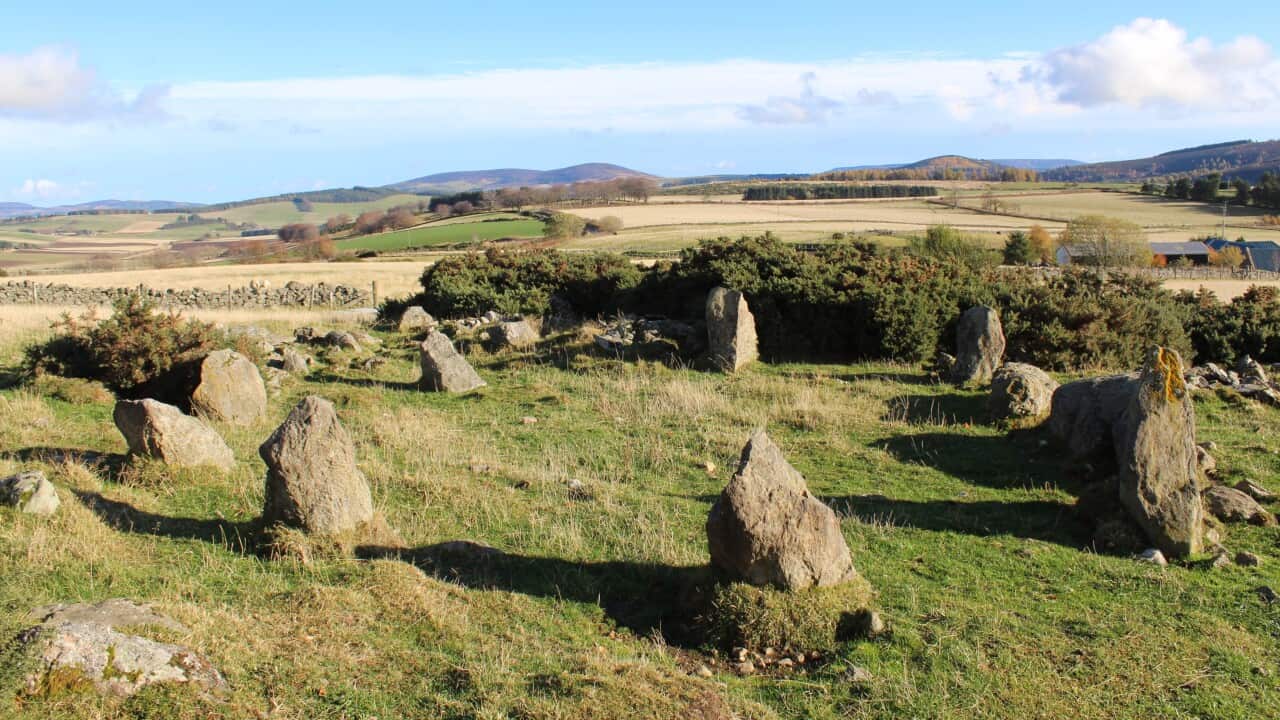
A stone circle in north-east Scotland, which was initially deemed by archaeologists to be thousands of years old, turned out to be a replica dating back two decades.
Archaeologists recently expressed excitement after a farmer located the recumbent stone circle - believed to be built during the Bronze Age nearly 4,000 years ago - on his property in Aberdeenshire.
The circle generated interest because of its size and shape and further analysis was begun.
However, a former owner of the farm came forward and said they had built the stone circle in the mid-1990s.
Neil Ackerman, historic environment record assistant at Aberdeenshire Council, said the stones are very difficult to date and are included in a database for future cases.
News that makes sense
Your trusted source for staying up-to-date with the world around you. Get free daily news updates and analysis, straight to your inbox.
“That it so closely copies a regional monument type shows the local knowledge, appreciation and engagement with the archaeology of the region by the local community," he said.
“These types of monument are notoriously difficult to date. For this reason we include any modern replicas of ancient monuments in our records in case they are later misidentified.
“We always welcome reports of any new, modern reconstructions of ancient monuments, especially those built with the skill of this stone circle and that reference existing monument types.”
Recumbent Stone Circles are among the oldest surviving structures in Scotland.
Stone circles, such as Stonehenge, are found across the UK but recumbent stone circles are unique to Scotland's north-east.
They are unique because one large stone in the circle is laid on its side, or is 'recumbent'. Archaeologists believe ancient people used the circles to record seasons or the passage of the sun and moon.







