This audio is voiced by AI and may occasionally mispronounce words.
Share your feedback and help us improve this feature. Read more about how we use AI at SBS here.
This article contains graphic descriptions of violence.
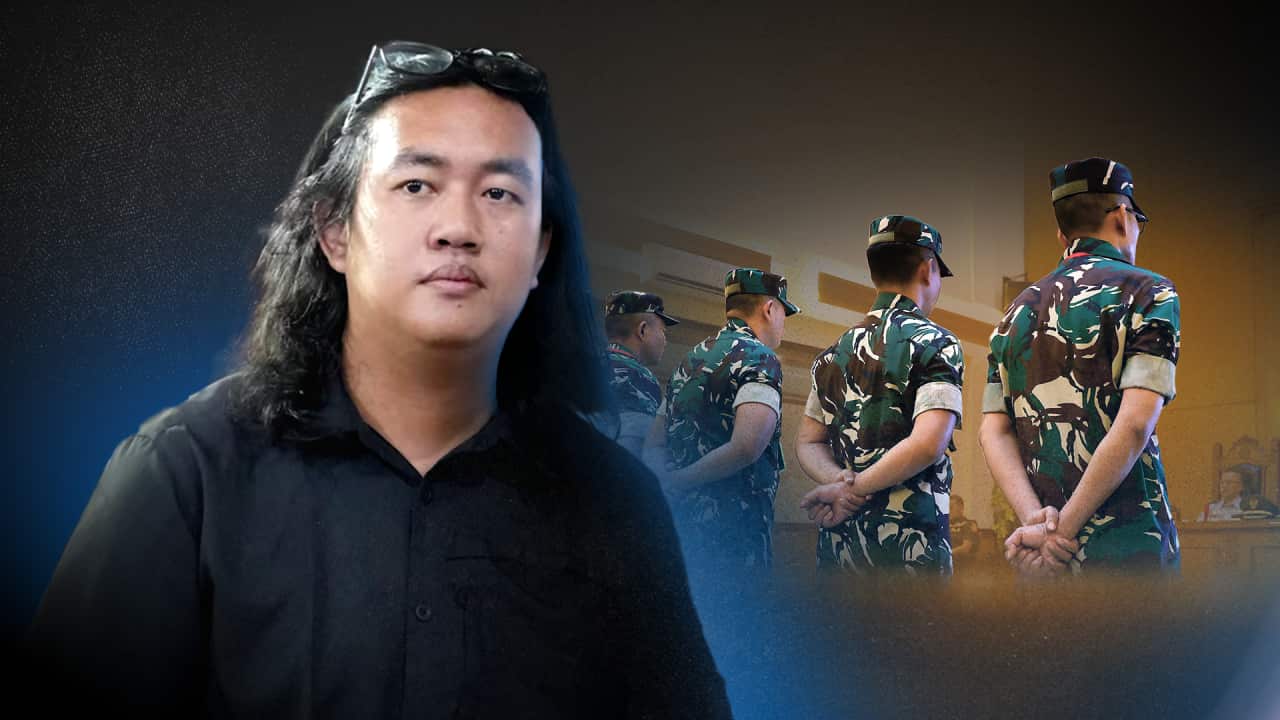
Andrie Yunus had just wrapped up recording a podcast about the military's growing influence in Indonesian politics when, on the evening of 12 March, he set off for home.
The issue has stirred deep and growing anxiety across the country since former Suharto-era special forces commander Prabowo Subianto became president 18 months ago.
Yunus, a 27-year-old human rights defender, had become one of the most outspoken critics of rising militarisation — and, in turn, the president.
Riding his motorbike home through central Jakarta that night in March, he was brutally attacked. Two men on another bike pulled up alongside him and doused him with acid.
News that makes sense
Your trusted source for staying up-to-date with the world around you. Get free daily news updates and analysis, straight to your inbox.
CCTV footage shows Yunus screaming in agony as he jumped from his bike, trying desperately to rip his clothes off. He survived the attack but suffered burns to more than 20 per cent of his body. Seven weeks later, he remains in intensive care.
The video — and the violence it represented — stunned the nation. A week later, that shock deepened when four active-duty military intelligence officers were arrested on suspicion of carrying out the attack.
Prabowo condemned the attack, saying it must be investigated.
"This is terrorism, isn't it? A barbaric act. We must pursue [the matter]," he said in an interview posted on his personal YouTube channel on 19 March.
Overnight, Yunus became the face of the very issue he had been warning about. In the world's third-largest democracy, the military's expanding footprint and its quiet encroachment into civilian life have drawn growing criticism from observers who see echoes of the country's authoritarian past.
'We're not feeling safe'
Yunus works for Indonesia's Commission for Missing Persons and Victims of Violence, known in Indonesia as KontraS.
At its headquarters, security is tight. A tall fence blocks the offices from view, with CCTV cameras trained around the perimeter.
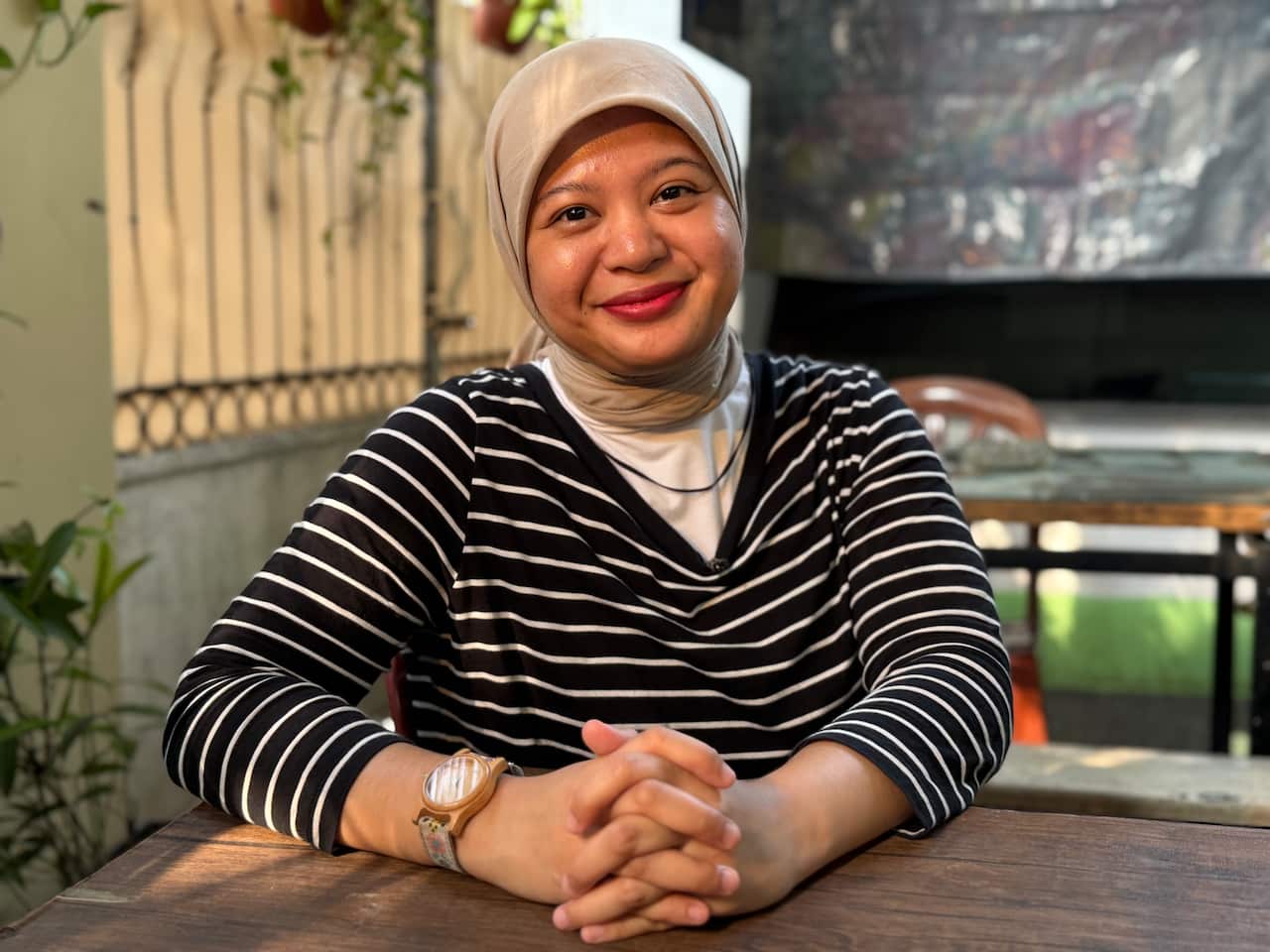
Nadine Sherani, who works with Yunus at KontraS, tells SBS News the attack has had a chilling effect on staff.
"Andrie is still in intensive care," she says.
"He has undergone five surgical processes, including for his right eye, and also plastic surgery for his skin. The substance was acid corrosive, so it keeps penetrating his right eye, causing corneal damage and ruptures. So, it seems he is going to need more surgeries for his eye."
In the lead-up to the attack, Yunus told his colleagues he had received threatening phone calls and had been followed to meetings.
His colleagues say the threats have continued in the weeks since, reporting intimidating messages sent to their families and Yunus' legal team.
"I won't lie — we are not feeling safe. We are not feeling safe at all," Sherani says.
But, knowing that we are being monitored, that doesn't mean we'll stop the work we are doing. The more we are pressured, the stronger we feel.
'A record of impunity'
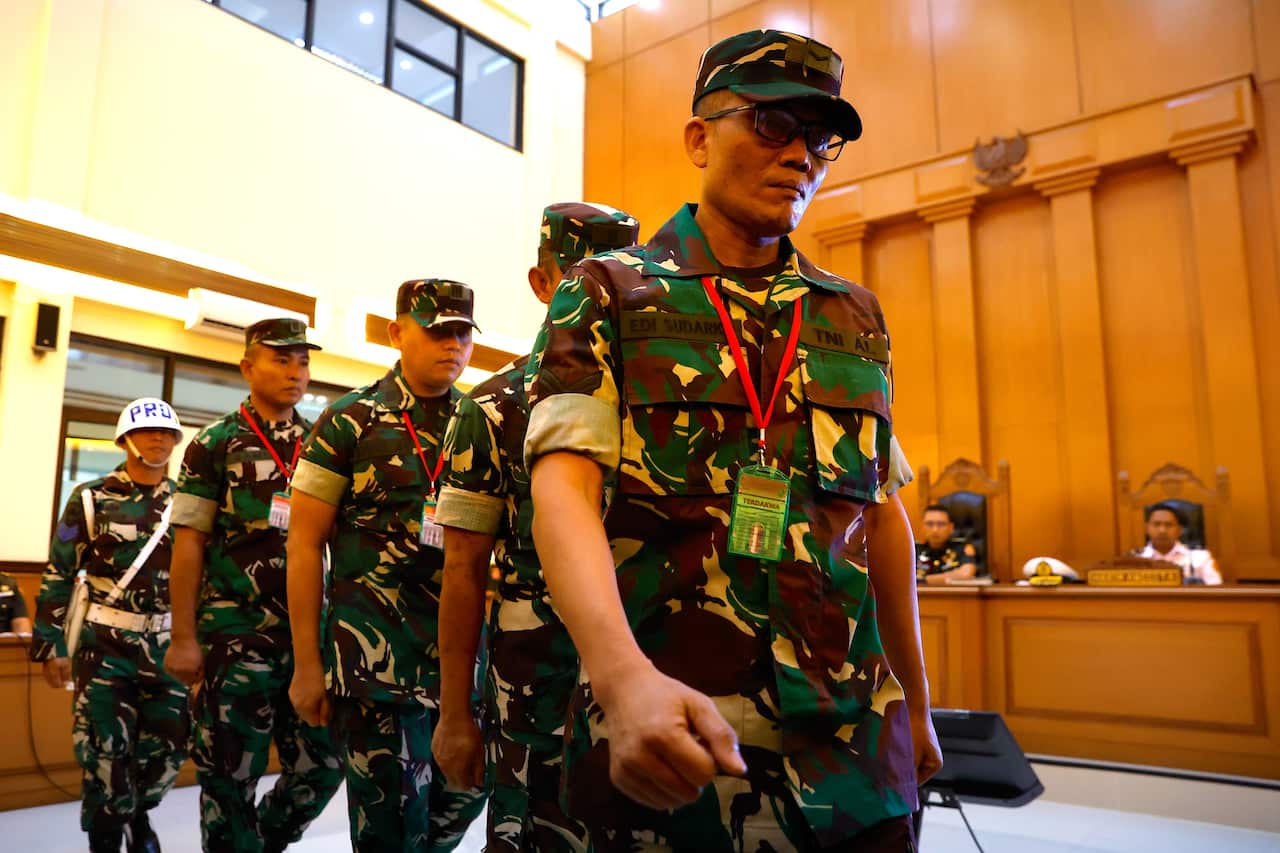
The trial of the four army intelligence officers arrested in connection with the attack began this week in Indonesia's military court.
Yunus' legal team had waged a sustained campaign to have the case heard in a civilian court instead. From his hospital bed, the activist appealed directly to Prabowo.
"In various cases involving civilians harmed by military personnel, including forced disappearances, killings, torture, and domestic violence, military courts have never delivered justice, accountability, or full institutional responsibility up to the chain of command," he wrote in a letter later released by KontraS.
"This only perpetuates a record of impunity."
The appeal was unsuccessful.
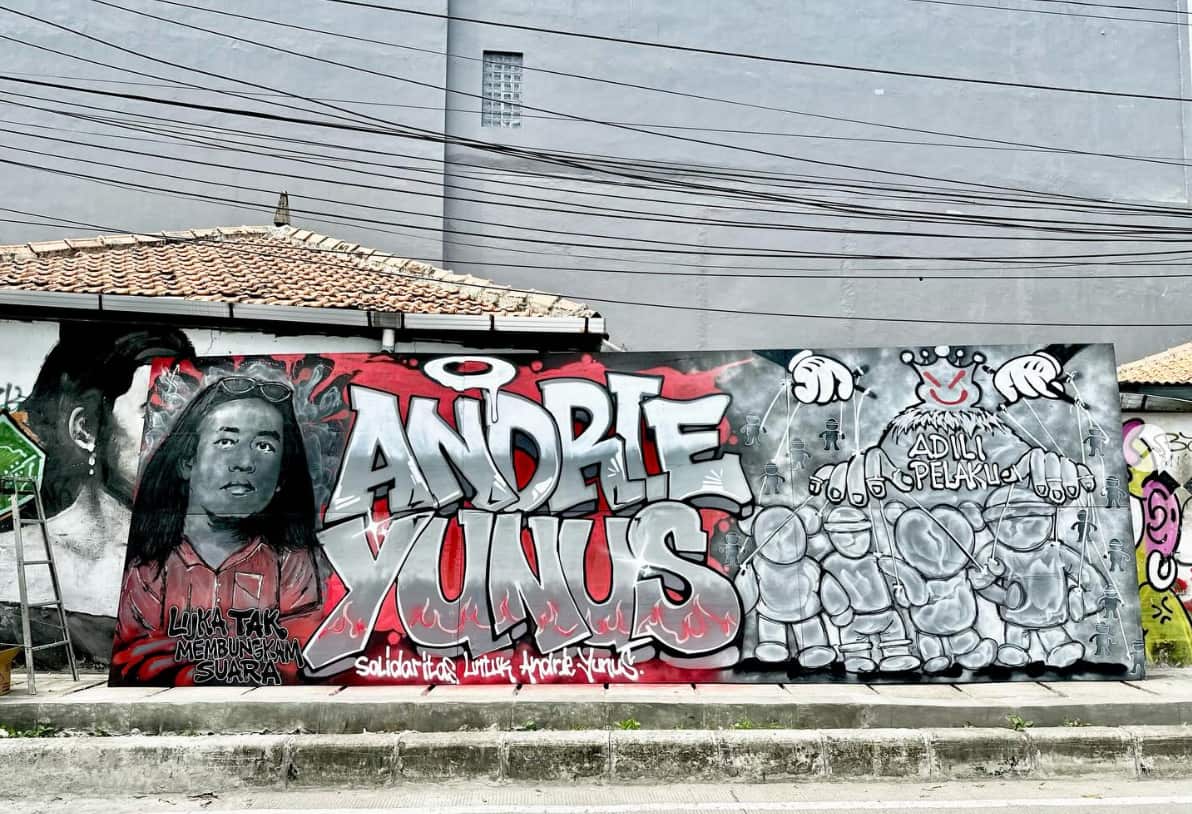
The Tentara Nasional Indonesia (TNI) — Indonesia's National Armed Forces — did not respond to SBS News' specific questions about those criticisms, but Colonel Fredy Ferdian Isnartanto, chief of the Jakarta Military Court, said the trial will be open to the public and invited the media to monitor proceedings.
He said the institution has both absolute and relative jurisdiction to try the case.
"If this were handled in a civilian court, it would not be appropriate and the legal process would not proceed. It could even be rejected by the district court," Fredy said at a press conference last week.
Military prosecutors are citing "personal revenge" as the official motive for the four accused perpetrators. Human rights activists believe it goes further than that.
A coalition of civil society groups and human rights lawyers, the Advocacy Team for Democracy, which is representing Yunus, launched an independent investigation into the attack. After analysing footage from 37 CCTV cameras, they identified 16 individuals they say could have been linked to the incident. They argue the scale and coordination point suggest a deliberate attempt to silence Yunus.
"This is not a personal grudge," Sherani says.
"Andrie did not even know these four people. This is an attempt at premeditated murder.
"We cannot deny the fact that Andrie has been one of the most vocal individuals in civil society on many, many issues, including on the militarisation of Indonesia."
Military influence under Prabowo Subianto
Prabowo took office in October 2024 after a decisive election victory, securing 58 per cent of the vote. His life before politics was mired in controversy.
He served as a special forces general under military dictator Suharto, who ruled Indonesia with often brutal authoritarianism for more than three decades.
For 15 years, he was also Suharto's son-in-law. His marriage to the late dictator's second daughter, Titiek Suharto, ended shortly after the regime collapsed in 1998.
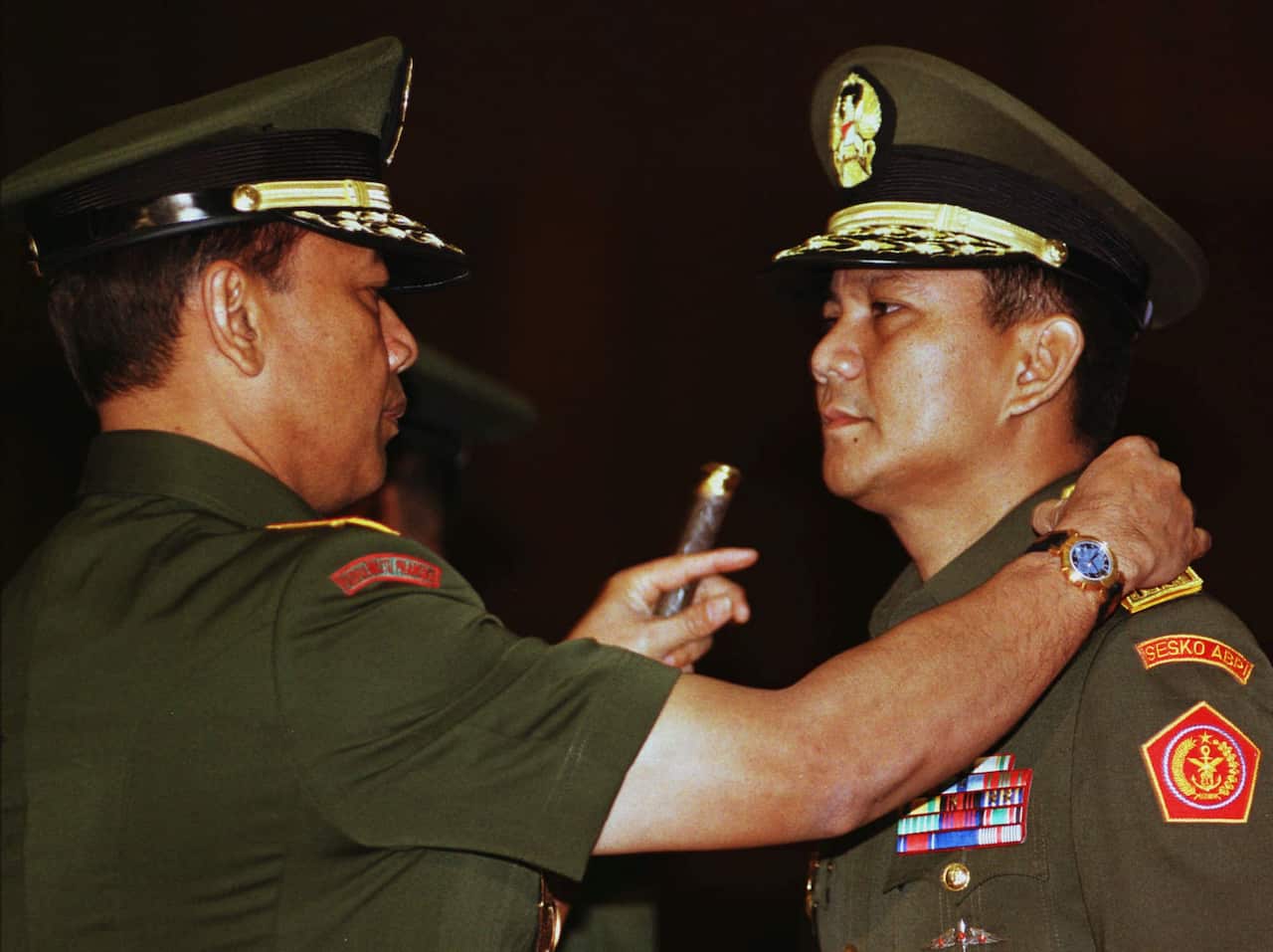
During his time as general, Prabowo was accused of several human rights violations and war crimes, including allegations he oversaw the unit that allegedly abducted and tortured 23 pro-democracy activists in the late 1990s.
He has denied these allegations. He was dismissed from the military for "misinterpreting orders", but some reports suggest his dismissal was related to an aborted coup plot. In 2014, he told Al Jazeera that he acknowledged his role in the kidnappings "that were legal at the time", but said he was following the orders of his superiors.
He was subsequently barred from entering Australia for the better part of 15 years: a ban that was quietly lifted before he became the defence minister under former president Joko Widodo in 2019.
In his first 18 months in office, the military's involvement in politics has steadily grown. He has appointed former generals to key posts, passed legislation allowing active-duty personnel to take on more civilian positions in government, and deployed the military to implement initiatives, such as his free school meals program.
The government has said criticisms surrounding the military's growing influence are "completely exaggerated", but some analysts warn they risk eroding the post-1998 reforms designed to separate the military from politics.
Ken Setiawan, associate professor in Indonesian studies at the University of Melbourne, tells SBS News: "Sometimes, there is this idea that after 1998, the Indonesian military was taken out of the political landscape. That is incorrect."
"This institutionalisation of the military in civilian affairs makes it more and more difficult to really separate between the military and civilian sphere. So, there's a blurring of the line and a potential for military overreach, and that presents a complex problem for human rights and democracy."
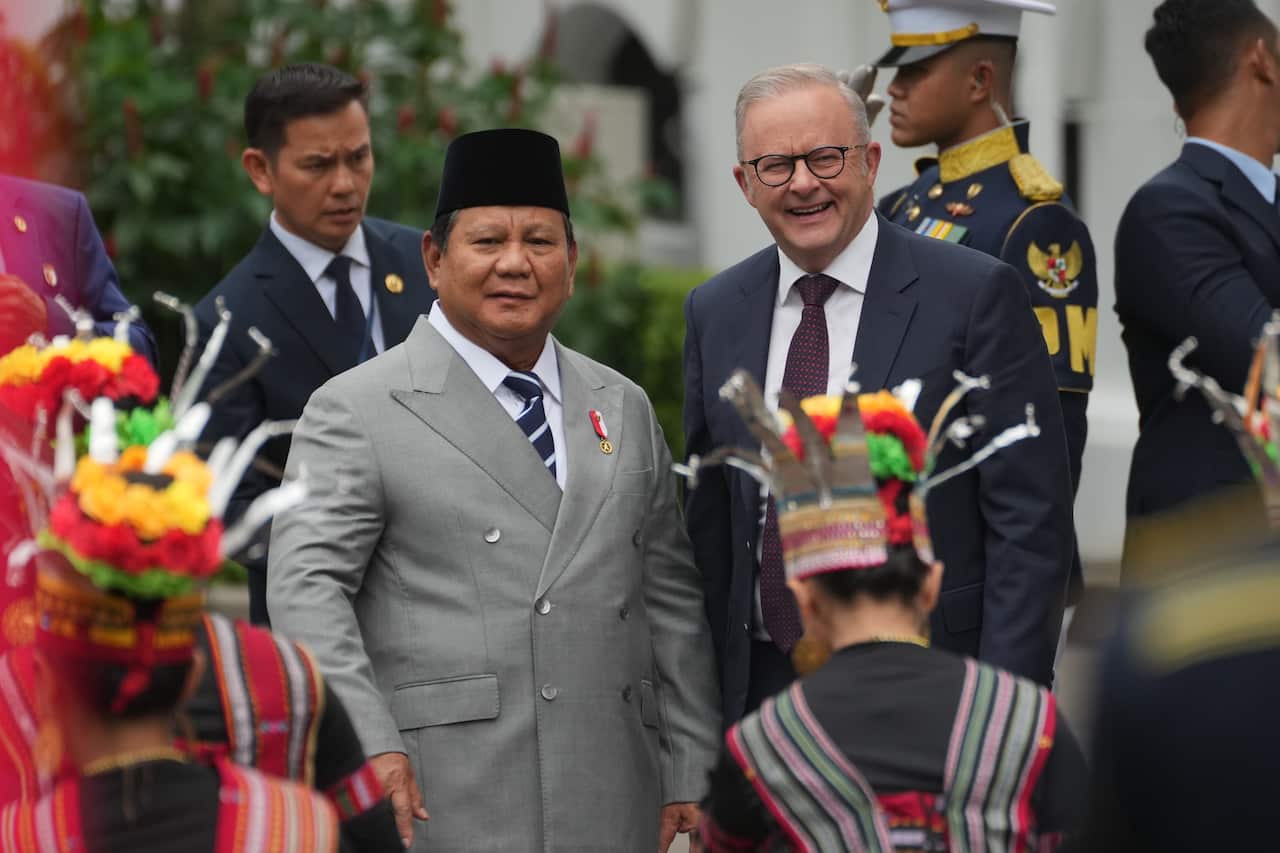
The issue has had little visible effect on Indonesia's relationship with Australia. In February, Prime Minister Anthony Albanese visited Jakarta to sign a landmark security deal expanding cooperation between the two countries' militaries.
"No country is more important to Australia — or to the prosperity, security and stability of the Indo-Pacific — than Indonesia," Albanese said at Jakarta's presidential palace at the time.
Setiawan says Australia has always had a pragmatic approach to diplomacy with Indonesia, prioritising maintaining good relations over raising human rights concerns.
"For example, in November last year, Indonesia proclaimed General Suharto a national hero. That was heavily criticised by Indonesian human rights actors and observers of contemporary Indonesian politics internationally.
"Then, the next day, Prabowo visited Australia to announce the security pact. So, I think that is a very good indication of the priority that human rights policy has in the bilateral relationship."
Rising attacks on human rights activists
Human rights monitors say the military's growing influence in politics has coincided with worsening violence targeting civil society.
Throughout 2025, Amnesty International documented 295 incidents of intimidation against human rights defenders.
There was a Molotov cocktail thrown at the home of a political influencer, a threatening note tied to a chicken carcass left at the home of a Greenpeace campaigner, and a mutilated pig's head sent to the offices of an investigative magazine.
Usman Hamid, executive director of Amnesty International Indonesia, says the attack against Yunus is a symbol of a "structural human rights problem and democratic decline in Indonesia".
It's a pattern of systematic repression. It's a pattern of shrinking civic space.
"I've been working in human rights for more than 25 years; I've been in a number of difficult situations. But this is the first time my wife has felt so worried, because she has witnessed the way I receive threats, phone calls and so on."
Hamid says the Prabowo government has contributed to a culture of impunity by failing to investigate previous acts of violence.
"I think he has — a president who has repeatedly made reckless statements undermining human rights defenders, journalists, activists or critical observers as 'enemies' of the state — created a climate where any elements of the state could have done something like the attack on Andrie," he says.
"Every time an attack against an activist is not investigated, it shows a strong indication that there are elements of the state behind the attack."
Meanwhile, Prabowo's administration has repeatedly stated that it supports freedom of expression and rejects violence against civilians.
Indonesia's unfinished business
After the fall of the Suharto regime, Indonesia entered a new era of reform, transitioning to democracy after 32 years of authoritarian rule. But while political reforms reshaped the state, accountability for past violence has remained limited and contested.
Every Thursday since 2007, a group of protesters clad in black has gathered outside Jakarta's presidential palace.
It started with one woman, Maria Catarina Sumarsih, whose 20-year-old son, Wawan, was shot dead by security forces during a 1998 pro-democracy protest.
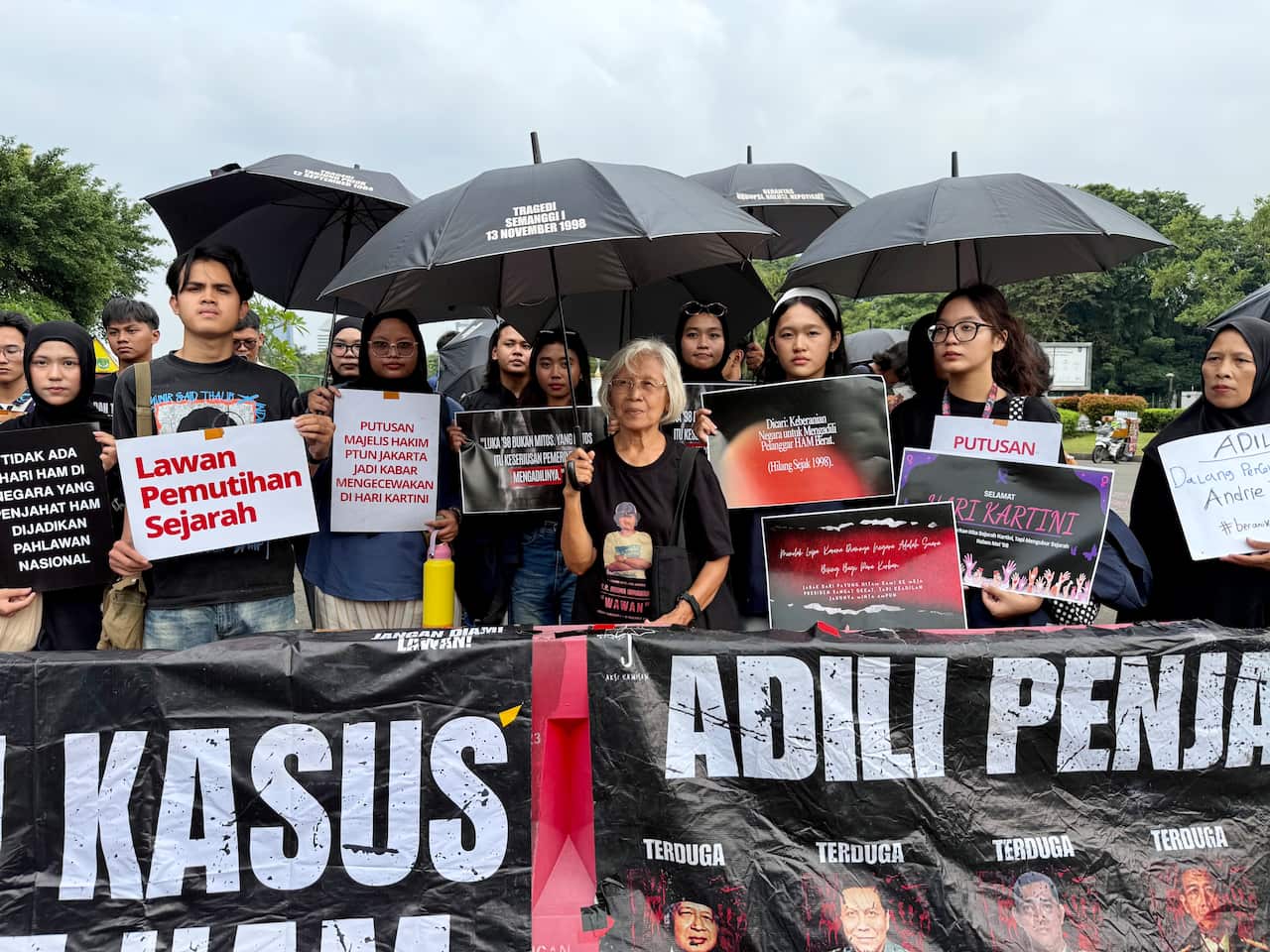
No-one has ever been held accountable for his death.
"I want to continue the fight of Wawan and his friends, which has not been completed," Sumarsih tells SBS News during her 905th weekly protest.
Upholding the truth, seeking justice, fighting impunity, refusing to forget and nurturing the reformation.
Suharto stood down in May 1998, but the protests continued for months, demanding a complete dismantling of the military's role in politics.
It is difficult for Sumarsih not to draw a link between the stories of Wawan and Yunus.
"This violence by the authorities must not be ignored," she says.
"It should have stopped with Wawan, but it has to stop with Andrie Yunus. There should be no more victims."
During the protest, another generation of university students files in to join her. Each one greets her with a bow, touching the back of her hand to their foreheads — one of the highest signs of respect in Indonesia. For many of them, the ritual is not just a cultural formality but a quiet acknowledgement of what Sumarsih has been carrying for decades.
As each year passes, more young voices are joining similar movements across the country. Sumarsih says the protests will continue as long as the attacks do.
For the latest from SBS News, download our app and subscribe to our newsletter.







