(Transcript from World News Australia Radio)
The Immigration Health Advisory Group has been told it'll be dissolved and replaced by one adviser.
Darren Mara has the details.
(Click on audio tab above to hear full item)
The Immigration Health Advisory Group was established to provide independent advice on the health needs of asylum-seekers.
It was set up in March this year to replace the Detention Health Advisory Group, which had been in place since 2006.
It's inception followed recommendations by the Palmer and Comrie Inquiries which came after the mishandling of the cases of Vivian Alvarez and Cornelia Rau.
The group consisted of nine experts, including psychiatrists, psychologists, nurses and GPs.
Professor Amanda Gordon represented the Australian Psychological Society in the Group, and says members had no forewarning of the decision from the Deparment of Immigration.
"Well we had been continuing to talk with the Department and although they cancelled our last meeting at relatively short notice there was no indication that the group was to be disbanded. We have outstanding issues from previous meetings not yet dealt with."
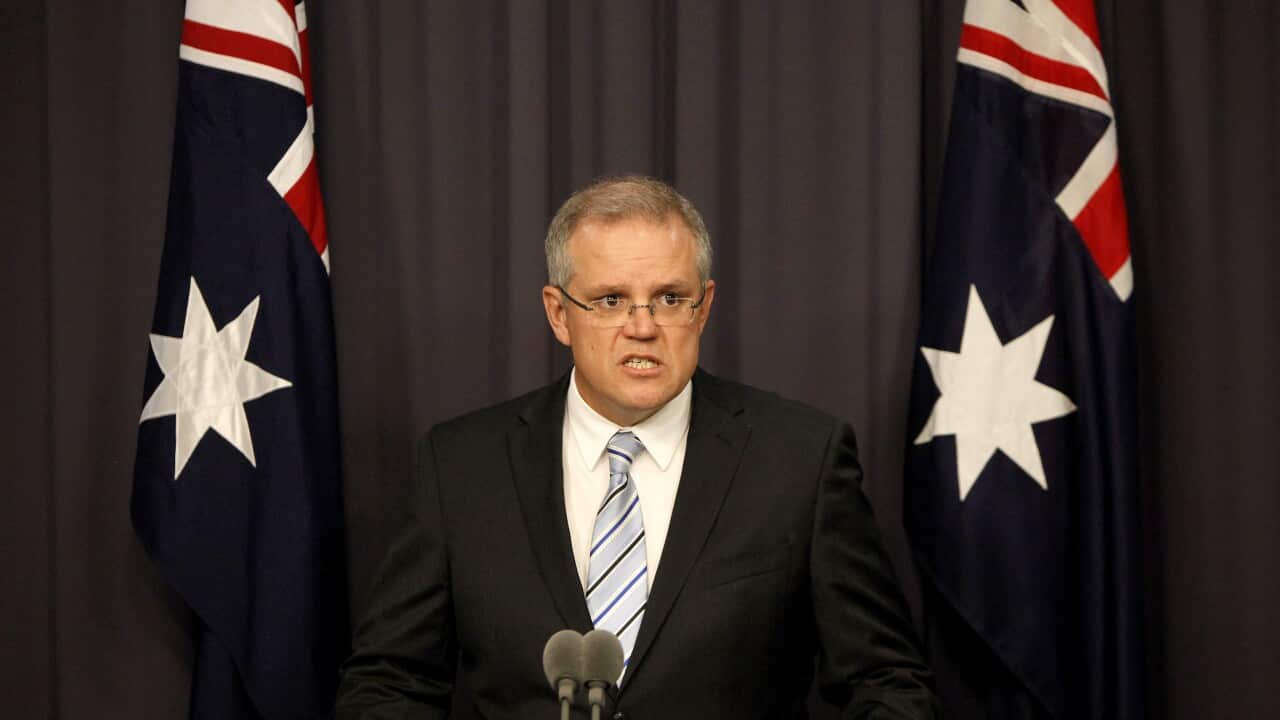
Immigration Minister Scott Morrison says the Advisory Group had a large membership that made it increasingly challenging to provide balanced, consistent and timely advice.
Professor Gordon refutes this.
She says it's been the Department of Immigration that's been unresponsive and unhurried.
"Over the last 12 months we have battled to receive information from the Department so that we could advise them on issues of concern. When we have ever been asked for advice, the turnaround has actually been very timely and very quick."
Dr Choong-Siew Yong represented the Australian Medical Association on the advisory group.
Dr Yong says disbanding it will block a vital conduit between asylum-seekers and monitoring by the health profession.
"We were able to do a lot of work around establishing standards of care, the standards to which the health facilities in each detention centre was held up to providing procedures and policies that reflected mainstream healthcare in other sectors such as in the community and in hospitals and in health facilities. So I think the value of our group was that we were able to bring that real life, best practice, clinical input into a department which was tasked with running a remote and rural health service, but wasn't a health department."
The only member of the Group who has been retained is Major General Dr Paul Alexander, a medical expert with the Australian Defence Force.
Immigration Minister Scott Morrison says Dr Alexander will advise the department in an independent capacity and that his medical background makes him ideal for the posting.
However, Dr Choong-Siew Yong says one person can't replace the expertise of a panel of experts.
"I'm pretty sure Dr Alexander will be asking individuals to help him out with various questions for the department, but that won't replace the ability for us to access the expertise of our professional organisations."
Professor Amanda Gordon and other Group members also suggest that Dr Alexander lacks sufficient experience in mental health, and raise questions over how independent his Defence Force role can allow him to be.
"Given the lack of experience in mental health issues we are very concerned because of course mental health issues are the prime reasons for people in immigration detention to seek medical advice and in fact to be taken to hospitals for assessment and for treatment. We also concerned about the idea of independence. The advantage of the IHAG has been that its membership has comprised delegates from the stakeholder colleges and representative groups and that did make us independent. I'm not quite sure where the independence of Dr Alexander, who's a government employee, actually comes in."
The Australian Greens have described the decision to axe the Advisory Group as "short-sighted and cruel".
The federal Opposition, meanwhile, says the timing of the move has been "appalling".
Opposition immigration spokesman Richard Marles points to a last week's report by rights group Amnesty International, which alleges a number of health and sanitation deficiencies at the Manus Island detention facility in Papua New Guinea.
Mr Marles says disbanding the Independent Health Advisory Group will reduce the government's ability to meet health standards throughout the entire immigration system.
"It's certainly removing a key source of independent advice and what it does is reduce the degree of transparency that we see with the government in the way in which it's going to handle the issue of maintaining appropriate health standards within our immigration system and within our detention facilities. It's going to place the government in a worse position to be able to do what is a very difficult job."
However Prime Minister Tony Abbott refutes these claims, saying the move is about efficiency and will not affect the health of asylum-seekers in detention.
"There has been no disbanding of advice to the immigration department, it's just that we've moved from an unwieldy committee to a single officer and the chairman of the relevant committee is now the Immigration Department's health advisor dealing with exactly the same matter."
But the president of the Australian Human Rights Commission, Gillian Triggs, says it's hard to discern the government's motives for the move.
She says mental health and suicide rates in mandatory closed detention are significantly increasing, and she's concerned disbanding the Group could have a detrimental effect on asylum-seeker health.
"Particularly as strong research is now emerging, for example, that suicide is the leading cause for premature deaths for detainees in our immigration networks and that is largely caused by the decline in their mental condition. The research is emerging, particularly from the Menzies School of Health in Darwin, again, of the very high numbers of psychiatric problems and self-harm of those in our detention centres."