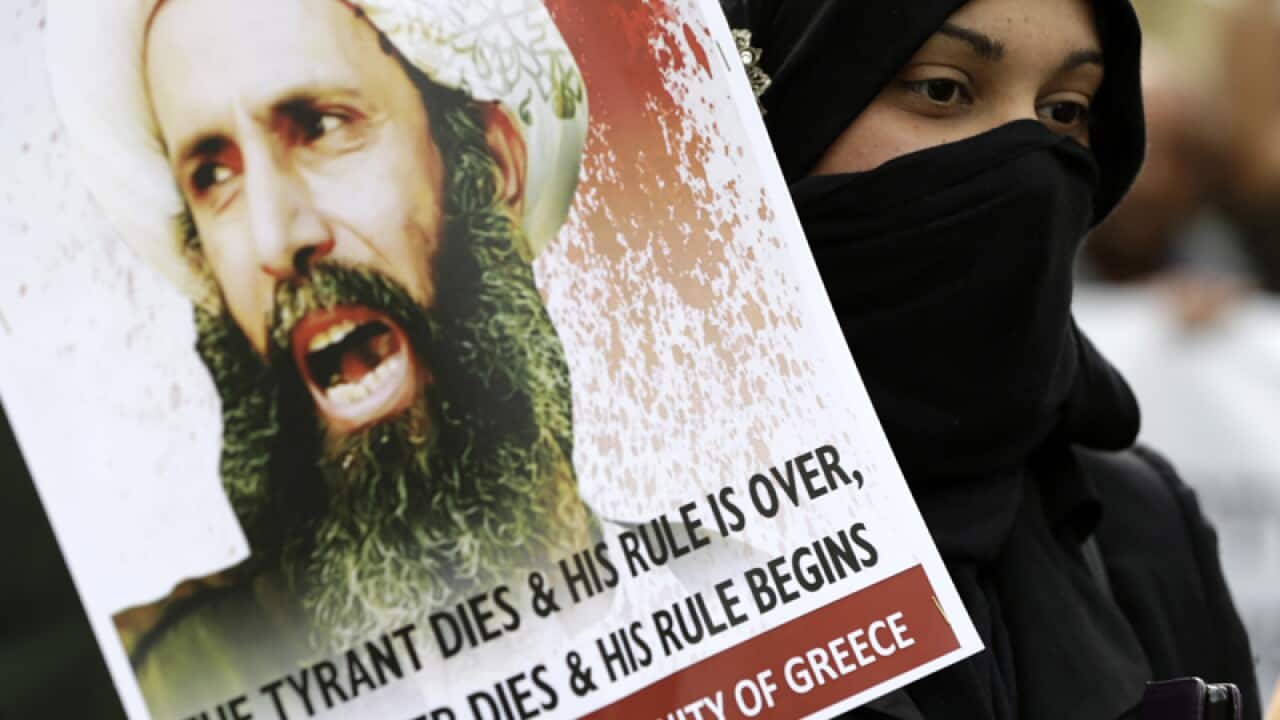
Since Saturday's execution of four Shi'ite Muslims in Saudi Arabia, hundreds of thousands of the minority sect have marched nightly in protest, and their anger could herald wider unrest.
The execution of one of them, dissident cleric Nimr al-Nimr, caused an international crisis as Shi'ite Iran and its allies responded angrily, but it also caused upset in his home district of Qatif, where many saw his death as unjustified.
"People are angry. And they are surprised, because there were positive signals in the past months that the executions would not take place. People listen to his speeches and there's no direct proof he was being violent," a Qatif community leader said by phone.
The protests in Qatif, an almost entirely Shi'ite district of about a million people in the oil-producing Eastern Province, have been mostly peaceful, though a fatal shooting and gun attacks on armoured security vehicles have also taken place.
Qatif is located near major oil facilities and many of its residents work for the state energy company, Saudi Aramco.
News that makes sense
Your trusted source for staying up-to-date with the world around you. Get free daily news updates and analysis, straight to your inbox.
Past incidents of unrest have not led to attacks on the oil industry, but a bus used by Aramco to transport employees was torched after a protest on Tuesday night.
Footage of marchers shouting "down with the Al Saud" and other anti-government slogans, corroborated by witnesses contacted by Reuters, is circulating on social media along with video clips showing shots fired at armoured cars.
"I did not hear shooting last night, but I heard it a lot on the two nights before," a resident of Nimr's home village, al-Awamiya, told Reuters by phone. Like others Reuters spoke to in Qatif, he asked that his name be withheld.
Shi'ites have long complained they face entrenched discrimination in a country where the semi-official Wahhabi Sunni school regards their sect's beliefs as heretical. They say they face abuse from Wahhabi clerics, rarely get permits for places of worship and seldom get senior public sector jobs.







