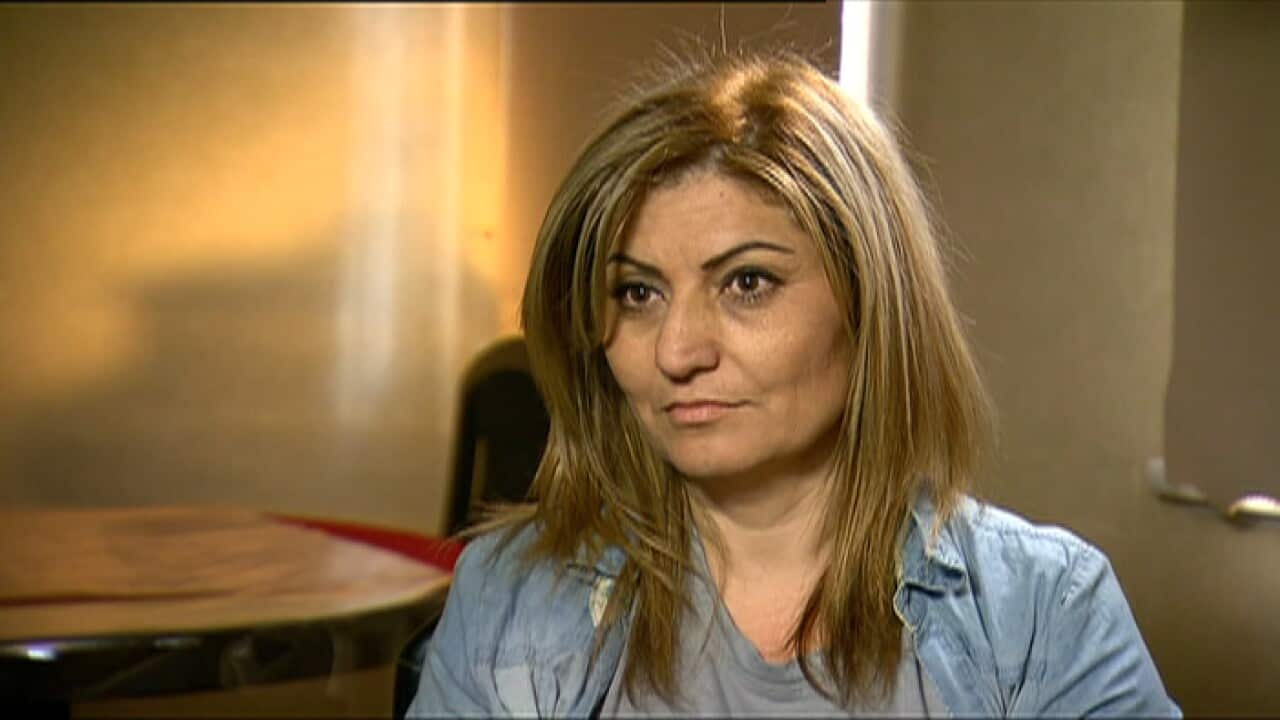
Rojeen Salah is one of a handful Yazidis living in Australia. She was born in Sinjar, the largest Yazidi town in northern Iraq and says life as a Yazidi was not easy.
"People (were always) following us and tried to kill us or do something to us. We always have to hide from them," she said.
"We always (had) to hide our religion from them and we can't tell them that we are Yazidi and if they know, they know, straight away, they kill us."
After spending years living in fear, she says she was forced to flee Iraq almost three decades ago. With her husband and baby daughter, she made the journey to neighbouring Syria before ending up in Brisbane, years later.
"The reason I left my country is we were living in the area where we were between all these Arab people, and my husband was in the army and because he was a Yazidi tried to kill him, so we left," she said.
News that makes sense
Your trusted source for staying up-to-date with the world around you. Get free daily news updates and analysis, straight to your inbox.
Until recently, few had heard of the Yazidis but they have now become a focal point in the ongoing conflict in Iraq.
Although exact numbers vary, its estimated there are up to 500, 000 Yazidi, many based in Sinjar, but they were recently forced to leave or risk being executed by Islamic State militants.
Ms Saleh's family were among those who were forced to leave and she says they aren't living together anymore.
She says her elderly parents struggled to make the journey up the mountains as they sought refuge.
The perilous journey and lack of food and water led to her mother collapsing from dehydration.
"It was difficult for my mum to walk up because there's no water, no nothing. No food, no anything," she said.
"It was like a desert and then they were trying to climb the mountain to get to the otherside to be safe, and then my mum she just collapsed."
The Yazidis have repeatedly faced oppression from larger, more powerful forces in the region over the centuries.
The Yazidi, are viewed by some, including the Islamic State group as 'devil worshippers'. This is in part, because their ancient faith is linked to Persian Zoroastrianism.
Yazidis have adopted elements of Judaism, Christianity and Islam over the centuries but it's not just the Yazidis that are living in fear of persecution from IS militants.
Iraqi Christians are among those that have been targeted.
Joseph Haweil is from the Australian spokesman for the Assyrian Church of the East Relief Organisation.
"Our community, to be quite honest, is horrified about the circumstances that are currently unfolding in Iraq," he said.
"The Assyrian people are a distinct ethnic and religious minority who have lived in Iraq since time immemorial, for more than 6000 years in fact and the current situtaion has seen them driven from their homes and persecuted relentlessly."
Other Iraqi Christians that have also been targeted include the Chaldeans and Syriacs.
The current state of events in Iraq has led members of the community to come together and call for action to protect these minority groups.
One of those intiatives is the 'Demand for Action' campaign which is calling on the Australian government and international community to do more to guarantee the safety of these people.
"It's really a campaign to raise awareness, to push for a safe haven and to push for the safety of these minorities in a land that they have lived for thousands of years," campaign spokeswoman Nineveh Younan said.
Ms Younan said it's not just a call for their voices to be heard but also a push for humanitarian aid and to push for the UN to put peacekeepers on the ground.
Recently, the Australian government announced that it would be offering 2,200 places for Iraqi fleeing the violence in the north of Iraq.
Although Mr Haweil welcomes the move, he said it's not enough.
"Australia is home to more than 40,000 Assyrian Christians and other Iraqi minority groups, so we have benefited from previous humanitarian programs and while we are definitely not opposed to humanitarian programs targetting Iraq's Christians into the future," he said.
"It's a short term solution. What is required in the long term is the establishment of a safe haven in the Nineveh Plains, for these people to live in dignity and peace, protected from persecution."







