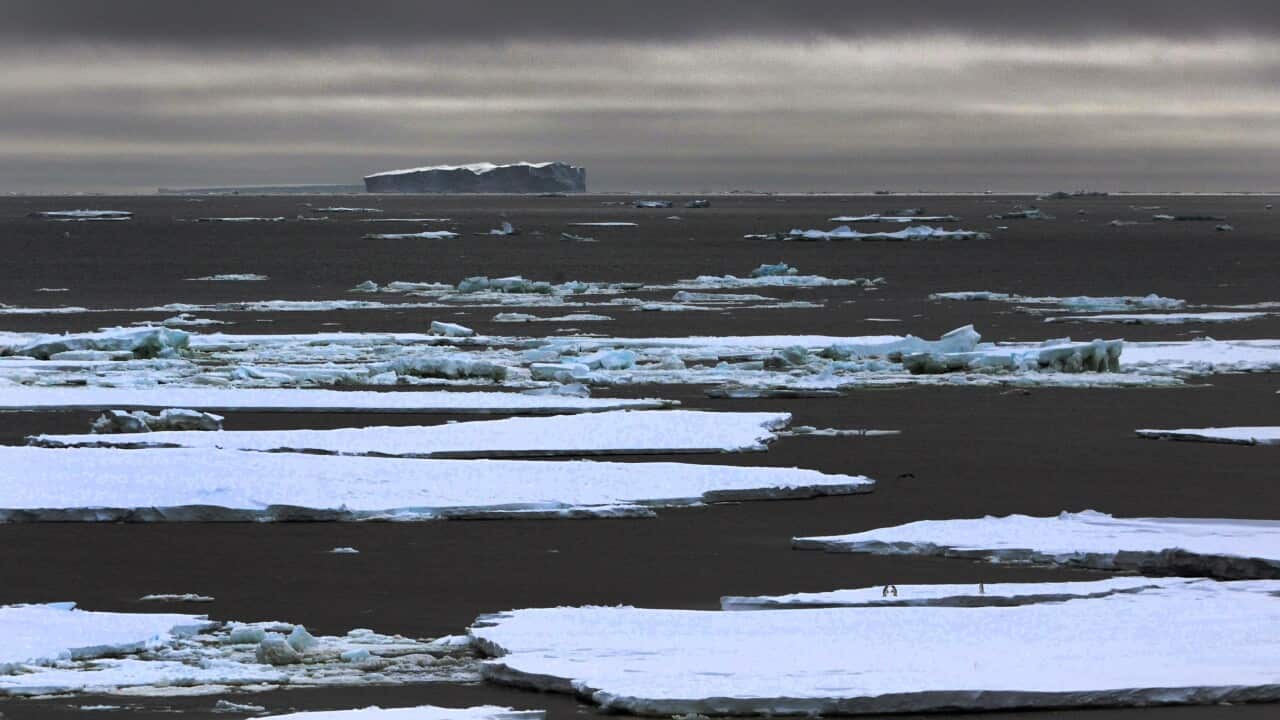
Ice is melting in the western Antarctic at an unstoppable pace, US scientists say, warning that the discovery holds major consequences for global sea level rise in the coming decades.
They say the speedy melting means prior calculations of sea level rise worldwide made by the Intergovernmental Panel on Climate Change will have to be adjusted upwards.
"A large sector of the West Antarctic ice sheet has gone into a state of irreversible retreat. It has passed the point of no return," said Eric Rignot, professor of Earth system science at the University of California Irvine.
He noted that surveys have shown there is no large hill at the back of these glaciers that could hold back the melting ice.
"It will raise sea level by 1.2 metres or four feet," said Rignot, whose paper appears in the peer-reviewed Geophysical Research Letters journal.
News that makes sense
Your trusted source for staying up-to-date with the world around you. Get free daily news updates and analysis, straight to your inbox.
A separate study published in the journal Science on Monday found that Thwaites glacier is melting fast and that its collapse could raise global sea level nearly 61 centimetres.
That study was based largely on computer modelling of the future, in addition to airborne radar measurements of the West Antarctic ice sheet.
Study author Ian Joughin, a glaciologist at the University of Washington, said the process is now expected to take between 200 and 1000 years.
Current projections of sea level rise, agreed upon by international surveys, do not account for the Antarctic ice sheet melting.
Sridhar Anandakrishnan, professor of geosciences at Pennsylvania State University, said studies like these will cause the United Nations to revisit their projections.
"The number for 2100 will almost certainly be revised and revised upwards, and my guess is toward what is now their upper limit of something like 90 centimetres," said Anandakrishnan.
He said that the rise in sea level is widely accepted to be a result of human-caused climate change, driven by the burning of fossil fuels.







