
In Brief
- Labor had promised before the 2025 election not to touch negative gearing or capital gains tax.
- Several media reports suggest those tax policies will form part of Tuesday's budget.
Prime Minister Anthony Albanese has defended looming housing tax reform measures in Tuesday's budget after being questioned over his government having repeatedly ruled out changes.
The 12 May budget will reportedly feature changes to negative gearing, the capital gains tax (CGT) discount and the way trust funds are taxed, although exact details remain unclear.
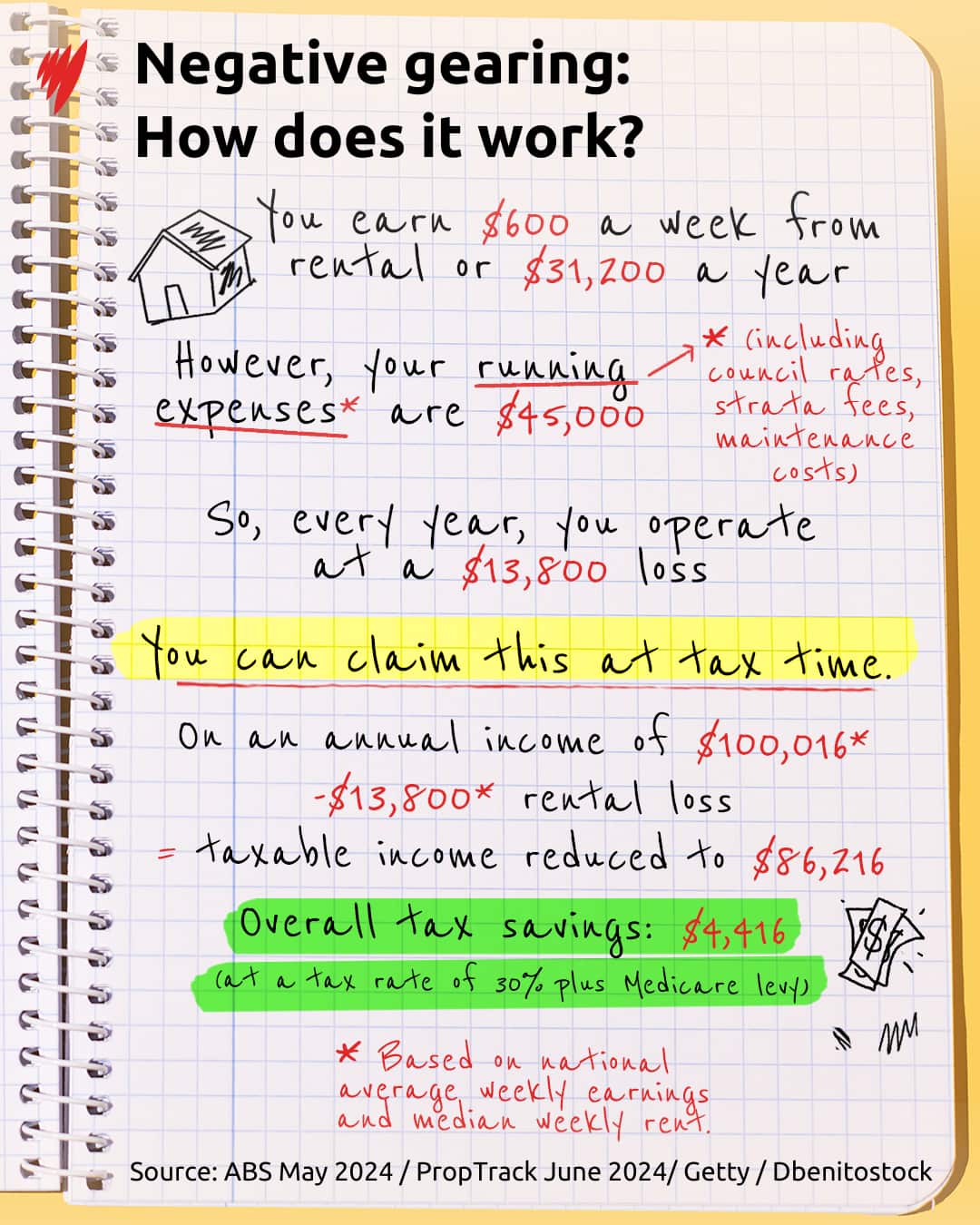
The measures allow property investors to offset losses from running a property against their income and halve the amount of tax they have to pay on any profit when they eventually sell.
Reports suggest the capital gains tax discount will revert to a pre-1999 indexation model while the tightening of negative gearing will come into effect in July 2027.
News that makes sense
Your trusted source for staying up-to-date with the world around you. Get free daily news updates and analysis, straight to your inbox.
Before the May 2025 election, Labor repeatedly ruled out changes to the policies. On 9 April 2025, Albanese was asked by a journalist: "Can you just be really clear — can you rule out any changes to negative gearing and capital gains tax settings if re-elected?"
"Yes. How hard is it? For the 50th time," Albanese replied.
As recently as August 2025, Albanese responded to calls for such reform from unions and welfare groups at a productivity roundtable saying: "The only tax policy we're implementing is the one we took to the election."
On Monday, Albanese was asked on ABC radio whether the looming changes constituted a broken promise.
He said Australians from all generations were worried about intergenerational equity and about home ownership slipping away from younger people.
"The difficult decision, but the right decision is to do the right thing with the right policies, to deliver. And clearly, people are frustrated," he said, adding that housing supply was the key issue.
"Any responsible government like ours has to take these issues seriously."
He said the government was responding to new issues as it arose, citing as an example the fuel excise cut amid the Middle East war.
Inequity between the generations was continuing to be entrenched without reform, he added.
"Government is about making the right decisions for the right reasons for the times that you are in," Albanese said.
"If we do change our position on any policy, we will explain why it is that that is occurring."
Labor unsuccessfully campaigned on housing tax reform at the 2019 election, which it lost. It had proposed limiting negative gearing to new properties and reducing the capital gains tax concessions from 50 per cent to 25 per cent.
While the changes have yet to be confirmed — Tuesday's budget is set to lay out the breadth of potential changes — it would not be the first time the government has had a change of heart on a major policy.
Labor ministers repeatedly asserted there were "no plans" to change the stage three tax cut package — a Labor pledge ahead of the 2022 federal election — before announcing an overhaul in 2024.
The two policies have been at the centre of calls for reform for years but have gained traction more recently amid a growing housing affordability crisis.
Welfare groups argue they fuel the housing crisis and have called for the CGT discount to be halved and negative gearing phased out entirely for existing investments.
Unions too, deem the system unfair, saying they hurt workers being priced out of home ownership while privileging professional landlords.
Australian unions want the CGT discount halved to 25 per cent and along with negative gearing tax breaks both limited to one investment property.
"The tax system should not provide the means for professional landlords to have their housing speculation subsidised by ordinary workers, who are being priced out of housing and are paying much higher rates of tax, in line with their income," Australian Council of Trade Unions president Michele O’Neil said in February.
But property and construction bodies say reforms would reduce housing supply and lead to fewer new home builds.
Master Builders Australia, the Housing Industry Association, the Property Council and the Real Estate Institute of Australia released modelling ahead of the budget which they said showed that removing negative gearing for all new and current rental properties, bar one per investor, would reduce Australia’s GDP by $3.1 billion.
It said that change would also cut construction jobs and raise rents by 2 per cent a year.
For the latest from SBS News, download our app and subscribe to our newsletter.







