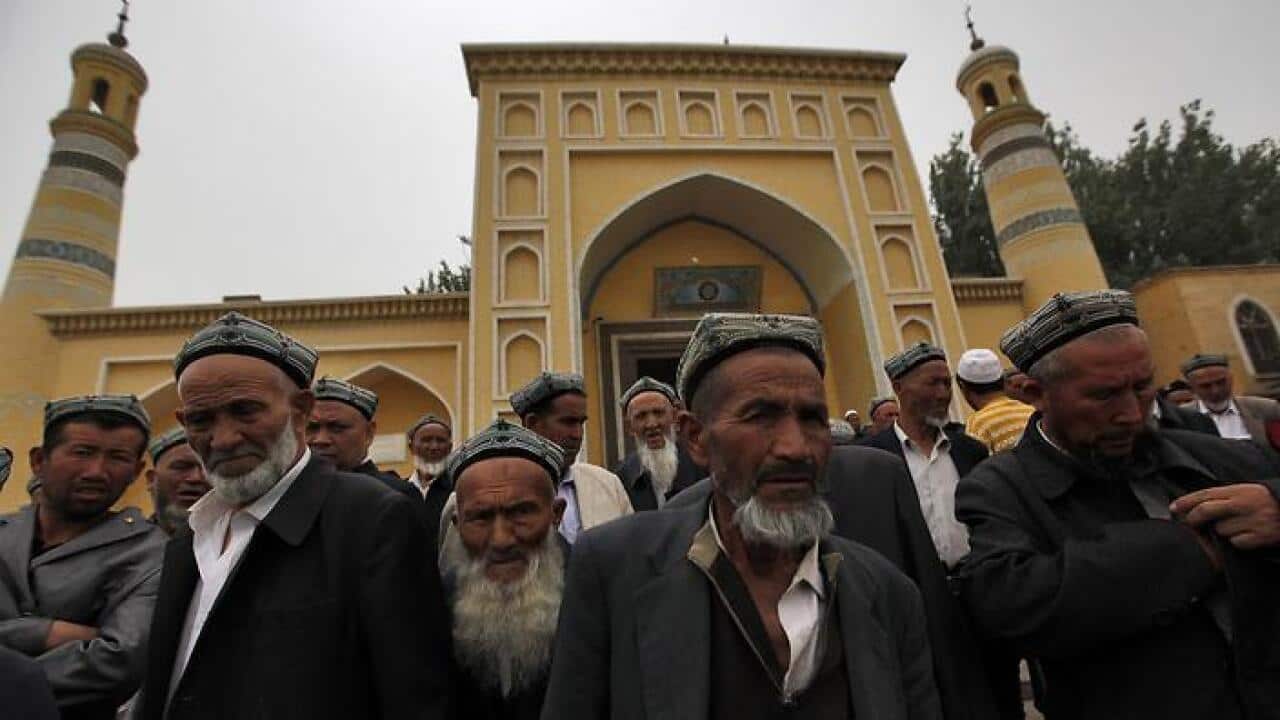
The Muslim community of the Hui ethnic minority in the city of Hefei in China’s eastern Anhui province has lived trouble-free for centuries, until now.
The Hui make up half of China’s Islamic population, and have traditionally been held up by the ruling Communist Party as relatively assimilated and trouble-free; model minorities of a multi-ethnic Chinese nation.
But a government plan welcomed by the Hefei community to relocate their mosque to a new and bigger complex was blocked by angry protest, fuelled by anti-Muslim sentiment on social media.
Imam of the Nangang mosque Tao Yingsheng said the problem originated online, and not in the local community.
"Some people are intentionally inciting a feud among different ethnic groups on the internet through micro-blogging. This has made the problem more complicated, more antagonising,” said Mr Tao.
News that makes sense
Your trusted source for staying up-to-date with the world around you. Get free daily news updates and analysis, straight to your inbox.
Using Chinese microblogging platform Weibo, a propaganda official known as Cui Zijian called for Muslims to be driven out of the China. His posts, followed by 30,000 accounts and circulated widely, encouraged non-Muslim locals to use pig's blood to stop construction of the new Nangang mosque.
Isa Ma is a young Chinese Muslim currently studying in Hong Kong. He often responds to attacks on Islam online, and tries to dispel stereotypes. The student said he feels the attacks are based on “innocent ignorance,” and reflective of international trends.
“I see it as a delayed effect of the global islamophobia which has been there for a decade or so already," said Ma.
"Chinese people may have the obstacle of the great firewall, but they still have enough access to be affected by Western ways of thinking."
But China researcher at Amnesty International, William Nee, said the sentiment is fuelled by a recent spate of violence in China's Muslim-majority Xinjiang province, where the government increased controls in an effort to clampdown on religious extremism. Last month burqas, hijabs and “abnormal beards” were banned in the province.
“There are domestic factors in terms of people perceiving that the Chinese government has been too accommodating towards Muslims and people in the Xinjiang Uyghur Autonomous Region, and of course the government's anti-terror campaign,” said Nee.
Imam Tao Yingsheng and his wife have received death threats, but he said he doesn’t blame those who sent them.
“They don't know about Islam. They don't know how the Hui people and Han people have got along so well with each other in this place. This and the misleading of some media, particularly the internet, has made people misunderstand Islam."
Isa Ma said he hopes others like him will use the backlash as an opportunity to learn more, and educate others about the religion.
“There is also a reaction to this anti-Muslim sentiment. It encouraged Muslims to know their religion."
Watch: Muslims in China say they're being targeted







