
In Brief
- The Royal Comission on Antisemitism and Social Cohesion staged hearings focused on antisemitism in workplaces
- Artists said they felt exhausted and defeated due to antisemitism.
Allegations of antisemitism within government agencies, schools and art sector are in focus during the hearings of the Royal Commission on Antisemitism and Social Cohesion this week in Sydney.
The hearings have heard from Jewish professionals across art, education, healthcare and public sectors, as they shared their experience of antisemitism at work.
On Friday, Jewish sculptor Nina Sanadze told the hearing that she became a target of antisemitism after private group chat where she called Hamas "animals" were leaked in 2024.
She told the royal commission mentions of Hamas were replaced with "Palestinians" by the time the message was leaked, alleging it was to accuse her of dehumanising Gazans.
She also said some of her Jewish colleagues became wary of exhibiting work, as they were scared of antisemitic attacks.
News that makes sense
Your trusted source for staying up-to-date with the world around you. Get free daily news updates and analysis, straight to your inbox.
"Jewish creatives are such an incredible, extinct minority already, and we have been now erased almost entirely," she said.
The Soviet-born artist felt the Australian creative sector has been "radicalised" by a Marxist-Socialist ideology since the 1960s.
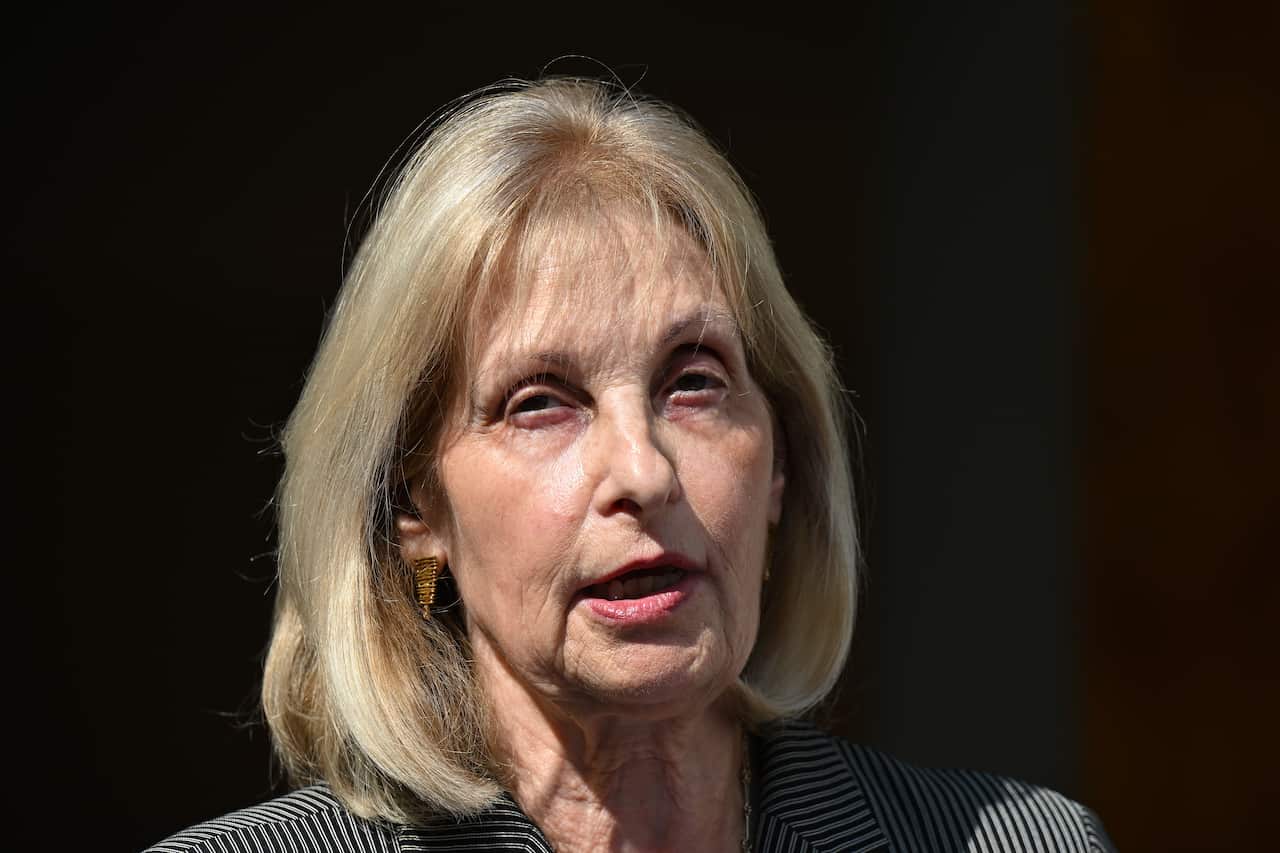
"They divide people into oppressors and the oppressed. And if you're in a category of the oppressor, any violence, any harassment, any bullying is by all means acceptable," Sanadze said.
She said she struggled to engage with the art world's discussion of the Middle East and pressure to attend rallies.
Another witness spoke of the two sides of the Australian comedy scene, which he said could be an open community, or a place of isolation, harassment and bigotry.
The witness, speaking under a pseudonym, felt exhausted trying to call out antisemitism and being ostracised.
Art funding distribution under scrutiny
On Thursday, Special Envoy for Combating Antisemitism Jillian Segal made her third appearance to the Royal Commission, this time raising concerns that Jewish artists are unfairly excluded from public creative grants due to antisemitism.
"The arts are important in challenging our thinking ... I wouldn't want to, in any way, constrain that," she said.
"But how do you balance that with making sure that everyone feels safe?"
Segal said supporting Jewish artists who were struggling to find work in the industry remained a "wicked problem".
She also advocated for creating a separate grant panel for Jewish artists, while ensuring existing grant panel members take antisemitism training.
Frequent antisemitic harassment against students
Segal also gave evidence on existing training and guidance available across the education sector, saying education on antisemitism should be rolled out further.
"We should touch people in primary school and in secondary school ... even touch being a tolerant, helpful young person in preschool, and we need to not only be high school, but university and TAFE," she said.
The special envoy also highlighted the needs of teachers being overlooked in favour of student outcomes.
Segal said she was first confronted by the issue at a teacher's forum hosted by Victorian billionaire John Gandel's philanthropic foundation a few years ago.
"They explained to me that the most difficult thing for them was answering questions from students that they didn't have the knowledge ... that was even in relation to the Holocaust, but (also) how it morphed into antisemitism," she said.
The inquiry also heard from the former head of Australia's largest Jewish day school that students were frequently targeted by pupils from other schools.
John Hamey, former principal of Sydney's Moriah College, told the inquiry that during his tenure from 2011 to 2018, he found many students from his school gave up reporting antisemitism incidents, due to their frequency and the lack of consequences for perpetrators.
"It was not necessarily something they would report because they would say, 'well, nothing would happen', or there'd be no serious outcome or consequence for the perpetrators of that antisemitism."
Hamey also said most teachers outside Jewish institutions weren't well informed about Jewish cultural life or equipped to identify antisemitism.
"They really lack the language," he said.
The inquiry also heard from Michael Zervos, who provided an example of a successful anti-discrimination program for primary and secondary schools.
The Courage to Care program, which has reached to more than half a million students nationwide, focuses on bystander training and calling out discrimination of all kinds.
"We now call them 'upstanders', who had the moral courage to actually take some action and combat that discrimination and that racism," Zervos said.
Courage to Care is an initiative created by B'nai B'rith, which describes itself as an international Jewish community service organisation committed to combating anti-Semitism, promoting Jewish unity and continuity, and "staunchly" defends the State of Israel.
It's a connection Mr Zervos said he had had to defend.
"Our focus is on behaviour, so we are not an advocacy organisation. We're not a political organisation ... we know what our role is. We'll leave that to other organisations," he said.
Healthcare sector
The Australasian Jewish Medical Federation raised the issue of politicisation of Jewish identities in Wednesday's hearings of the royal commission.
The federation provided the royal commission with examples of multiple incidents in which people felt unsafe or doctors were rejected by patients because of their cultural identity.
Federation president Jack Green said the organisation "hardly ever" received reports of anti-Semitism before the turning point of Hamas' October 7, 2023 attack on Israel.
"There was increased politicisation in the health sector, there were a lot of social media postings," Green said of the shift.
Doctors became afraid to display symbols indicating their Jewish identity and, in one instance, an Israeli-Australian patient experienced significant distress seeing "overt political symbols" in a Northern Territory hospital Green said.
Government policy in spotlight
On Monday, Australian Jewish Association chief executive Robert Gregory criticised the federal government for having "egged on" antisemitism since the October 7 attack in 2023.
"[Government] policy, some of the statements and actions from people, particularly in the federal government, have egged on the situation," he said.
He claimed the government has refused visas "disproportionately to Jewish and Israeli people", while citing the government's refusal to grant a visa to a former Israeli minister.
In 2024, Home Affairs minister Tony Burke declined to grant a visa to right-wing Israeli politician Ayelet Shaked, citing concerns about social cohesion.
The inquiry also heard Jewish patients are scared of revealing their religious identity in hospitals, and some Jewish public servants feel worried about claiming their Jewish identity at the workplace.
The inquiry will continue on 4 August in Sydney, focusing on protests and policing.
For the latest from SBS News, download our app and subscribe to our newsletter.







