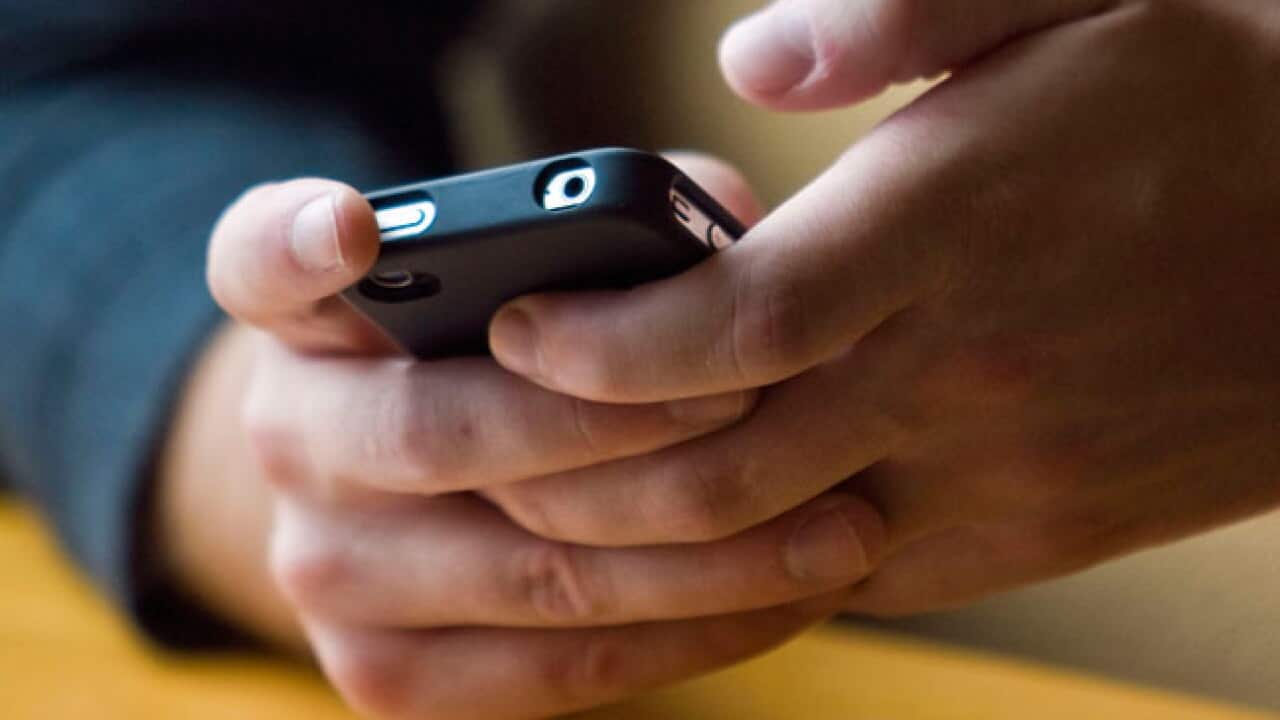
Over 4 billion text messages are sent each day in the US alone. Could all this thumb gymnastics be subtly changing the way we feel about numbers?
Psychologists have long known that if a specific tone is consistently played while a volunteer presses a specific key on a keypad, the tone will later be mentally replayed by the user each time that key is pressed on other keypads. With this in mind, Sascha Topolinski at the University of Würzburg, Germany, wondered whether the activity of texting on a cellphone might similarly lead people to associate words or ideas with numbers.
Topolinski found that 27 German study participants rated seemingly random numbers such as 373863 and 7245346 as equally pleasant. But when a further 38 German participants were asked to dial the numbers on a cellphone before rating them, they significantly preferred 373863 – equivalent to using the predictive text function to type "friend" in German – to 7245346 – German text for "slime".
News that makes sense
Your trusted source for staying up-to-date with the world around you. Get free daily news updates and analysis, straight to your inbox.
Topolinski also found that companies are more liked if their phone number spells out a company-related word, like "flower" for a florist. This applied even if the company-related word has negative connotations – "corpse" for a mortician, for example.
Subtle manipulation
Many companies already choose phone numbers precisely because they spell out a company-related word, but Topolinski says the number-word association occurs subconsciously, offering companies an opportunity for less explicit manipulation. For instance, a betting company might choose a number that spells out the word "successful" rather than the company name.
Topolinski's studies also suggested a way for people to protect themselves from such subconscious manipulation. While dialling the numbers on a cellphone subtly changed the way participants felt about them, the same effect was not seen when the numbers were 'dialled' on the number pad of a computer keyboard, where the numbers are arranged in a slightly different way.
The effect may be acquired "over several years in which hands and eyes interact over and over again with the cellphone", he speculates. "Perhaps the effect may be disturbed by simply changing the hand with which we dial."







