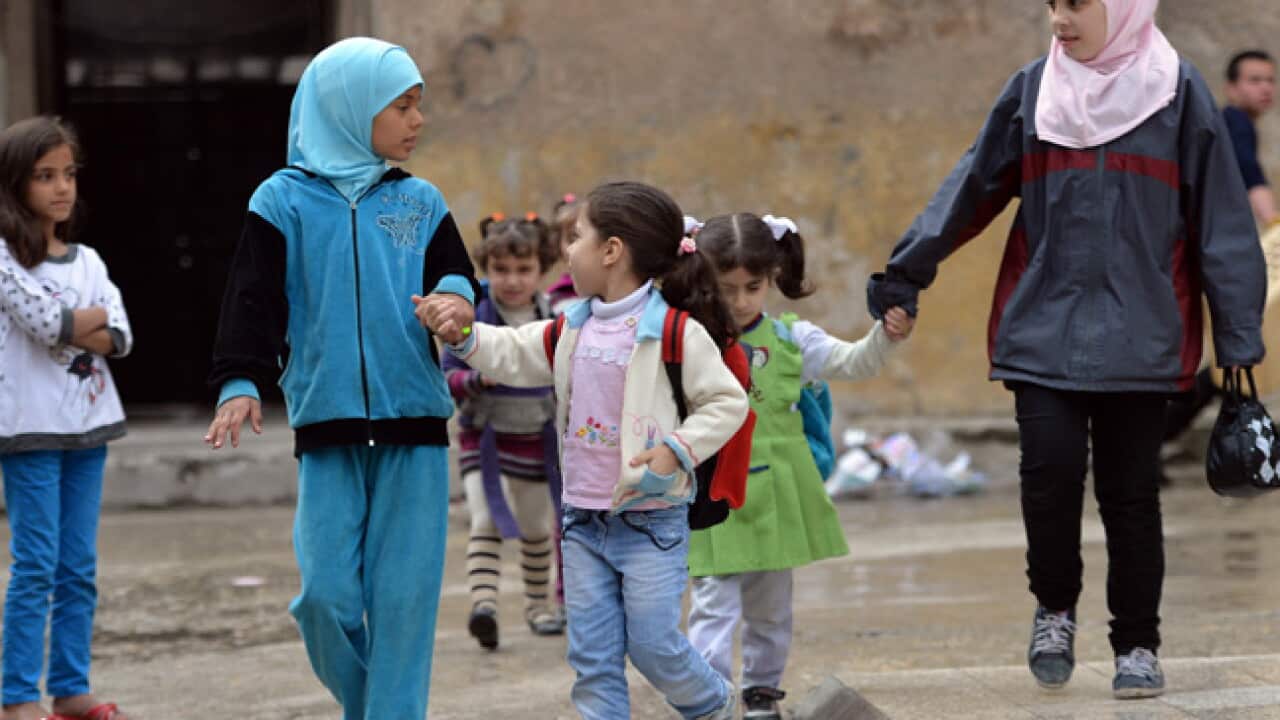
Save the Children has urged world leaders to criminalise attacks against schools and work with communities to preserve schools as places for learning.
The calls follow the release of a report, Attacks on Education, showing more than 48.5 million children cannot attend school in countries affected by conflict.
The new research comes as Pakistani teenager and activist Malala Yousafzai addresses the United Nations in her first public appearance since being shot by the Taliban.
In the speech, Malala insisted she did not want "personal revenge" against the Taliban gunman who shot her on a bus in Pakistan's Swat Valley on October 12 last year.
News that makes sense
Your trusted source for staying up-to-date with the world around you. Get free daily news updates and analysis, straight to your inbox.
"I want education for the sons and daughters of the Taliban and all the terrorists and extremists. I do not even hate the Taliban gunman who shot me. Even if there is a gun in my hand and he stands in front of me I would not shoot him.
The report by Save the Children documents more than 3,600 incidents of violence against children in 2012, including torture and intimidation of children and the recruitment of school-aged children by armed groups.
That number rose from 75 children and 212 teachers killed or injured in 2012.
The report reveals 70 percent of the attacks occurred in Syria. It also shows that girls represented more than half of the children who could not attend school due to the attacks.
Gaza-based Save the Children aid worker, Osama Damo, says the increase in the number of children affected by conflict is staggering.
"When we see these numbers of course we are also shocked as people who are working in the field," Mr Damo told SBS.
"It tells us that the situation is harder not only in our country office, but it's also harder actually everywhere. And that the attacks on schools, and the schools being part of any conflict is very, very harsh. And that's why there should be an international intervention, an international approach to end the suffering of the children and to end the attacks on the schools."
The group has also called on world leaders to increase education funding to a minimum level of 4 percent of global humanitarian funding.
The report said education funding remained had fallen to 1.4 percent of overall humanitarian funding last year from 2 percent in 2011. The level is also lower than the 4 percent global target set in 2010.







