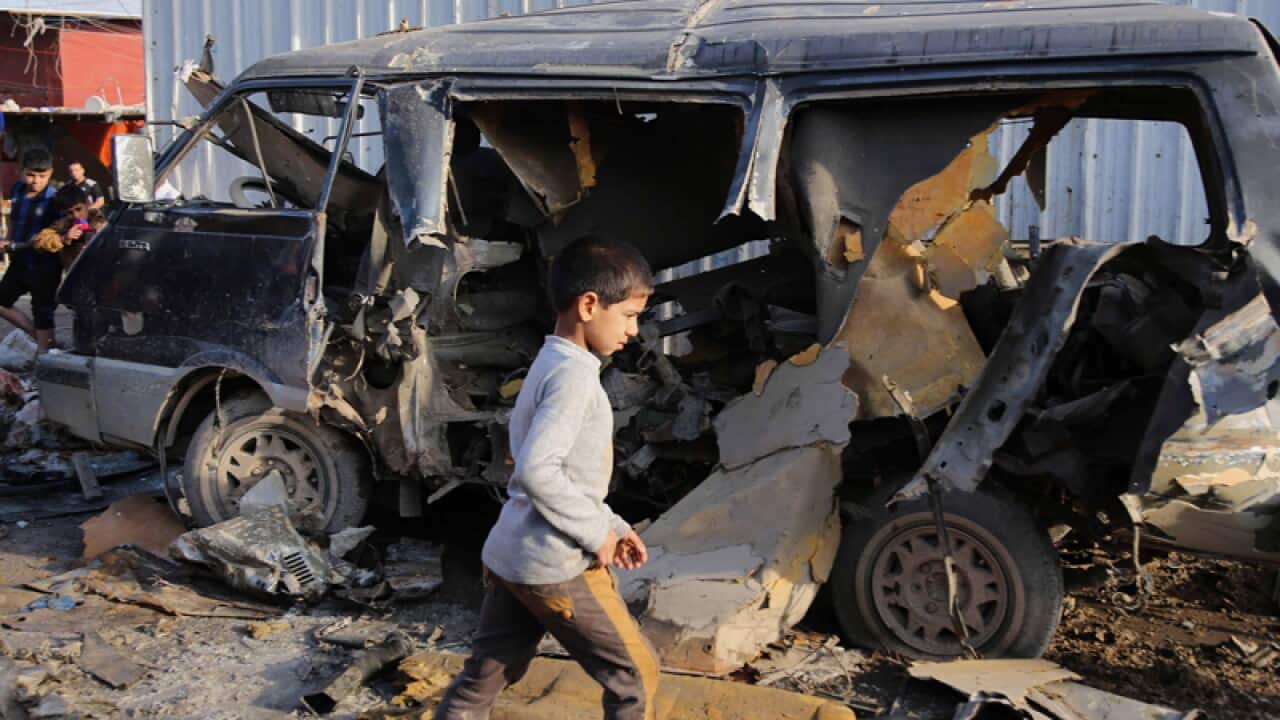
Attacks in Iraq mainly targeting members of the security forces have left 16 people dead, among them three senior army officers.
The bloodshed comes as Iraq suffers its worst violence since 2008, when the country was just emerging from a brutal period of sectarian tit-for-tat killings.
In the northern city of Mosul, a suicide bomber detonated an explosives-rigged vehicle near a military convoy, killing four soldiers, among them a brigadier general, a colonel and a lieutenant colonel.
The blast also wounded 10 people, including six soldiers.
Earlier on Sunday, a car bomb exploded near an army checkpoint in Mosul, killing four more soldiers, among them an officer, while a roadside bomb in the city killed a child and wounded three people.
News that makes sense
Your trusted source for staying up-to-date with the world around you. Get free daily news updates and analysis, straight to your inbox.
The attacks on the soldiers come after five senior officers, including a divisional commander, and 10 other soldiers were killed during a December 21 operation against militants in the western province of Anbar.
In Abu Ghraib, west of Baghdad, gunmen killed at least four Sahwa anti-al-Qaeda militiamen and wounded at least three at a checkpoint on Sunday.
The Sahwa are made up of fighters who joined forces with the United States against jihadists from late 2006, helping to bring about a significant reduction in violence.
They are frequently targeted by Sunni Muslim militants, who consider them traitors.
And in Baghdad, a roadside bomb exploded in the Jihad area, killing at least two people and wounding six, while another roadside bomb near the city of Baquba, north of the capital, killed one person and wounded four.
More than 6750 have been killed in violence since the beginning of 2013, according to AFP figures based on security and medical sources.







