
IN BRIEF
- Astronauts from the Artemis II mission have started their four-day journey back to Earth.
- The crew woke up just before 1am AEST on Tuesday to a recorded message from the late NASA astronaut Jim Lovell.
United States President Donald Trump has spoken to the four astronauts on Artemis II, congratulating the crew on their success as they head back to Earth.
Trump's message came after the crew finished their fly-by of the moon and observed a total solar eclipse while onboard their Orion capsule.
They have now started the four-day journey home, with a splashdown in the Pacific Ocean expected on Friday, local time.
Trump told the crew that they had made history and "made all America really proud".
"We have a lot of things to be proud of lately, but this is, there's nothing like what you're doing circling around the moon for the first time in more than a half a century and breaking the all-time record for the farthest distance from planet Earth," CNN reported Trump as saying.
News that makes sense
Your trusted source for staying up-to-date with the world around you. Get free daily news updates and analysis, straight to your inbox.
Trump also spoke to Canadian Space Agency astronaut Jeremy Hansen, who joined his three US counterparts for the Artemis II mission, adding that he's spoken with Canadian Prime Minister Mark Carney over Hansen's involvement in the mission.
"You have a lot of courage," Trump told Hansen.
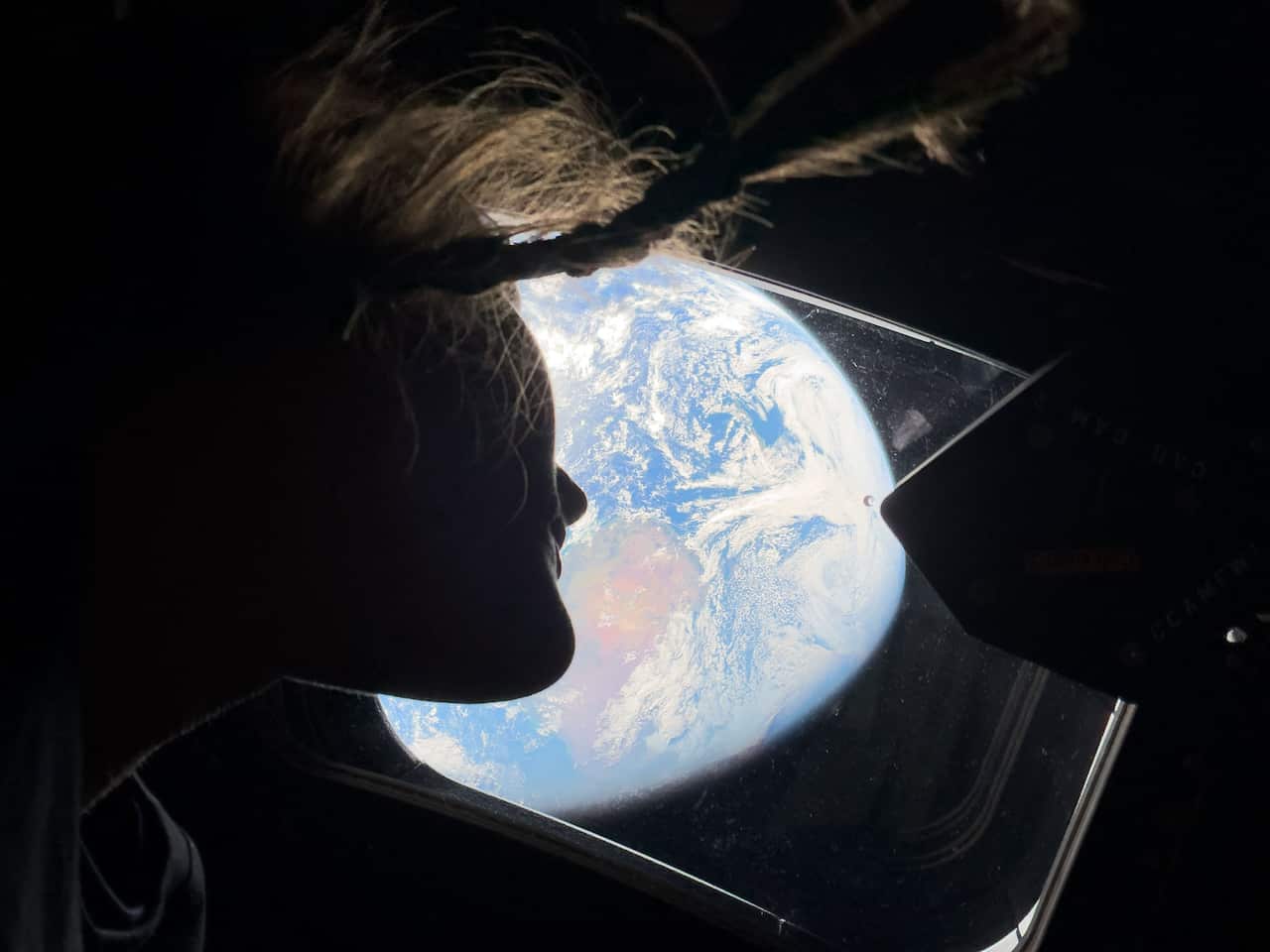
Trump had asked the astronauts to describe what they had seen from the capsule, and invited them to the Oval Office after their return.
NASA administrator Jared Isaacman then took over and hosted a question-and-answer session with the astronauts.
Christina Koch, the only female astronaut among the crew, described their journey with the word "humility".
"We would never be here if it weren't for so many people that came before us — starting with Neil Armstrong, Katherine Johnson, civil rights movement leaders — everyone who worked on this spacecraft before we got here," CNN reported Koch as saying.
The Artemis II crew consists of Hansen, Koch, pilot Victor Glover and mission commander Reid Wiseman.
Solar eclipse observed from far side of moon
The crew was scheduled to start its four-day journey home around 11.32am AEST, after launching from Florida last week.
One hour before they were scheduled to embark on the journey home, they became the first humans to observe a solar eclipse from the moon.
Glover described it as an "amazing" sight.
"This continues to be unreal," he said.
Because the moon rotates at the same speed as it revolves around the Earth, its far side always faces away from our planet, so few other human beings — only members of the Apollo crews who orbited the moon during their missions — have ever gazed directly on its surface.
The milestone marked a climactic point in the nearly 10-day Artemis II mission, the first crewed test flight of NASA's Artemis program, successor to NASA's 1960s-1970s Apollo project. It's the world's first voyage to send humans into the vicinity of the moon in more than half a century.
During the solar eclipse, the sun was expected to disappear from view for around 53 minutes, and only the corona — the sun's outer layer — was visible.
The astronauts also observed earthshine, where Earth appeared illuminated, followed by meteor strikes on the moon's surface.
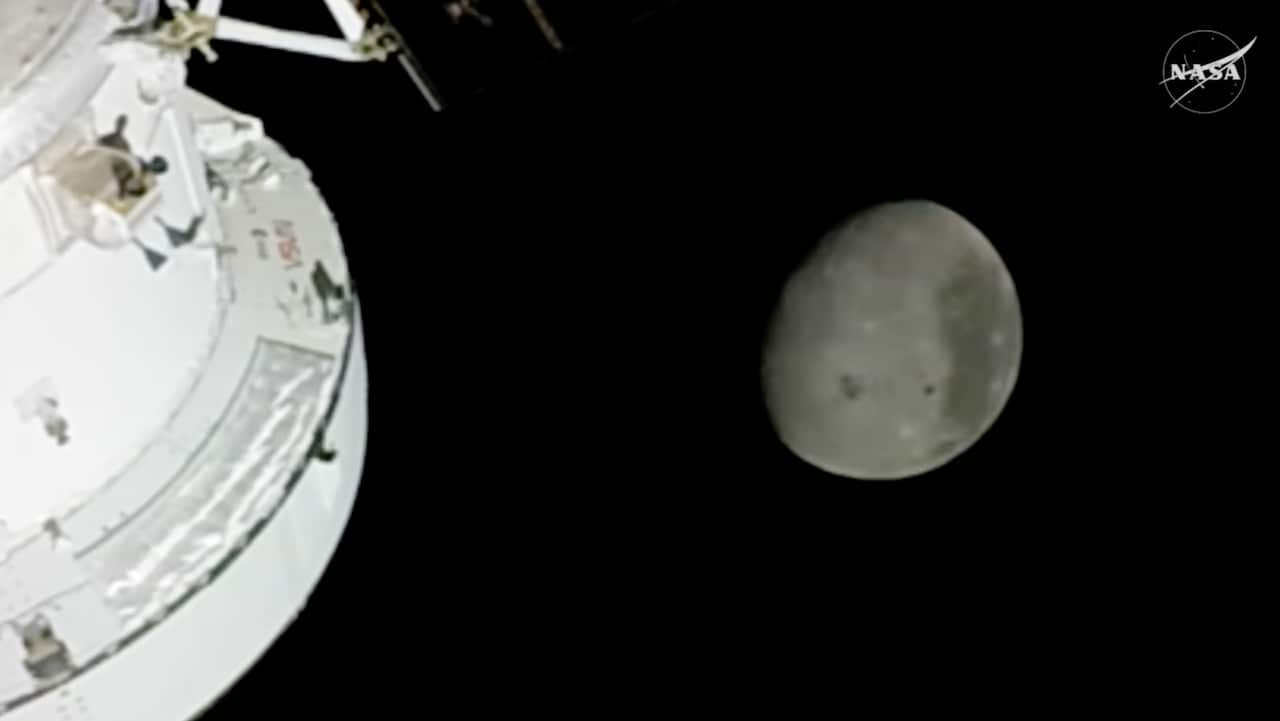
On their way home, the crew is expected to connect with their colleagues on the International Space Station via radio before they land in the Pacific Ocean near San Diego on the US west coast on Friday.
Communication restored after blackout
The Artemis II crew woke up just before 1am AEST on Tuesday to a recorded message from the late NASA astronaut Jim Lovell, who flew aboard the Cold War-era Apollo 8 and Apollo 13 moon missions.
"Welcome to my old neighbourhood," said Lovell, who died last year at age 97. "It's a historic day, and I know how busy you'll be, but don't forget to enjoy the view ... good luck and Godspeed."
The crew then prepared for a communication blackout with mission control that lasted around 40 minutes when their vessel travelled behind the moon at 8.47am AEST.
The crew has been relying on NASA's Deep Space Network — comprised of three communications facilities located in California, Madrid and Canberra — to communicate with the agency on Earth.
When Orion travelled behind the moon, the network's radio antennas were unable to receive signals.
During the Apollo 8 mission in 1968, which marked the first human-crewed flight to reach the moon, the crew also experienced a communication blackout, before travelling to the near side of the moon and regaining signal with mission controllers.
The four Artemis astronauts set a new spaceflight record on Tuesday as they exceeded the 399,117km distance from Earth reached in 1970 by Apollo 13, travelling 406,780km from Earth.
A nearly catastrophic spacecraft malfunction cut short the Apollo 13 mission, forcing Lovell and his two crewmates to use the moon's gravity to help return them safely to Earth.
Crater named after commander's late wife
Along the way, crew members spent some time assigning provisional new names to lunar features that previously lacked official designations.
In a radio message to mission control in Houston, Hansen suggested one crater be dubbed Integrity, after the name given to the crew's Orion capsule, and that another crater sometimes visible from Earth on the cusp between the far and near sides of the moon be named in honour of Wiseman's late wife, Carroll.
"A number of years ago, we started this journey, our close-knit astronaut family, and we lost a loved one," Hansen said of the mission commander's wife, his voice choking with emotion as he described the position of her lunar namesake.
"It's a bright spot on the moon, and we would like to call that Carroll."
The planned multibillion-dollar series of Artemis missions aims to return astronauts to the moon's surface by 2028, ahead of China, and establish a long-term US presence there over the next decade, building a moon base that would serve as a proving ground for potential future missions to Mars.
The last time astronauts walked on the moon was the final Apollo mission in 1972.
— With additional reporting by the Reuters and Agence France-Presse news agencies.
For the latest from SBS News, download our app and subscribe to our newsletter.







