In brief
- Australia recorded one its worst starts to a snow season in decades this year.
- But some resorts were able to turn lifts on the opening weekend thanks to artificial snowmaking.
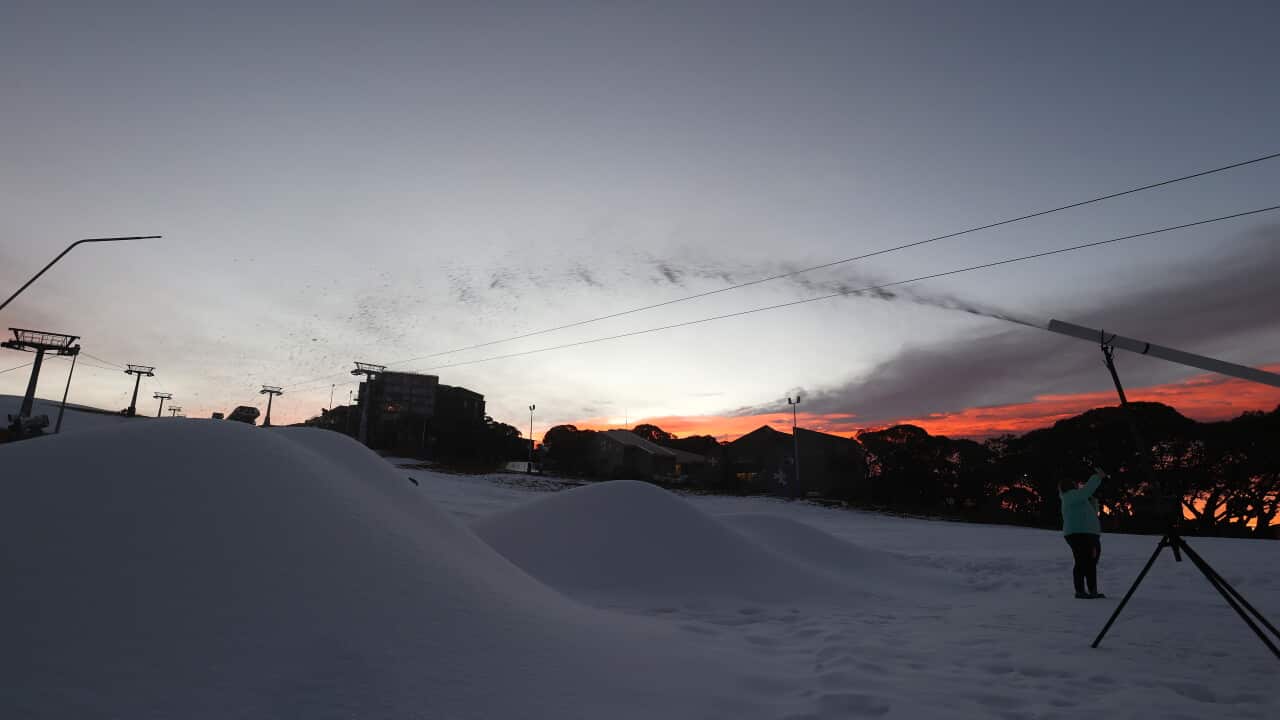
As the sun rises over Mount Buller in Victoria's High Country, the hum of snow guns echoes across the mountain, blanketing ski runs in artificial snow.
It's a scene that's becoming increasingly common at Australia's alpine resorts.
As winters become less predictable, operators are investing heavily in snowmaking technology, effectively an insurance policy keeping lifts turning and visitors coming when natural snowfall falls short.
With little natural snow falling until 3 July, one of the slowest starts to winter in decades, several resorts still managed to turn lifts on the traditional June long weekend opening thanks to artificial snowmaking — even if only thin stripes of beginner's terrain were open.
Among them was Mount Buller, which has invested $17 million in snowmaking in the past 25 years.
News that makes sense
Your trusted source for staying up-to-date with the world around you. Get free daily news updates and analysis, straight to your inbox.
The resort now operates more than 300 snow guns across almost 80km of ski runs, which can generally operate only at a wet-bulb temperature of -2C or below.
Mount Buller also has five snow factories — shipping container-like buildings capable of producing snow around the clock, regardless of temperature.
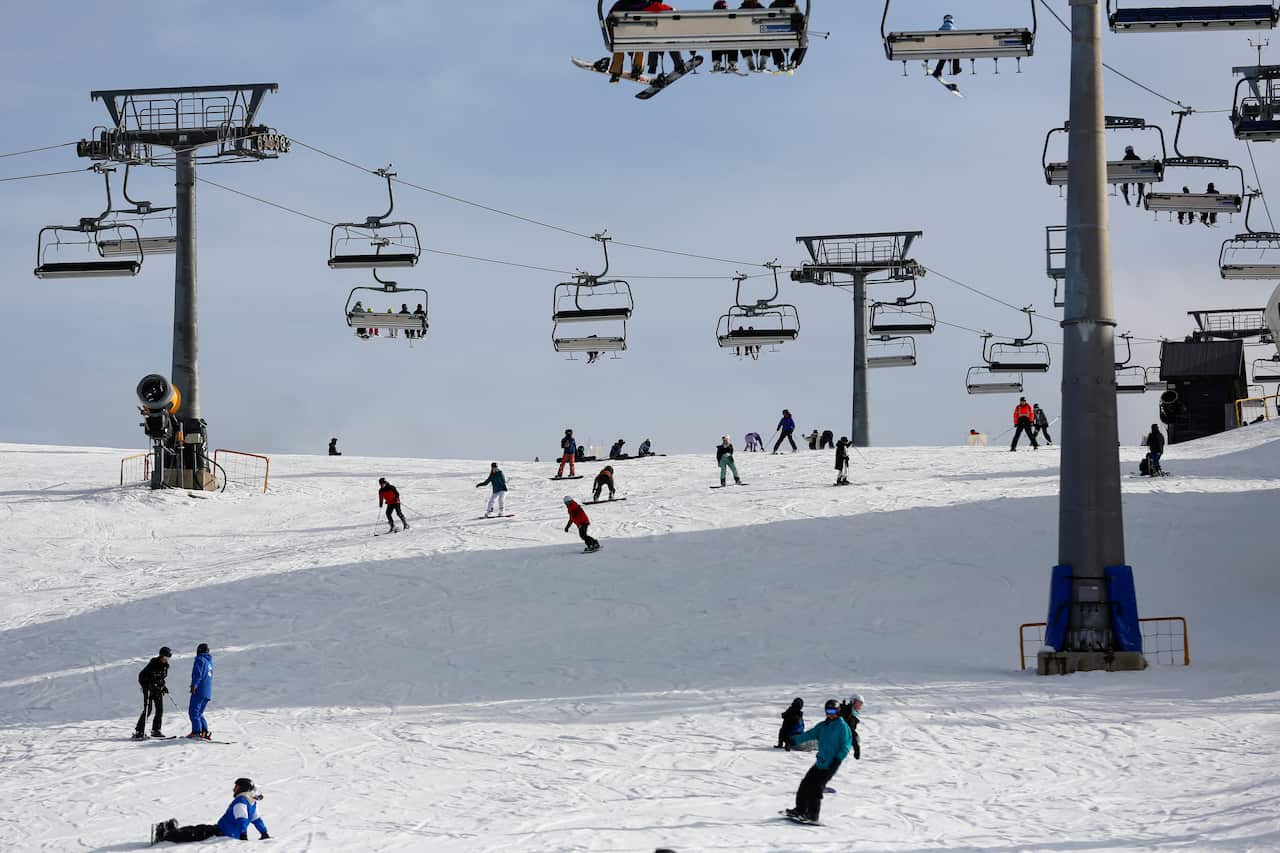
"Snowmaking has progressively become more and more significant around the world because it smooths out the variability from season to season," Mount Buller spokesperson Rhylla Morgan told SBS News.
"We haven't had many of those big snow events yet. There have only been a handful so far this season, so snowmaking helps us fill in those gaps.
"It allows us to maintain snow cover across the ski area and steadily build that base, which has enabled us to progressively open more terrain and keep our guests skiing and snowboarding."
Morgan said snowmaking technology — which is both water-and energy-intensive — had improved significantly in the decades since its introduction, allowing resorts to produce higher-quality snow more efficiently.
"The technology has really become very finessed; there are amazing companies around the world working to improve that every year," she said.
Resorts also rely on "snow farming" to extend their seasons by creating snow stockpiles in south-facing and shaded areas, which are then groomed to top up runs.
She said Australia's ski industry — which supports more than 22,000 jobs and contributes billions of dollars to the economy — was continuously adapting to the changing climate.
Why has this season been so slow?
While snowmaking has helped resorts cope with poor natural conditions, it hasn't changed the weather.
After an early July dump of snow, the Spencers Creek measuring site — considered the most reliable site for natural snow depth in NSW — recorded a depth of 68cm on 21 July. A good year would exceed a metre.
Experts say a combination of El Niño, the Southern Annular Mode and long-term climate change has contributed to this year's slow start to the snow season.
Dr Andrew Watkins, a climate scientist and Protect Our Winters science alliance member, said an intensified El Niño had brought more persistent high-pressure systems across south-eastern Australia.
"It's bringing a lot more of those big high-pressure systems that give the clear skies, which means less snow," he said.
The same weather pattern has also produced temperature inversions, where it can be warmer on mountain peaks than lower down the slopes.
Those conditions likely contributed to record July temperatures across Victoria's alpine resorts, with Mount Hotham reaching 12C and Falls Creek 11.5C last weekend — breaking their previous July records of 8.7C and 9.8C by several degrees.
Watkins, who is also an avid skier, said record-breaking temperatures were increasingly common in a warming climate.
"I don't think much surprises us as climate scientists anymore. I'd like to say I'm shocked by it, but I'm not," he said.
"The last decade, and even just this year, looking at what's happened in Europe, what's happened in the UK, and even what's happening in Canada and America right now, breaking records by two or three degrees is happening reasonably often."
Warmer conditions also mean cold fronts that might once have delivered snow are increasingly bringing rain instead, degrading the snow pack.
But the high-pressure systems can produce cold, dry nights — ideal conditions for snow guns.
"That's sort of a perfect scenario for snowmaking … which has been a saviour in many places," he said.
A 2024 report by the Australian Mountain Research Facility and Australian National University found snow cover had reduced by 30 per cent between 1954 and 2021, while the length of the ski season had contracted between 17 and 28 per cent at most resorts.
Despite the grim picture, Watkins said snowmaking would still be viable under a warming in the depths of winter.
"In the middle of the season, I think snowmaking has great potential," he said.
“[But] our seasons are still going to get shorter," he said.
As for this snow season, Bureau of Meteorology senior meteorologist Jonathan How said it would only take one big weather system to turn the fortunes around.
"We're entering the back end of winter, so certainly you know we could see some systems coming through still."
For the latest from SBS News, download our app and subscribe to our newsletter.







