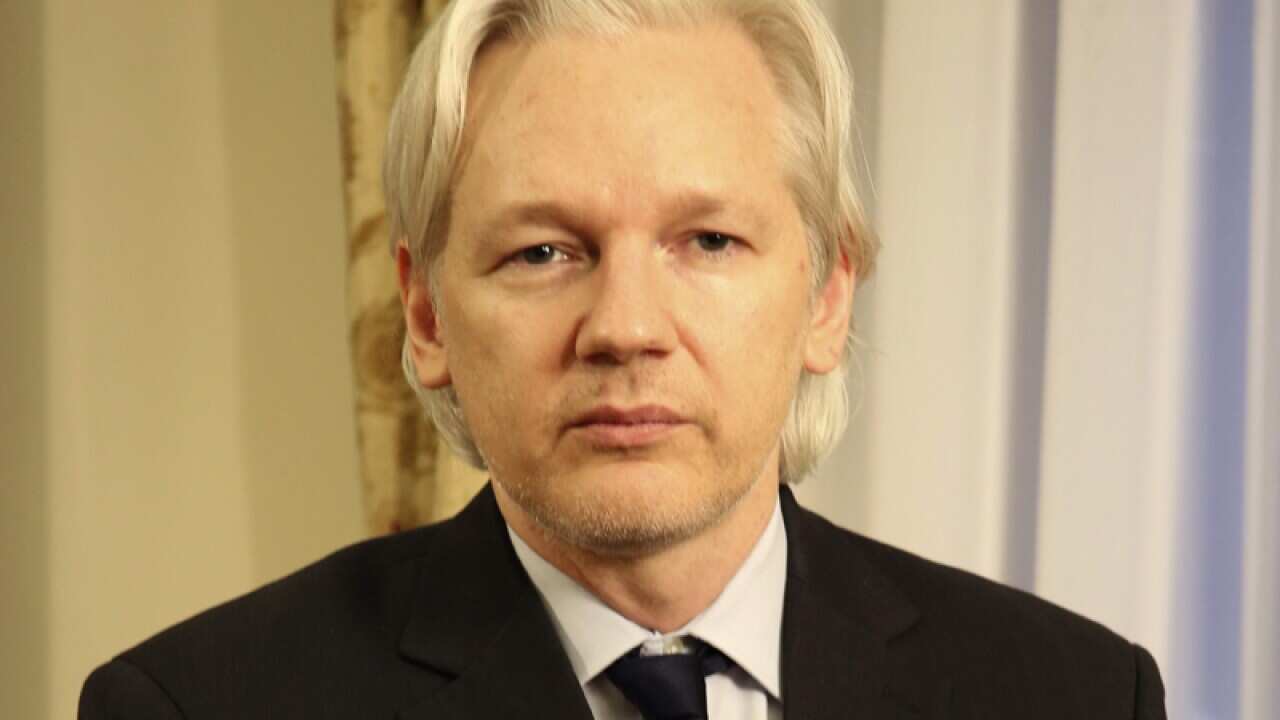
It's three years since WikiLeaks founder Julian Assange walked into the Ecuadorian embassy in London seeking political asylum.
On the first and second anniversaries of that day - June 19, 2012 - the Wikileaks founder gave countless press interviews to publicise his plight.
But this year he's not holding court with the international media inside the diplomatic mission that's become his home.
That's because he was expecting instead to be quizzed by visiting Swedish prosecutors over allegations he sexually assaulted two women in 2010.
That appointment, however, was cancelled on Wednesday because the Ecuadorian authorities are yet to grant permission for investigators to enter the embassy to take Assange's statement in the long-running case.
Sweden's deputy prosecutor Ingrid Isgren, who'll conduct the interrogation, is reportedly already in London.
But Ecuador says it's still evaluating the request for assistance, which was only received at the end of last week. Assange himself says that could take weeks.
London-based Australian journalist John Pilger, a key Assange supporter, thinks the whole situation is a farce.
"Until recently, she (Swedish prosecutor Marianne Ny) refused to come to London to interview Assange," he told AAP.
"Then she said she was coming, then she cancelled her appointment.
"It's a farce but one with grim consequences for Assange should he dare step outside the Ecuadorian embassy.
"He faces much of a lifetime in the hellhole of a United States supermax should he leave the protection of Ecuador in London."
Assange fears if he goes to Sweden he'll be extradited to the US and charged over WikiLeaks' release of classified documents.
The 43-year-old hasn't been charged in Sweden but faces allegations of rape, sexual molestation and illegal coercion.
After losing a UK legal battle against extradition, the former computer hacker entered Ecuador's diplomatic mission in June 2012 and was granted political asylum two months later.
Assange has long offered to be interviewed by prosecutors at the embassy or by video link.
But it wasn't until mid-March this year that Ms Ny performed an about-face and finally agreed to interview him in London.
On the second anniversary of Ecuador's decision to grant Assange asylum the Australian said he hoped to leave the embassy "soon". That was in mid-August 2014, some 10 months ago.
Assange was hopeful then that a UK law change making extradition more difficult without charge would assist his campaign. However the changes weren't retrospective so didn't apply in his case.
A few months ago Sweden's Supreme Court rejected an appeal by Assange against his arrest warrant.
His lawyers subsequently stated, for the umpteenth time, that they'd consider appealing to the international courts.
But for now Assange waits. Pilger insists he hasn't been forgotten.
"Assange and WikiLeaks have performed an epic public service by informing millions of people all over the world about the lies governments tell and the violence they initiate," he said.
"The powerful and the corrupt loathe this because it's true democracy in action."
Share


