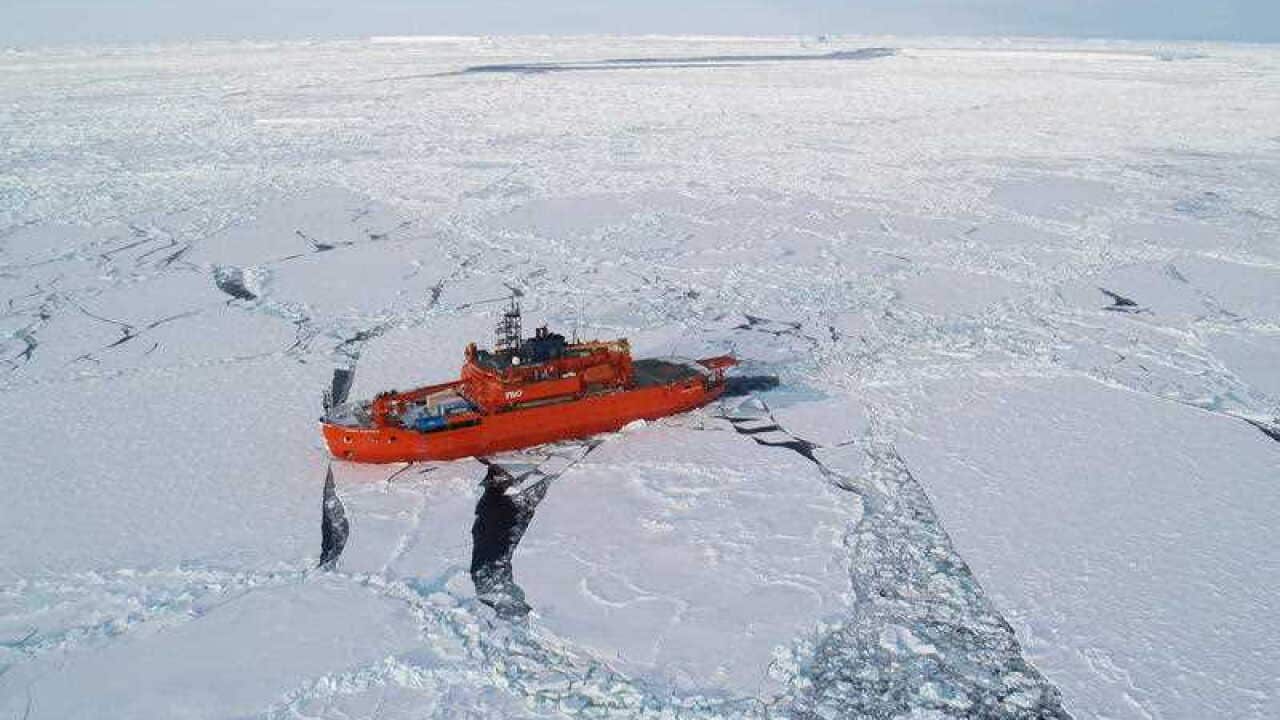
The Aurora Australis is back in the water after a successful salvage operation on Friday night that went exactly to plan according to Shaun Deshommes from P&O Maritime, which owns the vessel.
Up to three days will be spent carefully assessing the hull.
"The internal inspection will be done by simply opening up all the ship's (ballast) tanks and inspecting the structures at arm's length," he said.
"This will be complemented by an external examination of the ship with underwater cameras."
News that makes sense
Your trusted source for staying up-to-date with the world around you. Get free daily news updates and analysis, straight to your inbox.
The hull has been damaged, piercing a small tank, but the breach is not considered serious enough to affect the vessel's seaworthiness.
Repair plans have already been drafted in Western Australia, where the vessel is expected to head once all risk assessments have been carried out.
Mr Deshommes said it is not possible to conduct repairs in Antarctica.
"We are very pleased there has been no negative effect to the environment as a result of this grounding," he said.
There has been no oil spill identified, according to the Australian Antarctic Division, which charters the Aurora Australis.
The ship's crew took advantage of high tide, transferred ballast waters and used small work boats the take the vessel off rocks in Horseshoe Harbour near Mawson Station where it had been stranded for more than two days.
The vessel broke its moorings on Wednesday in winds of more than 170km/h, with more than 68 crew and expeditioners on board who had to wait until conditions eased on Friday to be transferred to land.
Personnel from Australia's Antarctic stations are now likely to be flown home as the immediate future of the vessel remains unknown, division director Nick Gales said.
"The ice runway is operational ... (and) is scheduled to remain operational until around the middle of March," Dr Gales said.
A United States aircraft will be used to help ferry some expeditioners between Australian stations and Dr Gales said other international resources are on standby.
"When you get an event like this there are communications out to all of the programs who operate in the area - the French, the US, South Africans, the Chinese, the Japanese - we assess where all of their assets are, ships and aircraft, and then talk to them about options," Dr Gales said.
"It's all part of a big international jigsaw puzzle."







